
The maritime threat that most needs Taiwan ' s vigilance does not always have to be a warship with a military flag. The U.S. State Department publicly criticized </a" on October 10 as destabilizing in China's actions in the eastern sea of Taiwan, following the presence of suspected Chinese maritime militia vessels. The Taiwan side's focus is on how these ships, which appear to be civilian activities, can be combined with naval police and military operations to gradually change the maritime order around Taiwan.
The eastern sea areas of Taiwan are of different importance from the western strait. The Taiwan Strait is a significant front line of tension between the two sides, while the eastern sea route is related to the space for war-time supply, international transport, external assistance and naval operations. The deployment of maritime forces to the western side of Taiwan alone would not be sufficient if Beijing were to attempt to create a de facto blockade.
原始来源 · reuters.com路透社10月8日台湾东部船舶识别调查报道船名、监控方式、台湾东部海域发现的民兵渔船与伴随海警、科研船。reuters.com ↗According to diplomatic disputes disclosed on 10 October, Chinese vessels had appeared in eastern Taiwan in August, and Taiwan maritime patrols claimed that the associated suspected militia vessels were still outside the restricted waters. This fact is particularly important: the lack of access to restricted waters does not amount to a lack of political and military pressure, but the existence of a suspicious intention does not amount to the imposition of a blockade. The real threat lies between them, re-establishing the daily response costs of each other with long-term and gradual activities.
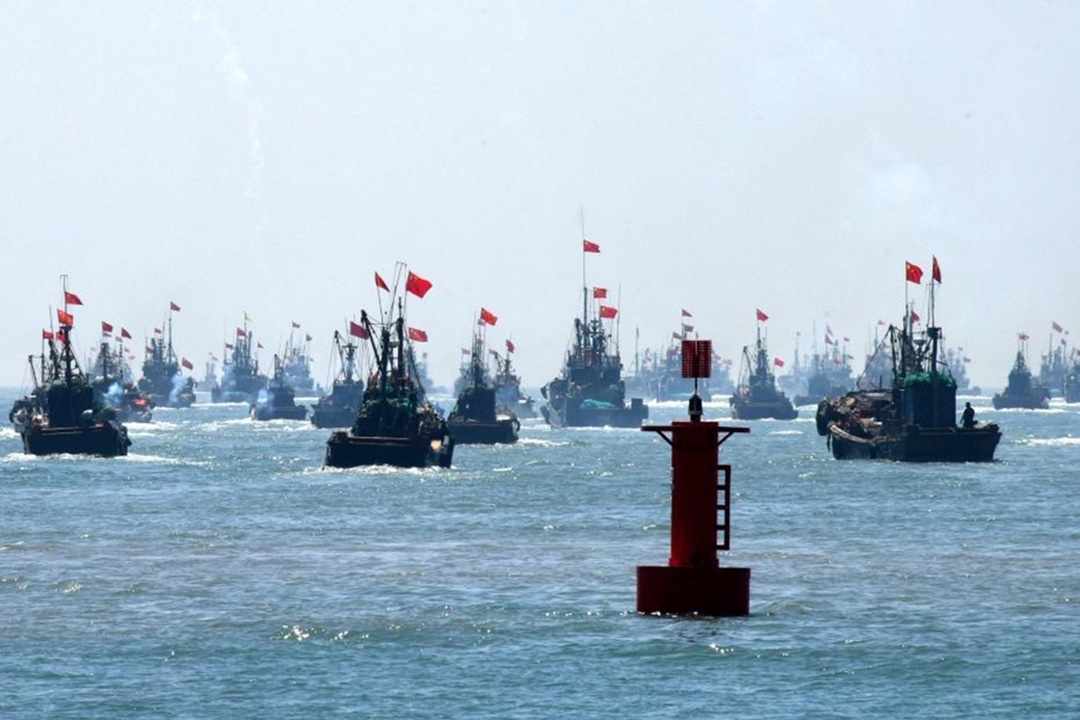
Sea-based identification cannot be based solely on the appearance of a ship. The ship survey of 8 October and the statement of the United States Department of State on 10 October are two different pieces of evidence: the former relates to the ship's position and conduct recorded on Taiwan's cruise, and the latter to foreign policy judgements. The focus of the study of maritime militias is on when a ship will appear in what waters, whether it will be coordinated with the maritime police or the military, and whether there will be an unusual cruise trajectory. The civilian appearance of fishing vessels does not automatically prove military identity or the investigative value of potential concerted action. Satellite positioning, open ship registration and continuous navigation are key to transforming military inferences into verifiable facts.
Chinese maritime militias often operate by fishing or other commercial vessels, with a less intuitive military role than the regular navy. If naval, naval, militia and civilian shipping are used to exert pressure, the challenge for Taiwan is not only to add a few more boats to the radar, but rather to identify different objectives of a legal nature, determine enforcement powers and avoid being induced to escalate the conflict.
The United States Department of State has stated that such actions seriously destabilize and has urged Beijing to stop pressure on the platform and to open a dialogue. The freedom of navigation in the region is also of concern to countries such as the United Kingdom, France and Germany. However, the translation of international statements into actual deterrence remains dependent on maritime posture sharing, regional coordination and a sustained response capacity.
Beijing insisted that Taiwan belongs to the territory of China, that Taiwan is governed by its own elected Government and that it rejects the sovereignty arrangements in Beijing. The apparent conflict between the political claims of both sides cannot be interpreted as a purely domestic law enforcement issue because of the pressure placed on Taiwan ' s maritime traffic. Once a ship ' s action threatens international shipping, the safety of persons and regional peace, there are inevitable consequences for international public security.
Taiwan should focus not only on the next large-scale military performance, but also on small-scale operations that do not trigger war warnings but that continue to change the customs of maritime operations. One of the techniques of political pressure by power is to repeat the anomaly to what appears normal. When such normalization succeeds, the cost of implementing a genuine future cut-off of the course may decrease.
The response to the maritime militia must therefore be precise: to disclose the location of the ship, its record of conduct, affiliation and verifiable images, to distinguish between civilian activities and concerted pressure, and to describe risks without exaggerating the impending outbreak of war. Every suspicious approach to the eastern sea of Taiwan needs to be looked at under this progressive logic of maritime blockade.
Article discussion
Verified members can discuss this report publicly and manage their own content.
Checking member sign-in status…