

At the BRICS Summit in New Delhi, Xi Jinping did not only talk about the abstract "global south".He put artificial intelligence, economic special zones and services trade three specific platforms on the table, trying to make the BRICS after expansion from a political manifesto to a network that can bear China's technology, industry and trade influence.On the surface, this is Beijing's expansion of the international space; from the domestic and foreign difficulties faced by the Chinese regime today, it is more like an urgent rush to find a strategic buffer zone.
* Three cards played simultaneously: AI, Special Zone, Trade in Services
Reuters on September 13.At the 18th BRICS Summit in New Delhi, Xi Jinping put forward three initiatives: China will set up the BRICS Open Source Cooperation Centre, establish the BRICS Special Economic Zone Partnership, and set up the BRICS Services Trade Forum in Beijing.
原始来源 · reuters.comXi pushes greater BRICS economic ties to give bloc larger global rolereuters.com ↗AI open-source cooperation can extend China’s technology ecosystem to more members; Special Economic Zone partnerships can connect parks, investments and supply chains; and the Service Trade Forum provides new institutional interfaces for digital services, finance, logistics and professional services. Beijing is trying to use a long-term economic technology network to turn the “bigger BRICs” into an amplifier of China’s foreign influence.
The larger the BRICS, it does not mean that Beijing is safer; the faster the platform expands, the more it can see the urgency of the Xi Jinping regime to find external backbone.
Modi shrugged his hand and welcomed Xi Jinping, but the Chinese printed book was not cleared.
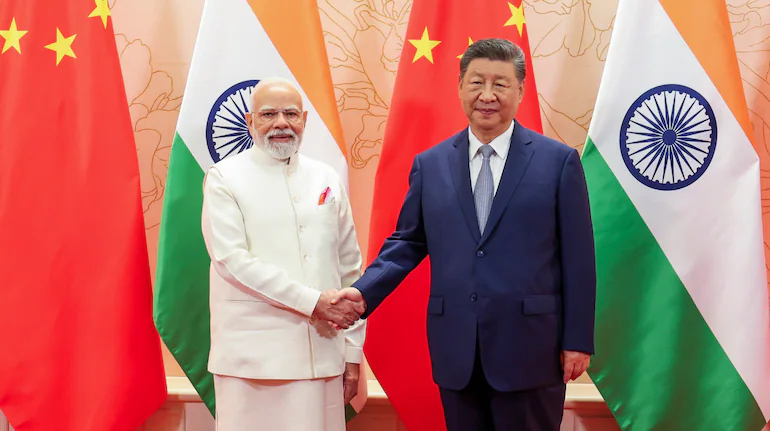
Before the Summit,Xi Jinping's Interaction with Indian Prime Minister ModiBut shaking hands did not eliminate the long-standing structural contradiction between China and India.The two countries are cooperating within the BRICS framework and are also wary of each other in terms of border security, trade imbalances, industrial competition and regional influence.
原始来源 · www2.xinhuanet.com习近平会见印度总理莫迪www2.xinhuanet.com ↗India’s willingness to preside over the expansion of the BRICS does not mean that it is willing to turn this mechanism into a geopolitical tool dominated by Beijing.For New Delhi, the BRICS value lies precisely inining strategic autonomy: it can cooperate with China and Russia, and it can continue to develop relations with the United States, Japan and Europe.
This means that if Xi wants to transform the BRICS into a comprehensive Chinese strategy, he must first face a reality: Member States participating in the BRICS is not equivalent to accepting the political leadership of the Communist Party of China. The more expansive the group, the more complex the interests, institutional and diplomatic direction, the more difficult it is for Beijing to turn it into a highly united anti-Western camp.
China's massive export machinery is a source of code and pressure.
The underlying conditions for promoting BRICS economic cooperation are that China still has a huge manufacturing and export system, containers, cargo ships and lots of export goods in the port, which constitute the most intuitive material basis for Beijing's foreign economic influence.
But the same set of export machinery is also creating new frictions.When domestic consumption is insufficient, real estate is long-term adjustment, local fiscal pressures, and industrial capacity continues to expand, Chinese enterprises rely more on overseas market digestion products.Europe, the United States and more and more emerging economies begin to worry that China's excess capacity impacts their own industries.
Therefore, Beijing’s sales to BRICS members today are not just “co-operation opportunities,” but also a more and more realistic question: “Who will continue to absorb the capacity that China’s manufacturing system needs to release?” and “When the European and American markets increase barriers, the global South naturally becomes a market, supply chain and political space that Xi is more eager to pursue.”
Xi Jinping's urgent expansion to the outside world depicts the anxiety of domestic rule
Focus on China's view that understanding Xi's BRICS offensive cannot only look at the Summit Declaration, but also the historical position of the Chinese regime.A truly self-confident, strong internal growth and attractive regime does not need to constantly package every international cooperation platform as an alternative to the existing international order.
What Xi is now facing is multiple pressures at the same time accumulating: domestic growth patterns have been difficult to restore the high-speed expansion of the past, real estate and local debt issues continue to drag the economy; the United States has strengthened restrictions around chips, artificial intelligence, key technologies and supply chains; Europe is increasingly alert to China’s trade imbalances and industrial subsidies; and Chinese companies have to look for new export markets and investment landmarks.
In this context, the meaning of the "bigger BRICS" for Xi is not just diplomatic achievements, but the "external buffer belt" for the security of the regime: the market must look outside, resources must look outside, technical partners should look outside, and diplomatic support should also look outside.
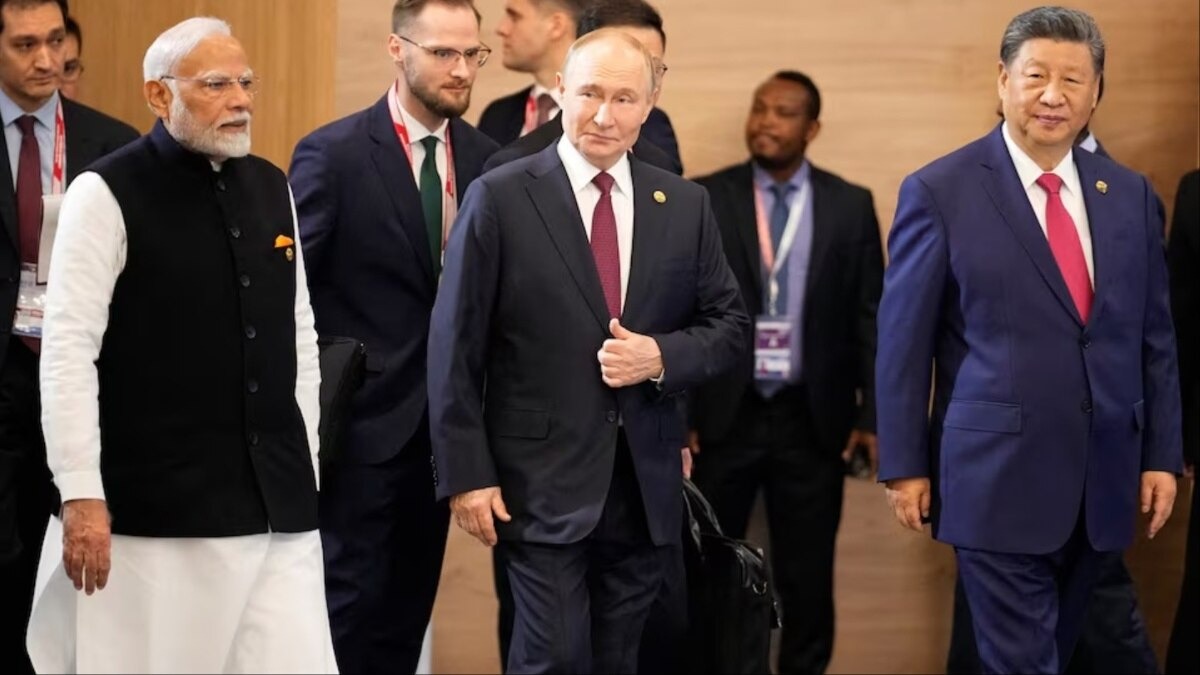
The so-called “global southern leadership” is facing member states’ own calculation table
Beijing likes to describe the BRICS expansion as proof of a change in the international power pattern.But the BRICS interior has never been a piece of iron.India pursues strategic autonomy, Brazil has its own regional and industrial interests, Middle Eastern members care about energy and security, and other new members will not automatically hand over their foreign policy to Beijing.
China can provide markets, loans, infrastructure, manufacturing capabilities and technology platforms, but can’t eliminate member states’ concerns about sovereignty, debt, industrial competition and dependency on China.
This is precisely the paradox in Xi’s strategy: the more he hopes to use the BRICS to prove that the Western dominant order is declining, the more different systems, different interests and even competing countries need to join Beijing; and the more these countries emphasize their autonomy, the harder it will be for Beijing to truly control the platform.
When the final trial is approaching, the greatest relentlessness is that the bigger international stage will not solve the internal crisis.
Focus on China's judgment is that the deepest trouble of the Xi Jinping regime today is not in New Delhi, not in Washington or Brussels, but within China.The external platform can delay pressure, transfer capacity, find partners, but can not replace real economic reforms, and much less eliminate the political stiffness and institutional failure brought by high personal concentration.
The so-called "last day trial" of the Communist Party of China is not a mysterious event that can predict a specific date, but a political, economic, social and international responsibility that the regime has accumulated for a long time must eventually face the historical process of liquidation. The more power Xi Jinping focuses on individuals, the more the national line is bound to the personal political destiny, and when failures and costs continue to accumulate, the more responsibility can not continue to transfer to local officials, enterprises or foreign forces.
The New Delhi summit thus presents an ironic picture: Xi Jinping stands at the center of the ever-expanding BRIC stage, announcing new AI centers, new special zone networks and new trade forums; but these constantly stretching touchpoints are also precisely indicating that Beijing is looking for new markets, new allies and new safety pads.
When a regime is truly in danger, it is often not when it stops expanding, but when it increasingly needs expansion to prove that it is still strong. Xi Jinping’s high tone today on the BRICS stage cannot mask the reality of the accumulating pressure within the CCP. The international stage can make applause, but can not escape the ultimate political responsibility for a regime that has lost its ability to correct the error.
Article discussion
Verified members can discuss this report publicly and manage their own content.
Checking member sign-in status…