

White Gmong Dong had already been granted visas to travel to a third country, but had failed to board flights from Thailand twice. The first was on 5 February and the second on 22 June. The reasons given by Thailand were that the departure permit had not been completed. Meanwhile, the Chinese side has formally submitted an extradition request to Thailand.
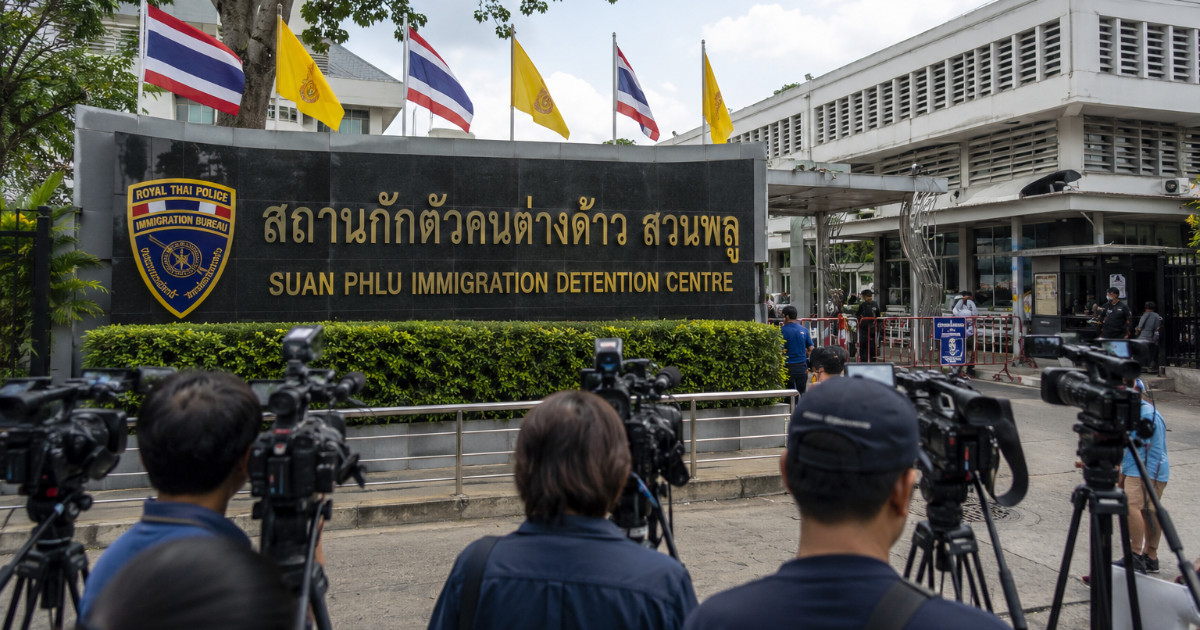
The journalist, who had been investigating and covering the media for more than 20 years, including the Financial Times, is now being held in the Suan Phlu Immigration Detention Centre in Bangkok. and the Southern Bangkok Criminal Court was scheduled to hear publicly the complaint filed by Baek Mt. and his lawyer against the continued detention on 18 September. The public search, which had not been updated by the main source as at 22 September, had not resulted in the final decision of the hearing, and the most recent status that could be confirmed remains: detention in Bebnazole, the risk of extradition not being lifted and the path of third-country resettlement not yet implemented.
原始来源 · rfa.org前中国调查记者白兆东是否引渡回中国 曼谷法院9月18日审理自由亚洲电台关于白兆东在泰国拘留、法院申诉及中国引渡请求的最新报道。rfa.org ↗The time line is being pulled back and the cross-border nature of the case becomes clearer. East White GmbH left China in November 2023 and arrived in Thailand in
- RSF invoked the Thai court documents it had seen to state that the Public Security Bureau of Shaanxi Elin City had issued an arrest warrant against him on 30 September 2024 on suspicion of “extortion”. > The Chinese Foreign Ministry confirmed to Reuters in July this year that Thailand had been requested to extradite "as soon as possible" Baektong to China, claiming that he was suspected of extortion and bribery.
The case was linked to his career as a journalist by the organization Bedmong and his pro-Liberal Freedom of the Press. RSF stated that he had long reported corruption, financial fraud and money-laundering networks of officials and had been repeatedly charged, interrogated or detained for reporting criminal charges between 2011 and
- Human rights groups consider the allegations against him by the Chinese side to be politically motivated; This judgement belongs to the claims of the organizations concerned, which the Chinese Government does not accept.
Legal controversy in Thailand has focused on another point: why is he still in detention, given that the Bedmong East has a third-country visa and placement arrangement. Prachatai quotes his lawyer, Nadthasi Bergman, and has received no criminal charges pending in Thailand and has been accepted by third countries; Counsel therefore argues that there is no need to continue detention on the grounds of waiting for departure and applied to the court for release.
This has led to a rare tri-link: extradition requests from the country of origin, detention and departure permits from the country of origin and resettlement channels already available in third countries. Whether or not the genuine departure of the Gborg East from Thailand depends no longer on refugee status or visa, but rather on the ranking between the Thai judiciary, immigration administration and the Chinese extradition request.
The involvement of international organizations further magnifies the case. Amnesty International issued a joint statement with 58 other groups in July requesting Thailand not to forcibly repatriate Beb? to China. United Nations special procedures experts also suggested that they should be given effective legal remedies, due process and medical guarantees, and that any possible repatriation should be suspended until the protection risk was independently assessed. The core basis of the organization is the principle of non-refoulement: a person cannot be forcibly returned to his country of origin if he runs a real risk of torture or other serious violations upon return.
Thailand ' s past approach to Chinese dissent and Uighurs has not made this concern out of context. In 2025, Thailand had returned a group of Uighurs to China who had been detained for many years, which had provoked criticism from many Governments and human rights bodies. Beijing stated that the repatriation was carried out in accordance with the law and opposed interference in China ' s internal affairs on the grounds of human rights. The Bei Mt. Dong case is thus also seen by the outside world as another case to test how Thailand has dealt with the conflict between its relations with China and its international human rights obligations.
The White Gmong case, unlike the ordinary extradition case, was not pending referral after he had been indicted in Thailand for serious criminal cases. Available public information indicates that his detention is mainly centred on immigration status and exit procedures, while criminal charges in China come from the time he leaves the country. The fact that a third country has been provided with a reception arrangement why it is still impossible to leave is the most specific and difficult legal fact of the case.
From the perspective of freedom of the press, there are longer tails in the case. If an investigative journalist who has left China, has received international protection and has entered a third country resettlement procedure, he or she can still be deprived of liberty in another country for a long time because of a criminal arrest warrant in China, then the scope of cross-border pressure is no longer limited to the Chinese border. Whether or not the White Gmbong East could move from the Bangkok Detention Facility to a third country would determine directly which chain of responsibility would eventually be left in.
Article discussion
Verified members can discuss this report publicly and manage their own content.
Checking member sign-in status…