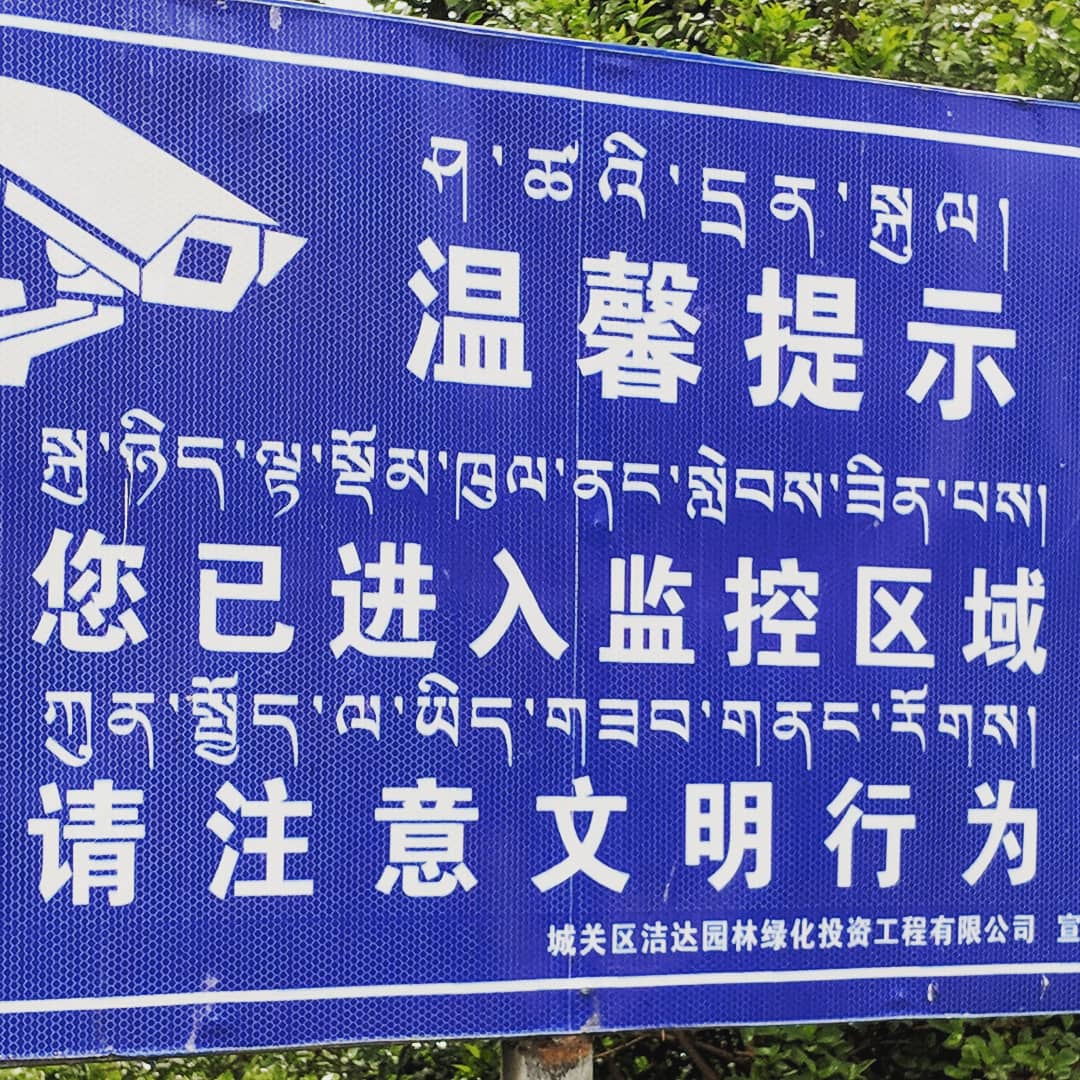
In Tibet, surveillance has gone beyond being installed at the corner and at the door of the monastery.
On October 7, Radio Free Asia, in Tibetan, again pushed an increasingly clear trend into public view: Tibet is becoming an important laboratory for high-density surveillance and social control techniques in China. From ground grid management, facilitation of police stations, mobile phone checks, DNA collection, to aerial drones, self-motive nests and anti-unmanned aircraft systems, State authority is extending “seeing you” from fixed cameras to the entire space.
The most noteworthy aspect of the system is that it is increasingly free of the need for visible violence.
原始来源 · rfa.orgRFA藏语:监控与压制下的西藏rfa.org ↗Drone flew further and left surveillance in a fixed location
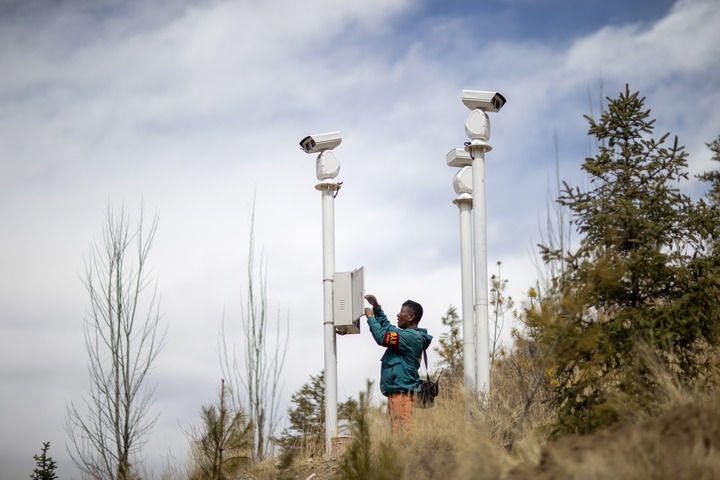
The report " The Eye of the Highlands ", released by Tibet Watch at the end of September, was based on Chinese Government procurement documents, police circulars and tender records, and a compilation of the expansion of the Tibetan public security system from 2017 to 2026.
Reports indicate that drones, self-motive nests and anti-drainer equipment are being procured from the anti-terrorist surveillance units at the level of the Autonomous Communities to the county-level public security organs. Some of the flying trainings directly use “stable” as a mission expression.
原始来源 · tibetwatch.orgEyes Above the Plateautibetwatch.org ↗The only people that can be seen on the camera are the fixed cameras. The drones changed distance and terrain: pastoral areas, mountain gates, religious gatherings, valleys and border routes could be included in mobile surveillance.
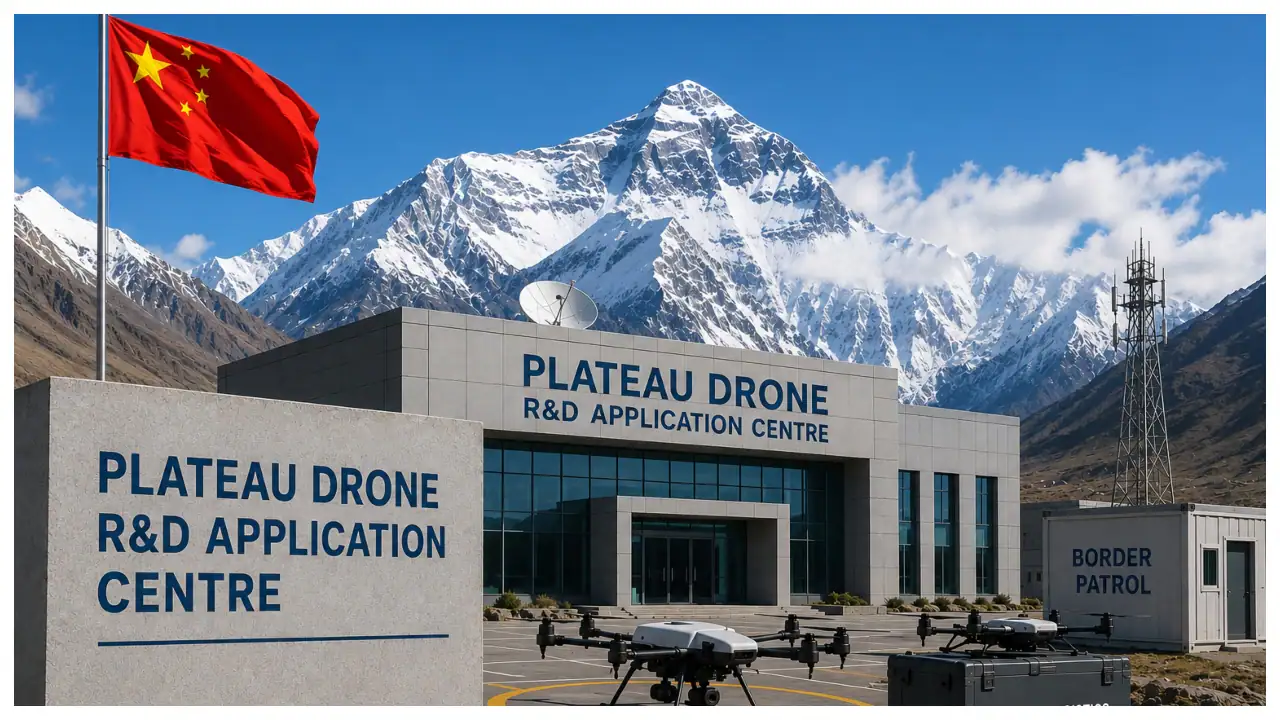
This is particularly important for Tibet, as a large number of social activities do not take place in urban streets. The monasteries, pastures, border corridors and the water and electricity works were the areas where fixed surveillance was the hardest to cover.
The country can fly, but the average man can't fly
The other side of the surveillance system is the tightening of civil airspace.
The Tibet Watch combing documents show that during Xi ' s visit to Tibet in 2025, severe restrictions on unauthorized aircraft were imposed in Lhasa and several sub-districts; The Changdu and others warned that unauthorized drones might be disposed of. Since 2026, new UAVs have been sold in China to further bind their registration to real names.
As a result, there is a clear asymmetry in the same sky: the police can patrol, track, monitor the crowd using drones, while drones of ordinary citizens must be known, prepared and may be banned from taking off at any time.
This means that surveillance is no longer just “governments see more than citizens”, but that it is also empowered to stop citizens from retrogressive records.
Quiet country is harder to see than mass arrests
The scholar Robert Barnett, who studies Tibetan governance, calls this model “quiet state” — a system of control that is low-intensity, routine and rarely generates mass violence.
It does not need to arrest hundreds of people every day, but rather embeds officials, police, community managers, cameras, mobile phone checks and political education in daily life. It is difficult for individuals to point out that at one point “the repression began”, because control has become the environment itself.
This is also a major change in Tibetan governance in Xi ' s recent era: the State is not only punishing the objections that have already arisen, but is trying to make them known before they are formed.
The drones let this logic into the air.
Tibet is not the end of surveillance technology, but may be the starting point of proliferation
Tibet deserves the sustained attention of the international community not only because of the human rights problems on the ground themselves.
Over the past decade, China has used grid-based management, bio-information gathering, forecasting and high-density surveillance in Tibet and Xinjiang, and has since entered other parts of China and even spread abroad through equipment, training and security cooperation.
The Xi Jinping regime defined “stability” as a technically regulated problem: knowing where, with whom, what, where.
When this logic is combined with AI, drones and large-scale data systems, the costs of authoritarian governance are declining.
Tibet is showing today that perhaps not a special model of a border area, but a preview of the next phase of social control by the Communist Party: on the ground there is a grid, data on the mobile phone, and eyes on the head.
Article discussion
Verified members can discuss this report publicly and manage their own content.
Checking member sign-in status…