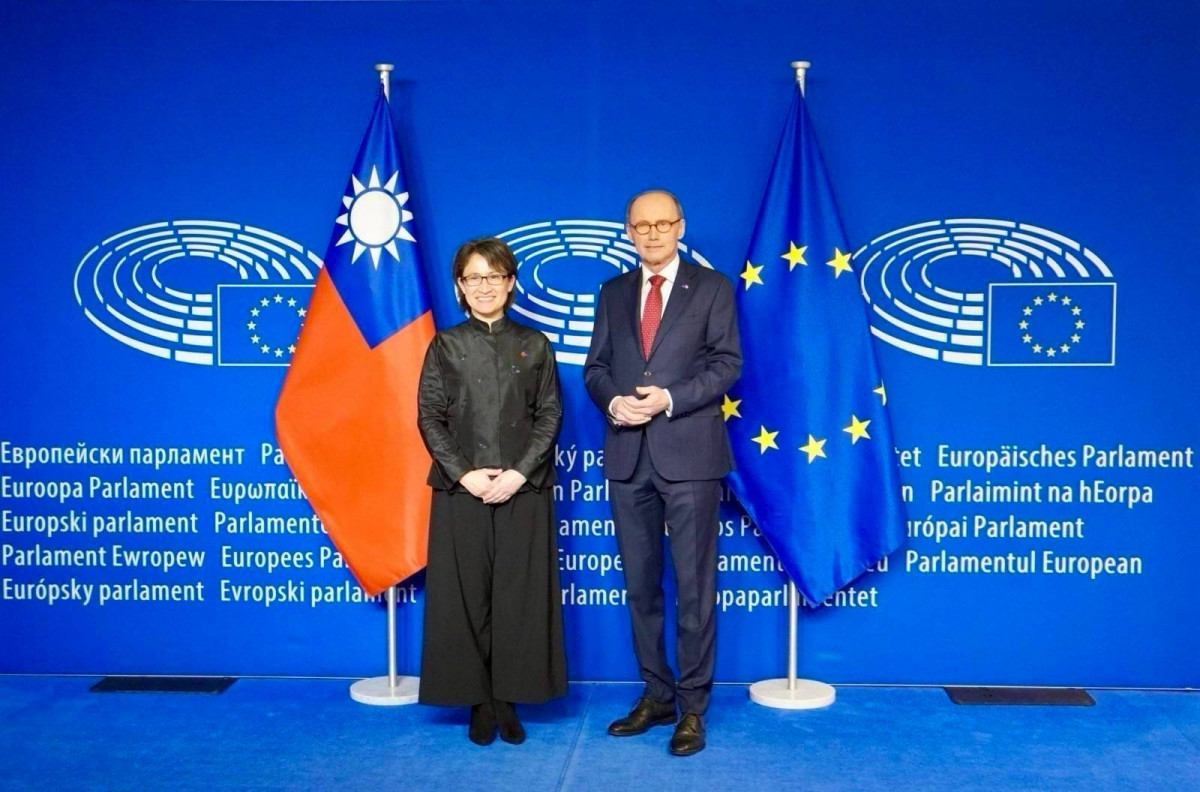
The European Parliament did not say “support for Taiwan” this time, but was devoted to breaking down two words that were often deliberately mixed with Beijing.
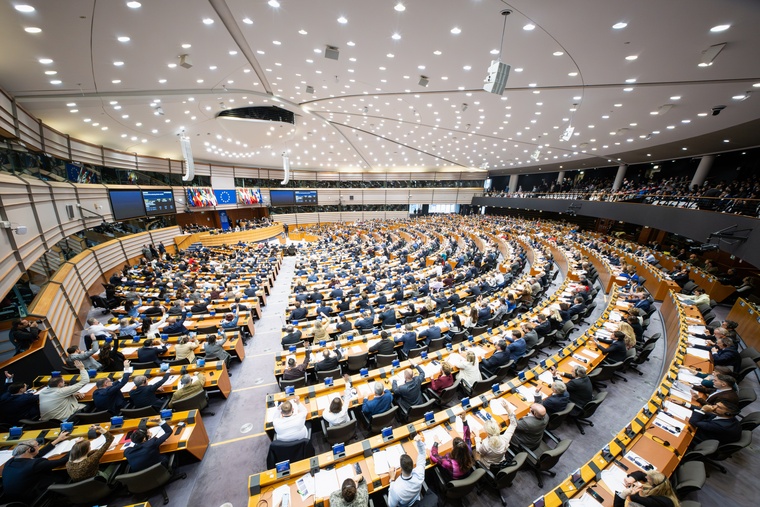
On 7 October, the European Parliament adopted a proposal on Taiwan ' s international participation, which clearly rejects the pressure exerted by the Chinese Government on international organizations, third countries and other actors to restrict Taiwan ' s participation in international activities and contacts.
More crucially, the EU's own “Single-Single-Single Policy” does not amount to the “Single-Single-Single-Single-Single-Single-Single-Single-Single-Single-Single-Single-Single-Single-Single-Single-Single-Synchet” as defined in Beijing.
原始来源 · focustaiwan.twEuropean Parliament backs Taiwan participation, rejects Beijing coercionfocustaiwan.tw ↗First clarify two concepts that are often referred to in Chinese
Beijing has long called for the “one-China principle” of States to be the only political basis for dealing with the Taiwan issue, namely, the People's Republic of China representing all China, which is an integral part of China's territory.
Most EU member States recognized the Government of the People ' s Republic of China, but did not recognize Beijing ' s sovereignty over Taiwan as such.
This is exactly the border that the European Parliament is trying to draw.
In diplomatic practice, many countries use their own “One China policy” rather than accept all “One China national” Beijing. This difference was often buried in diplomatic texts in the past; This difference is now being pushed back to the forefront as Beijing continues to use economic and political pressure to ask States to restrict Taiwan ' s activities.
The issue is one of participation and outreach to international organizations
Taiwan is unable to join the United Nations, but has sought to participate in a long-standing manner in functional bodies such as the World Health Organization, ICAO and INTERPOL.
Beijing, for its part, has consistently called on these institutions to restrict Taiwan in accordance with their sovereignty claims.
This time, the European Parliament has written the issue as “coercion” rather than as a general diplomatic divide, which means that Europe’s characterization of Beijing has changed: it no longer merely recognizes the existence of cross-Strait disputes, but it has begun to focus on how China uses economic and diplomatic power to reduce Taiwan’s international space.
This change does not mean that the EU is turning to support Taiwan ' s independence. On the contrary, it maintains its own policy.
But Europe has increasingly and unequivocally rejected Beijing's interpretation of the “one-China policy” as “all countries must implement political isolation of Taiwan for China”.
Behind the text is the Xi Jinping regime's attempt to export its own sovereign interpretation
The control of the Communist Party over Taiwan is not limited to military pressure.
It also requires that airlines change their web pages, that international meetings change their names, that parliamentarians have less contact and that international organizations lower Taiwan ' s level of participation.
The common goal of these actions is to make the Beijing sovereign narrative a default operating rule for global institutions.
The European Parliament, on this occasion, openly broke down the “One-China policy” and the “one-China principle” and effectively prevented the extension of this right to define.
Taiwan ' s ability to participate in a technical conference, health conference or international forum appears to be a seat; But every time a name, invitation and identity dispute is contested, the answer is the same political question:
Is the world implementing its own policy against China or is it implementing Beijing's claim to Taiwan for Xi Jinping?
The importance of the language of the resolution lies in the right to a system of interpretation
The European Parliament ' s statement does not automatically change the diplomatic recognition arrangements of EU member States, much less the immediate accession of Taiwan to any international organization. It is a claim for the right to interpret policy language: can the EU define its own document as a relationship between China and Taiwan, rather than being forced by Beijing to expand its “one-size-fits-all principle” to a common obligation for all countries? Reporting on this controversy requires a clear distinction between parliamentary political opinions, the EU ' s foreign policy and the statutes of specific international organizations, to see how the rhetoric becomes a real obstacle to participation.
Article discussion
Verified members can discuss this report publicly and manage their own content.
Checking member sign-in status…