

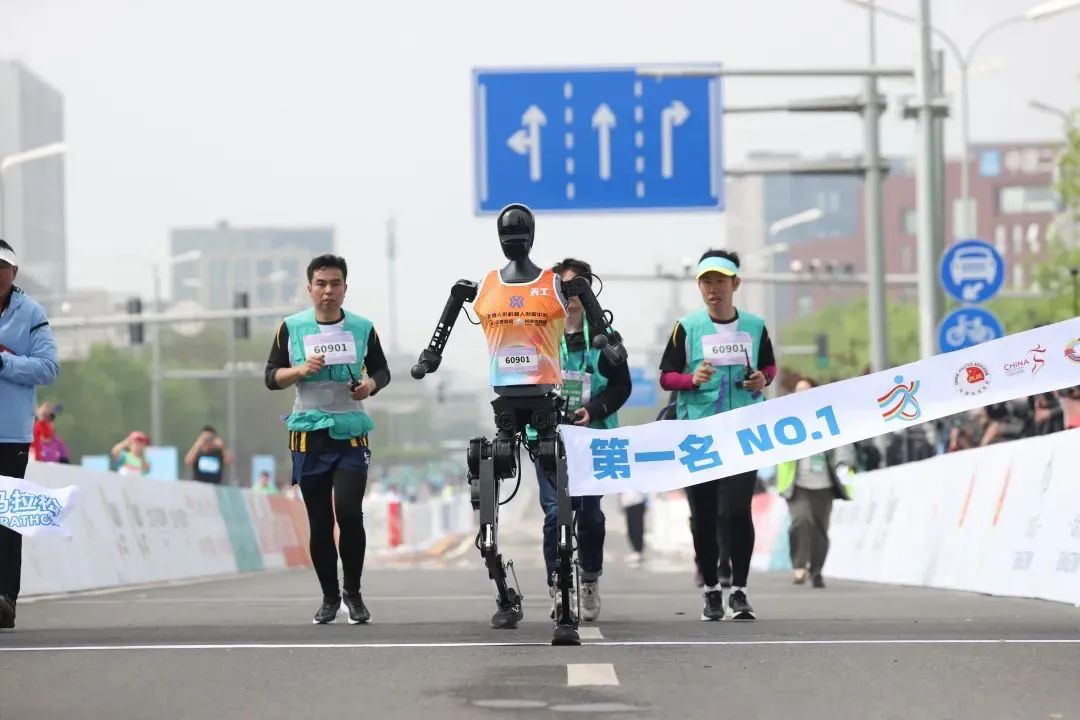
A few months ago, the Chinese robots fell and hit the groundline on the marathon track; The ALBA system has now begun to discuss how to enter the area of reconnaissance, logistics, dangerous environmental disposal and even urban siege. Reuters's work on the compilation of more than 100 Chinese military procurement announcements, papers, patents and defence companies shows that China's defence system is accelerating its research into the military utility of human robots and is trying to turn the size of the commercial robotic industry into a battlefield capability.
This is not a “robots go to war” science fiction, but a very representative technology migration of the Chinese civil-military integration system. China has gained a global lead in human-shaped robotics production, parts supply chains and the full-air cargo, and the LA is now most concerned about how to transform these original machines for the service of factories, logistics and fairs into “consumptive platforms” that can carry out their tasks in complex terrain, fire threats and limited communications.
Business boom is becoming a ready base for military research and development
Since 2025, the Chinese human robotics industry has been expanding in large numbers. Official data indicate that China has developed more than 400 complete human-shaped robotic products, with industrial chains covering electrics, speed-reducing devices, sensors, controllers and smart models. Enterprises such as Woo-ki, Ji-won and the Beijing Human Robot Innovation Centre are constantly reducing the cost of the machine, and are also moving robots from laboratories to plant testing and bulk production.
原始来源 · reuters.com路透社:中国推进人形机器人军事化研究reuters.com ↗When a country has the largest robotic capacity, the most complete supply chain of parts and a highly centralized defence mobilization system, the time difference between so-called “civilian” and “military” is reduced significantly.
A 2025 University of Defense Science and Technology research scenario revealed by Reuters suggests that future urban attack teams may integrate human-shaped robots, dogs and unmanned vehicles into ground forces, allowing machines to enter buildings, search and clear hazard sites. Another procurement document called for the establishment of video, radar, motion and terrain data systems for the training of human robots. This indicates that the military is not only concerned with “manufacturer walking”, but rather with its ability to sense, judge, operate and work with soldiers.
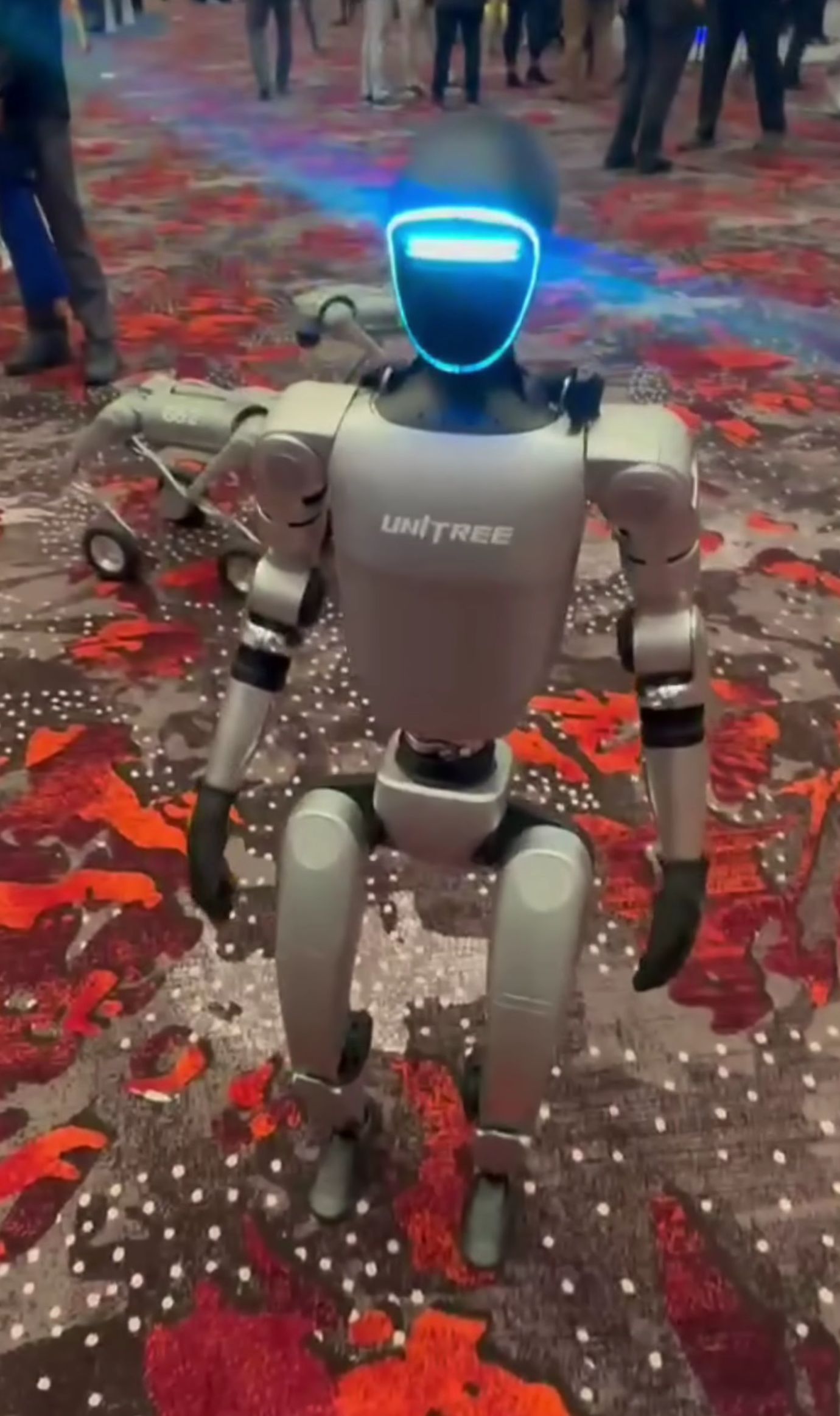
"Death for Man" is the greatest temptation for military robots
Modern warfare has proved that the greatest value of unmanned systems is not so much the appearance of a handsomeness as the ability to transfer high-risk tasks from soldiers to machines. On the battlefield of Ukraine, drones and unmanned ground vehicles have been tasked with reconnaissance, demining, resupply and attack. For the Chinese military, if a robot with a declining cost could replace soldiers in mined areas, underground facilities, nuclear, biological or chemical contaminated areas or enemy buildings, its tactical value would be much higher than a public performance.
This logic also explains why the Liberation Army is following up on commercial robots quickly. Human structures are not necessarily better than wheeled or tracked platforms in all scenarios, but they can use doors, stairs, tools and vehicles designed for humans. The real advantage is that machines can enter space that was designed for human beings without the need to completely re-establish the battlefield environment.
From remote control to autonomy, the real danger threshold is “decision-making power”
Most of the robots currently openly displayed in China still rely on remote control, pre-set action or limited autonomy. The sustainability, stability, complex environmental perception and failure rates remain real bottlenecks. Reuters also found no evidence that the armed human robots had been formally deployed by the Liberation Army into the combat units.
However, the technical route is clear: it begins with remote and semi-autonomous missions and gradually increases the capacity for perception and autonomous decision-making. The real sensitive question is not whether the robot has a gun, but who decided to fire. The chain of responsibility of weapons systems becomes more complex when smart models are able to independently identify targets, select routes and carry out attacks.
The international community still does not have a complete legal framework for autonomous weapons, while major military powers, such as the United States and the Russian Federation, are promoting unmanned and intelligent warfare systems. The size of the Chinese human robotics industry has made this ethical issue no longer theoretical.
The LA is the strongest part of Chinese manufacturing.
The robotic industry in China is really hard to replicate, not just a company's algorithm, but a complete supply chain. Electric generators, structural components, batteries, visual sensors, industrial controllers and low-cost mass capacity are concentrated in the Chinese manufacturing system. Even if a single robot is not perfect, a “scale tactic” different from the expensive Western military platform may be developed if it is low enough to be large enough.
This is also a reality that the United States and others must face. In the past, military robots were developed by large defence contractors, with high costs and long cycles; China may go another way: let the commercial market cut down the costs before the military selects the mature technology to enter the training grounds. This path can significantly reduce the cycle of military technology proliferation.
The most interesting thing in the next five to ten years is not whether China will create a “robots infantry division”, but rather the following more realistic changes:
- Reconnaissance and Detonation whether or not to take the lead in normalizing deployment;
- Whether there are mixed human-machine groups in urban warfare and underground operations;
- A smart model access to military sensors and command systems;
- Whether the line between commercial robotics and military procurement systems is further blurred.
Focus China believes that the real strategic significance of the militarization of Chinese human-shaped robots is that it once again proves that the integration of the Chinese Communist Party with the civil-military is not an abstract slogan. The commercial market is responsible for cost reduction, running scale and data accumulation, while the military is responsible for the screening of technologies that can be transformed into a war-fighting capability. When the “sky workers” in the arena, the robots in the factory and the “combat robots” in the defence thesis began to appear on the same technology chain, the Chinese robotics industry was no longer just a manufacturing story.
A robot can be a technology newser by running through the marathon endpoint. A whole chain of industries is imported into the army, and it's security news. What really needs vigilance is not how machines become more human, but how States decide who they are to carry out violence on their behalf.
Article discussion
Verified members can discuss this report publicly and manage their own content.
Checking member sign-in status…