

Hong Kong had a press freedom, an independent civil society, an open political competition and a relatively sound common law system unprecedented in mainland China.After Xi Jinping's rule, especially after the 2019 anti-amendment movement, Beijing re-formed Hong Kong's political order with "national security" as its core: Democrats were massively prosecuted, opposition forces were in fact expelled from the electoral system, news agencies were closed, civil organizations dissolved, open memorial space disappeared, and some Hong Kong Democrats who were exiled overseas were also sought and rewarded.
On June 30, 2020, the Standing Committee of the National People's Congress formulated and implemented the Hong Kong National Security Law, established crimes such as separating countries, subversion of state power, terrorist activities and conspiracy of foreign forces, and established a system such as the Central National Security Agency and the Hong Kong National Security Commission. The Hong Kong government has always emphasized that the National Security Law safeguards social stability and guarantees rights in accordance with the law; the U.S. State Council and several international human rights agencies believe that the relevant systems have weakened Hong Kong's autonomy, political participation and basic freedoms.
The “Hong Kong 47 case” is one of the most representative cases of this system change. Democrats organized unofficial legislative primaries in 2020, hoping to coordinate candidates and fight for a parliamentary majority, followed by 47 Democrats accused of conspiring to subvert the state regime. The case ended up with a large number of accused acknowledgements or convictions, many sentenced to long term imprisonment.In February 2026, the Hong Kong Court of Appeal upheld the conviction or sentence of 12 of the Democrats.The Court considers that forcing the chief executive to respond to political appeals by obtaining a parliamentary majority and systematically vetoing the budget constitutes a subversive plan under the National Security Law; international human rights organizations and some foreign governments criticize the case for criminalizing peaceful political participation.
The most questionable question in this case is not only how the courts apply existing laws, but how the boundaries of political activity are redefined. Organizing primaries, coordinating candidates, fighting for a legislative majority, and using parliamentary veto are all political strategies that can be discussed and competed in a democratic system. When these acts can lead to years of imprisonment, the first consideration for political actors is no longer whether voters support, but whether national security agencies will not interpret political claims as a crime.
The experience of Yellow Vanguard has become a reflection of the fate of a generation of Hong Kong democratic activists.Reuters on September 2.The 29-year-old Yellow Vanguard was convicted in the High Court of Hong Kong for conspiring to conspire for the allegation that foreign forces threatened national security, accused of involvement in international media and political lobbying, and sought measures such as sanctions by foreign governments against Hong Kong or China. The crime in serious cases could be sentenced to life imprisonment.
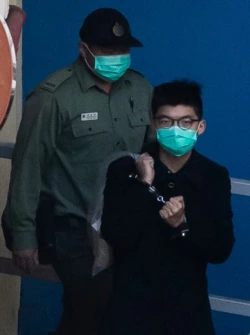
But a regime that incorporates international lobbying, seeking foreign political support and even pushing for sanctions into the criminal responsibility of national security can still accept public discussion and the test of international human rights standards. The court’s ruling according to law does not automatically end the discussion of whether the law itself is excessively restricting freedom of speech, association and political participation.
The Li-Ching case further demonstrates that the Hong Kong national security system has deepened in the field of news and publication.Reuters in February.Li was sentenced to 20 years in prison, one of the toughest sentences since the implementation of the Hong Kong National Security Law. Li was convicted of involvement in conspiracy with foreign forces and incitement to publications. The Hong Kong government emphasized the case for violations of law rather than freedom of the press; U.S., UK, EU, UN human rights officials and a number of freedom of the press organizations criticized the verdict. The Apple Daily was suspended in 2021 after police searches and assets were frozen.
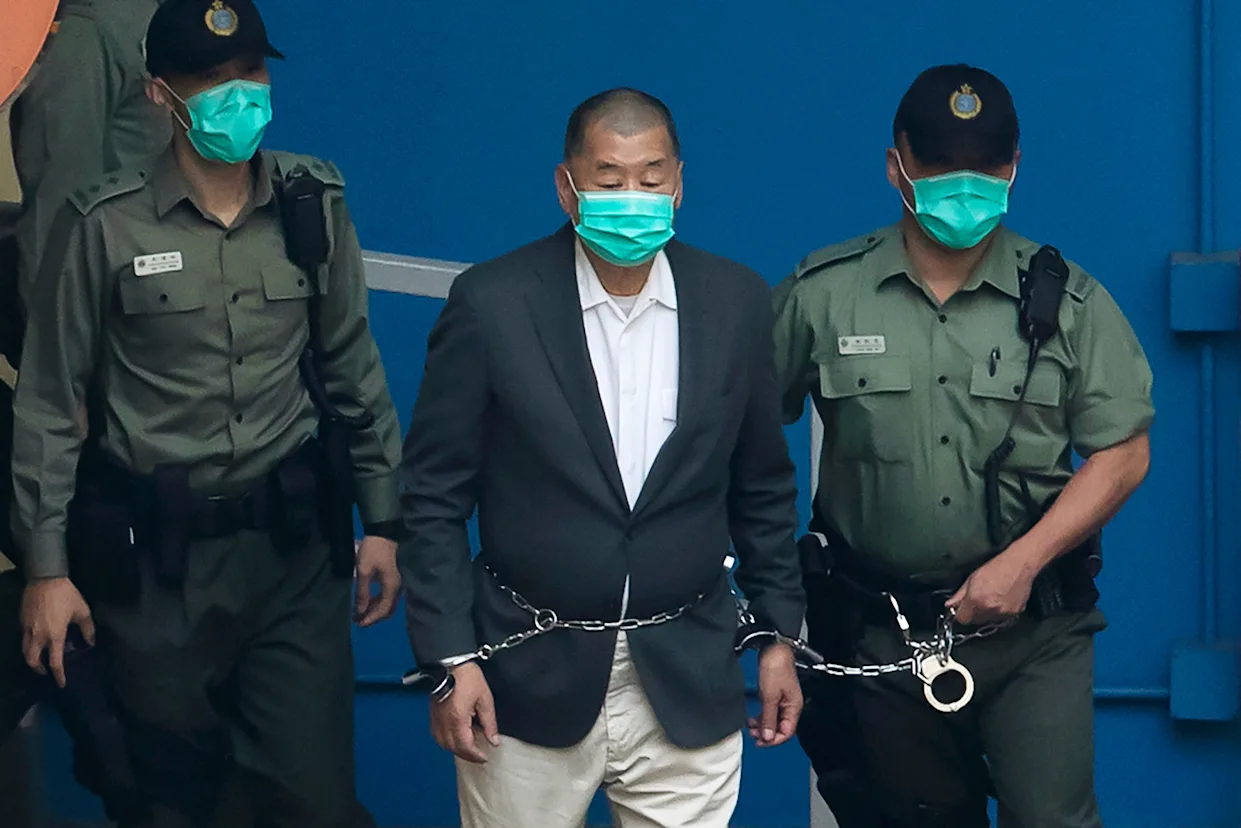
The real test of freedom of the press is not whether the legal text says “freedom of the press is guaranteed”, but whether journalists, editors, publishers and bookstores operators can oversee the rulers without worrying about political criminal risks.
In March 2024, the Hong Kong Legislature passed the National Security Regulations and implemented Article 23 of the Basic Law to further increase the crime of treason, instigation, state secrets, espionage, disruptive activities and foreign interference. The Hong Kong government said the new law was blocking national security vulnerabilities; critics feared that broad definition would further restrict media, academic research, social organizations and international exchanges.
Meanwhile, political pressure has crossed Hong Kong’s borders. Hong Kong police have issued search and reward measures against democratic activists in the United States, the United Kingdom, Australia, etc., and contacted some of their relatives or related persons who are still in Hong Kong. Hong Kong authorities believe that the National Security Law has an out-of-the-country effect in law; the United States, the United Kingdom and other governments have described some practices as transnational repression or threat to freedom of expression abroad. Regardless of the political expression, a system that can continue criminal prosecution against those who are abroad and engage in peaceful political expression has generated clear international human rights and sovereignty disputes.
Focus on Chinese comments
Xi Jinping's regime's most profound change in Hong Kong was not only the capture of several well-known democratic figures, but the systematic demolition of the political space that was not controlled by the Communist Party of China.The political opposition was greatly eliminated, the independent media was severely injured, the civilian organizations were massively disbanded, the electoral system was restructured and emphasized "patriot governance of Hong Kong", and the national security laws provided an extremely powerful criminal tool for handling political expression, organizational activities and international contacts.
Beijing has repeatedly claimed that Hong Kong has been "bordered and governed and governed". If the definition of "stability" no longer appears to challenge the mass protests of the power of the Communist Party of China, no longer there is an opposition capable of competing in governing power, no longer there is a strong independent media, then Xi has indeed achieved the political results of its pursuit. But this cost of stability is that young political activists such as Huang Feng have been trapped for years, that 47 democratic figures have been accused for the primary election as a national security case, that Li Ching has been sentenced to 20 years in prison, and that a city that once had a high degree of political pluralism and free media has continuously lost the institutional space against Beijing.
What Xi Jinping is truly intolerant is not just violence or so-called foreign forces, but a society that is not controlled by the Communist Party of China, but can organize itself, freely report, participate in elections and form a political force. Hong Kong has proved that under Chinese sovereignty there can also be a political and legal space different from the mainland China.
The more dangerous change is that the concept of “rule of law” itself is redefined. The real rule of law requires that the law binds the government and protects individuals from arbitrary violations by state power; the “rule of law” under authoritarian systems may show that the state has increasingly complete legal tools to carry out political goals. Both may have police, prosecutors, courts, judges and judgments, but their power structure and rights guarantees are completely different.
Therefore, the documentation of the Hong Kong National Security Act, the 47-person case, the Yellow Flag, the Qing and the forced shutdown of the media and organizations is not to replace evidence with political positions, but to preserve a verifiable chain of responsibility: which laws are promoted by who, which political activities are redefined as national security crimes, which organizations disappear, who are sentenced, and how the Beijing and Hong Kong governments interpret these measures.
Article discussion
Verified members can discuss this report publicly and manage their own content.
Checking member sign-in status…