

As of the end of July 2026, China's photovoltaic power plant reached 12.86 billion kilowatts, the first to exceed 12.85 billion kilowatts of coal power plant, becoming the largest power plant category in the country.This is a real and important historical node: the coal power plant, which has long occupied the position of the center of China's power system, has been surpassed by solar energy for the first time on the scale of the plant.
But “installation first” is not equivalent to “generating first,” nor does it mean that China has got rid of coal. If only 12,86 billion kilowatts were written as the end point of energy transition, the next stage would cover up the more difficult questions: when these photovoltaics will generate electricity, where they will generate electricity, can they be sent out, who will store, and who will be responsible for the bottom after the sunset.
National Energy Bureau data show that photovoltaic has accounted for more than 30 percent of the total power generation installations in the country. At the same time, the official still clearly emphasizes the role of coal power to underpin the system's security. These two things are not contradictory, they jointly indicate that China's power system has entered the transitional phase of "new energy being loaded more and more, but the system can still not leave the traditional stable power source".
原始来源 · nea.gov.cn光伏“登顶”,电力工业迎来新格局国家能源局转载人民日报:截至7月底光伏装机12.86亿千瓦,首次超过煤电12.85亿千瓦。nea.gov.cn ↗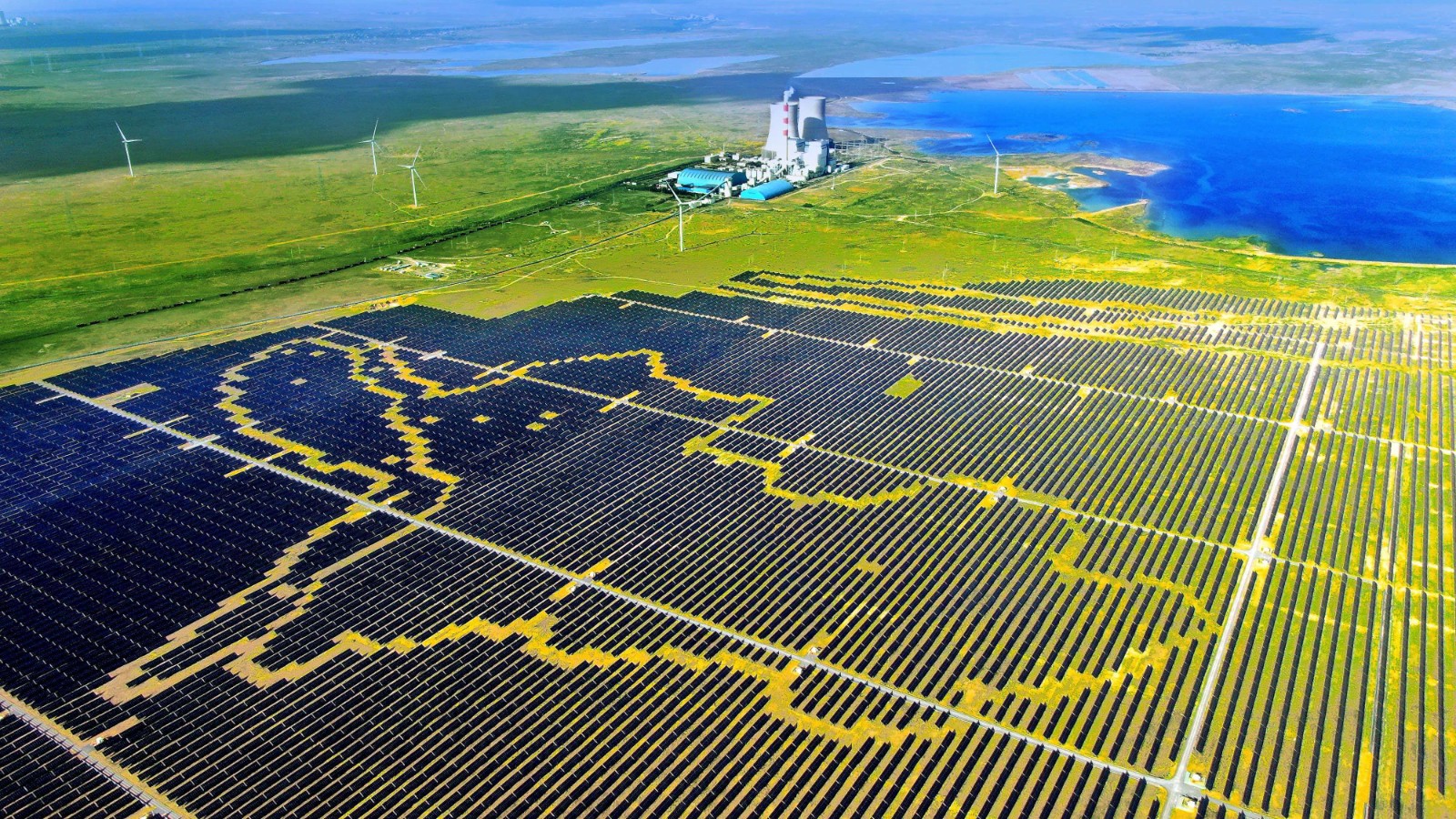
The same installed capacity does not mean that the same electricity can be supplied
A kilowatt of coal power and a kilowatt of photovoltaic power are both a kilowatt on the statistical table, but their operating characteristics are completely different. Coal power units can continue to generate power for a longer period of time according to schedule, while photovoltaic power is influenced by day and night, clouds, seasonal and regional weather.
Therefore, the comparison of the size of the installation machine can only answer "theoretically how much power generation equipment has been installed", and can not answer "who can immediately supply power when the grid is out of power at 8 a.m."
This is why after photovoltaics surpassed coal power, China still needs coal power, hydropower, nuclear power, gas, energy storage and cross-regional power transmission to keep the grid stable.
Photovoltaic over coal power, is a milestone in the change of energy structure; if it is packaged into coal power has left the historical stage, it is to change the installation statistics into actual power supply capacity.
The real bottleneck starts from "does there be photovoltaic panels" to "can the grid eat it?"
China already has the world’s largest photovoltaic industry chain and installation machinery size. Continuing to manufacture photovoltaic components is not the most difficult part, and the difficulty is being transferred to the system level.
Large-scale new energy is concentrated in resource-rich areas in the northwest and north, while power loads are heavily concentrated in the eastern coast and industrial cities.This means that electricity must travel thousands of kilometers of transmission while addressing new energy output fluctuations.
Indicators that truly determine the quality of energy transition include:
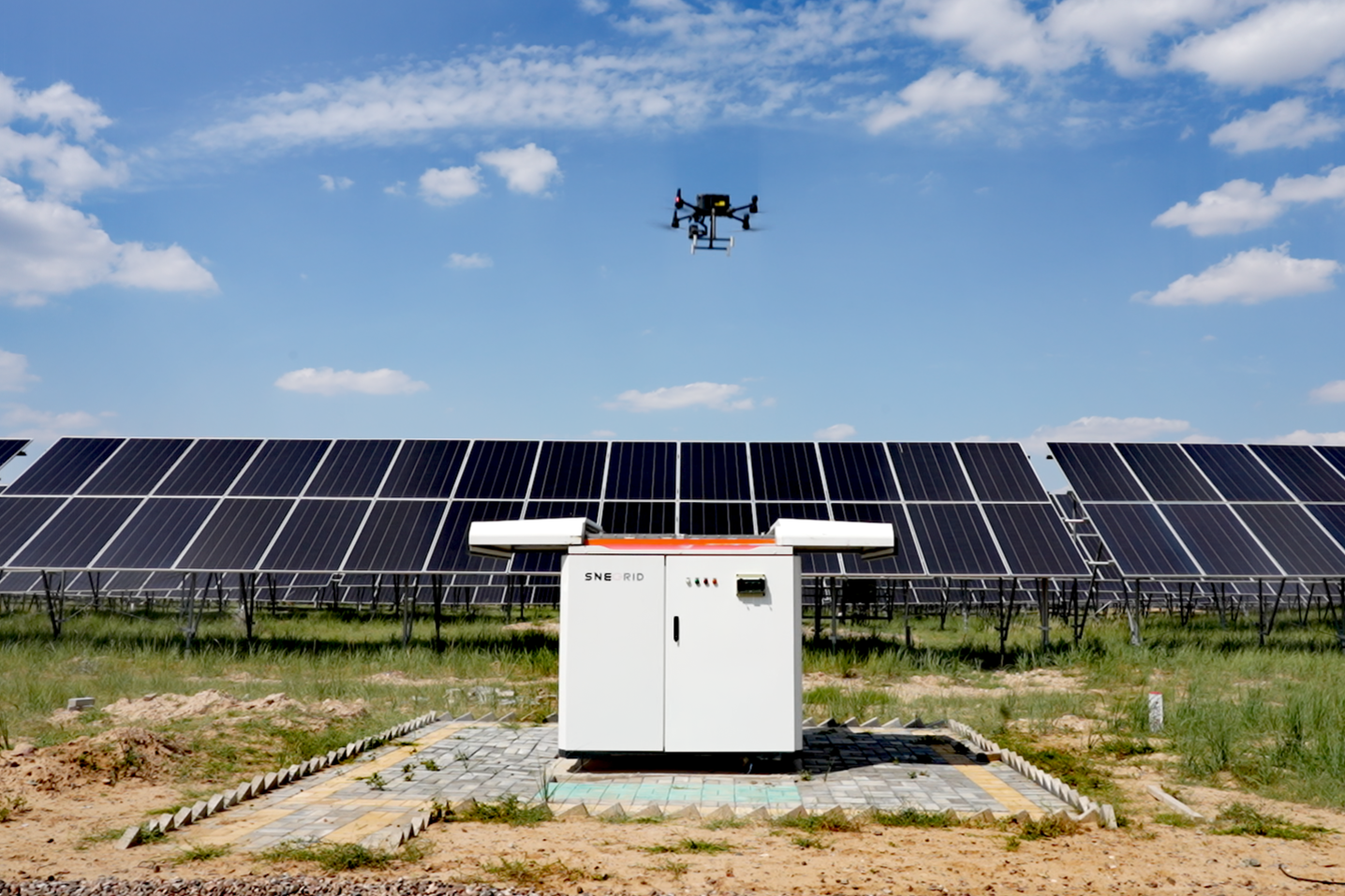
原始来源 · cpnn.com.cn宁夏灵武:光伏板下书写生态答卷中国能源新闻网关于宁夏大型光伏基地建设、巡检和生态治理的现场报道。cpnn.com.cn ↗- The actual share of new energy generation, not only the installed share;
- whether the trans-provincial transmission channels are sufficient to connect the resource area and the load center;
- whether the storage of energy can economically bear the peak filling valley;
- whether the electricity market can correctly reflect the power value of different periods;
- the coal power from the "main power generation" to the "regulation and backbone" after the cost is borne by who;
- whether the distributed photovoltaic mass access, the distribution network can bear two-way current and complex scheduling.
The role of coal power will change, but it will not disappear because of a statistical line crossing.
China's officials have increasingly used expressions such as "coal power backbone" and "regulatory power supply".This actually means that the coal power business model must also change.
In the past, coal power was mainly relied on more power generation to earn revenue; after the increase in the share of new energy, some coal power units may require less power generation, but retain the ability to start and adjust at any time.
Without reasonable capacity prices and auxiliary services market, coal power companies may continue to pursue more power generation hours, competing with the new energy market; if compensation is too high, it may lock the inefficient coal power that should be withdrawn in the system for a long time.
The most difficult thing in the energy transition is not to build new assets, but to decide how the old assets will exit.
Photovoltaic first also exposes the other side of industrial surplus
China's photovoltaic industry has experienced extremely fierce price competition in recent years.Great manufacturing capacity has driven component costs down and has also helped the rapid expansion of new energy globally, but at the same time has caused corporate profits to be compressed, repeated investment and capacity competition.
The continuous expansion of the domestic installation machine can absorb part of the production capacity, but can not solve the problem of supply and demand indefinitely.If the local government continues to see photovoltaic manufacturing as a contractor and GDP project, and the construction of power grids, energy storage and market mechanisms can not follow, there may be a situation of "plate more and more cheap, more and more factories, enterprises more and more difficult to make money".
Therefore, photovoltaic installations over coal power should not be the reason for continuing to blindly expand production, but should be a signal of the shift in the policy: from pursuing the number of installations, to pursuing the efficiency of the power system.
The day that really deserves to be celebrated is not the number of photovoltaic panels exceeding the number of coal units
The ultimate answer to China’s energy transition is carbon emissions and actual energy consumption, rather than which power source ranks first.
If the future photovoltaic, wind and other low-carbon power sources can stabilely provide an increasingly high percentage of actual electricity consumption, coal power generation continues to decline, while the reliability of the grid does not deteriorate, and the electricity prices of residents and enterprises remain tolerable, then 12.86 billion kilowatts will really have historical significance.
Conversely, if the new energy mass construction is frequently limited to electricity, waste power, coal power still bears the majority of actual power generation, and local continues to rely on the expansion of manufacturing capacity to maintain growth, then "photovoltaic first" is more like a beautiful engineering record.
China has demonstrated its ability to manufacture and install solar panels at unprecedented speeds.The next test is more difficult: building a modern power system that can truly digest the power generated by these solar panels.
Photovoltaic power over coal power is not the slogan of the energy revolution, but rather the slogan of “short-building speed” into “short-building system, grid, energy storage and scheduling capacity”.
Article discussion
Verified members can discuss this report publicly and manage their own content.
Checking member sign-in status…