

On the 16th of September, villagers protested against the construction of iron mines in Pyeongchang, China.Overseas China's collective protest recording project "Yesterday" released on-site video showed that a large number of government staff, public security and special police appeared in the village, the alert line was pulled, some villagers and personnel were pushed off the scene.The publisher said that villagers were opposed to continuing to advance iron mining construction, mainly concerned about the pollution caused by mining, land destruction and the deterioration of the living environment.
原始来源 · yesterdayprotests.com昨天:唐山迁安徐家沟村抗议铁矿施工yesterdayprotests.com ↗The event did not enter the national official news agenda, but from the scene images, mining project disclosure data and the long-term mining development background, it is not an isolated “villager resistance” event, but a crossroads of resource development, environmental risks, land interests and grassroots stability at the same place.
The police first appeared on the scene, and the controversy came into public sight only afterwards

The video released on September 17 of the "Yesterday" project shows that a large number of uniform police and personnel appeared in the village, and villagers gathered around the construction area. In the video you can see someone being taken away by a number of people, and there are villagers who continue to interact with the personnel on the scene. The project says that the local public security, special police and government personnel are mobilized into the village, with the aim of ensuring the continued advancement of iron mine construction.
At present, the public network information has not seen the government of the municipality, the government of the town of Penang or the local public security issued a complete explanation on the site disposal on September 16, nor has the mining enterprises involved in the pollution and construction disputes raised by the villagers to publicly respond.
The “New Project” is not a “New Project” without history.
Open mining data shows that the Yuan city of Xu Jiajiang iron mine has long been included in the list of non-coal underground mines in Hebei, the registered subject is the Yuan city of Xu Jiajiang iron mine, Ltd. The Yuan city of Xu Jiajiang government public yearbook also records that the local main leaders have been to the Pyeongchang city of Xu Jiajiang iron mine and other key iron mine research.
原始来源 · m.intelmining2018.com河北非煤地下矿山公开名录m.intelmining2018.com ↗原始来源 · qianan.gov.cn迁安年鉴2024qianan.gov.cn ↗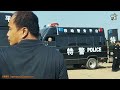
This means that the villagers are not faced with a sudden emergence of temporary construction, but a project linked to the local long-term development of iron mining resources. The migration itself is an important iron mineral area in Hebei, and the mining, steel and mining industries have long supported the local economy, while also bringing sustainable governance issues such as underground mining, dust extraction, transportation, land degradation, water resources and ecological recovery.
The core of villagers' protests is not just "against construction"
From existing videos and publishers’ illustrations, villagers’ attention focuses on pollution and environmental damage.Such disputes often involve several specific issues:
- whether the necessary environmental, safety and land procedures have been completed at the current stage of the project construction;
- what impact the construction and future mining will have on villages' housing, groundwater, cultivated land and roads;
- whether villagers have received complete circular assessment information, risk explanations and compensation schemes;
- What are the legal grounds and boundaries for government and public security intervention when villagers refuse to enter the construction or request a suspension.
These questions cannot simply be compressed into the two slogans “whether the project is legal” or “whether the villagers prevent work.” Even if the mine has the mining rights, the specific start-up still involves many aspects such as environmental impact, safe production, land use and construction licenses; likewise, villagers express environmental concerns does not mean that any form of blocking construction is of course legal.
Enterprise and local relationships behind mining rights need to be further disclosed
Open enterprise data showed that Hebei Boli Jingfu Industrial Group owns a number of such as Xu Jingfu iron mine, iron selection plant, club, logistics, is one of the local large private industrial enterprises. Hebei open mines list also long listed Xu Jingfu iron mine. For such a resource project that lasts for many years, the local government is both under contracting, industry and tax pressure, but also under the responsibility of environmental regulation, safety production and the protection of rights and interests of villagers.
This multi-role is often the hardest place to deal with conflicts in resource-based regions: local governments both want projects to advance and must regulate the public risks posed by the projects; and whether governments can maintain procedural neutrality and transparency when villagers and are in direct conflict is key to judging the quality of grassroots governance.
September 16 site left a few questions unanswered publicly
From the current time line can be confirmed: September 16th, Xu Xiaogong villagers gathered near the iron mine construction area; large numbers of government personnel, police and special police appeared on the scene; some were forcibly evicted during the protests; September 17th, "Yesterday" project released on-site videos to overseas platforms.
For a public event involving villagers, mining enterprises and the disposal of the public security site, society needs not only a scattered short video, but a complete chain of facts: who the project is, what the procedure is, what the villagers oppose, why the government moves the police force, who took the scene, and how to deal with the follow-up.
If the project procedure is complete, enterprises and local governments should be able to explain the basis for the review, construction and compensation; if the villagers put forward pollution and land risks are factual basis, should also enter the formal investigation and remedy procedures; if the scene someone is taken compulsory measures, the public security organs should also explain the facts and legal basis.
In resource-driven areas, mining can bring financial and employment, and can concentrate environmental and social costs to the villages closest to the mining area. The protests of the villagers of Xu Xiaobo on September 16 pushed this long-standing contradiction back to the screen. What really reduces conflict is not the disappearance of on-site images, but the project, environment and law enforcement information into procedures that the public can verify.
Article discussion
Verified members can discuss this report publicly and manage their own content.
Checking member sign-in status…