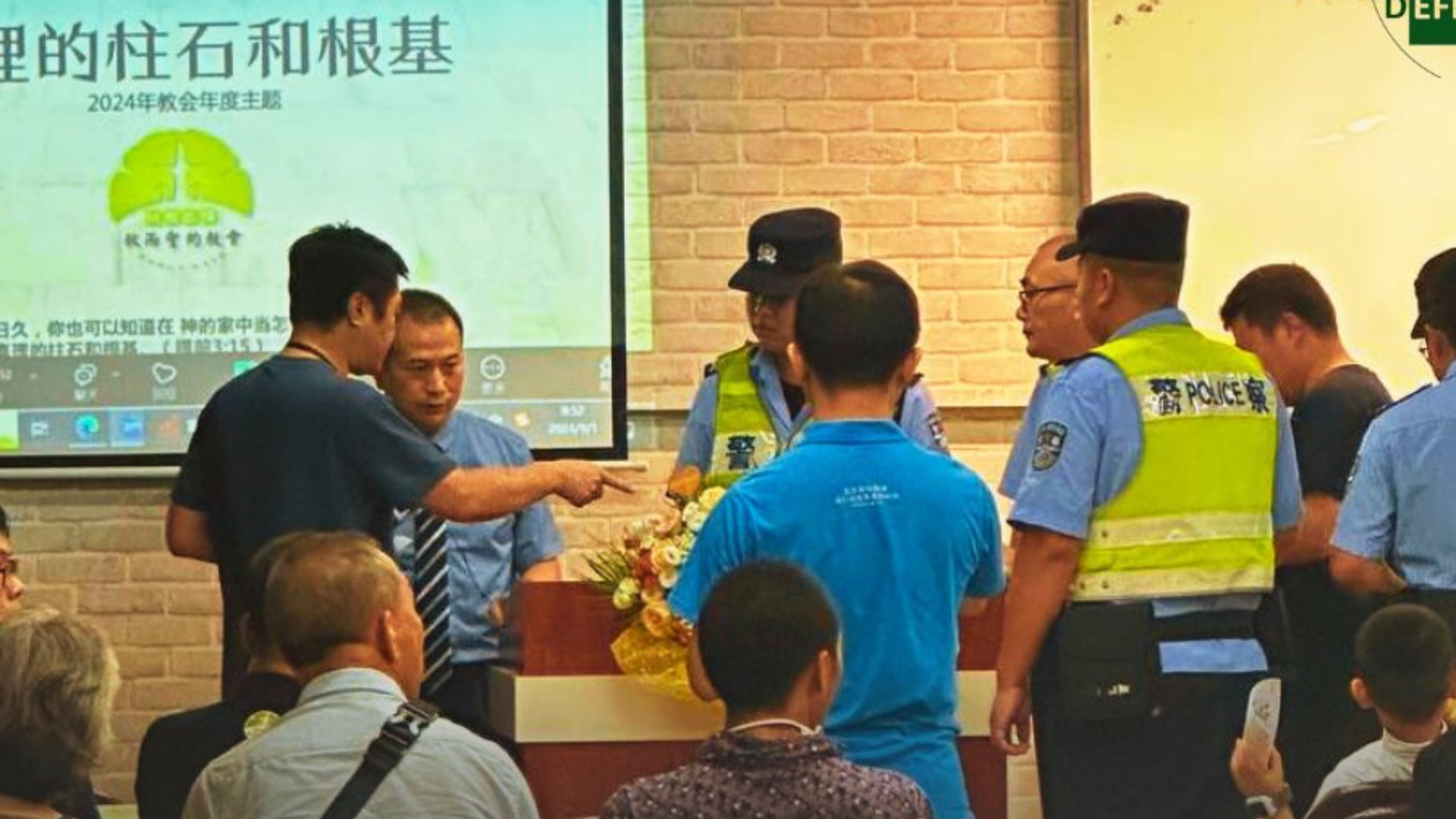
On the afternoon of September 11, a reading of the Charity Communion of the Church of the Holy Covenant of Chengdu was interrupted by the police. Photo media, citing church information, said that there were about 11 believers, mostly older than 60 years old, who read the publication "Going through suffering".
The next day, nine people were released. Wu and Shenyang were detained for 10 days by the administration for “illegal missionary organization” and fined 500 yuan and 300 yuan respectively. On September 22, the two men expired their detention.
原始来源 · chinaaid.net对华援助协会:吴五清与沈晓庆获释报道两人拘留期满获释及读书会被处置经过。chinaaid.net ↗How a book, a meeting place, becomes an administrative detention case
The most important question for the incident was not whether the police knew there were religious members on the scene, but the ratio between the behavior and the punishment. Public data showed that the activity on the scene was a reading meeting; the police then identified the behavior of the two as “illegal organization missionary” and directly made 10 days of administrative detention.
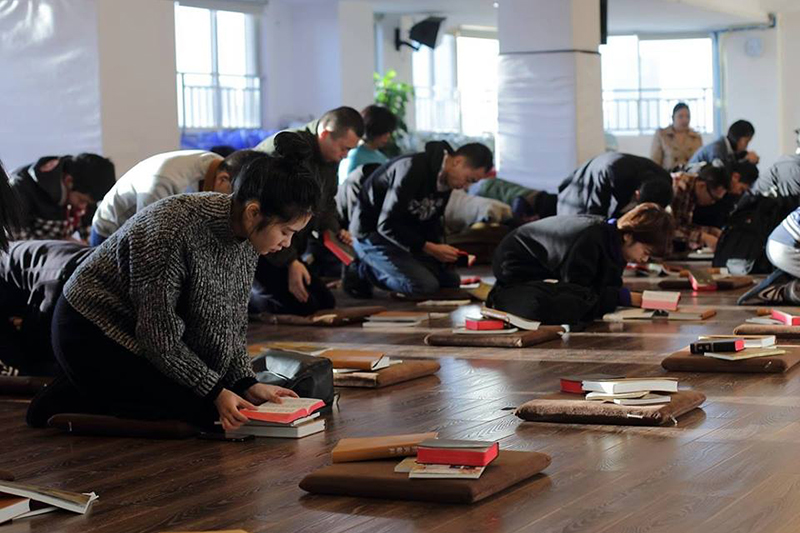
If the collective reading of a legal publication can be reinterpreted by the administration as “illegal mission,” then the boundaries are no longer determined by the activity itself, but are interpreted by the law enforcement on the spot. For family churches that do not enter the official religious system, this uncertainty means that any small gathering may be converted to a security punishment.
Detention 10 days, the actual transmission is the deterrent effect
The detention of Wu Qing and Shenyang has ended, but the effect of the punishment has not ended with the door opening. People's Living Observatory on September 23, that after the two were released, the Autumn Church of the Holy Covenant still faced pressures such as being forced to relocate; previously, church members were warned or summoned for calling the mayor's hotline complaint on law enforcement issues.
The effect of this treatment is direct: it doesn’t have to shut down the whole church, it doesn’t have to condemn everyone, it just requires detention of a handful of participants, fines, and the pressure to extend to housing, complaints and subsequent gatherings is enough to increase the personal cost of each participation in religious activities.
* Wu Five Qing has previously been taken away for church activities
Human Rights Defenders’ online public information shows that the Church of the Holy Covenant was also entered by police in September 2024, when Wu was taken away.The incident was not an accidental one-off law enforcement, but part of the church’s long-term conflict with local public security.
For its members, the national religious policy is not an abstract regulation, but is reflected in very specific scenarios: can a reading continue, who will be taken away, who will receive a decision on detention, who will be sought again because of complaints.
From the criminal label “Illegal Organization Mission” to see how executive authority expands the space of interpretation
Administrative detention is a punishment of direct deprivation of personal freedom. For such punishment, law enforcement agencies should explain the corresponding relationship between acts, evidence and legal provisions. It is easy to translate the right to punishment, which should be strictly limited, into a broad tool of religious administration, simply by referring to an “illegal organization’s missionary organization.”
Wu and Shenyang have returned home, but the real question of the incident remains: when religious activity is "legal" interpreted mainly by the administrative authorities on the spot, freedom of belief is no longer a stable right, but becomes a permit that can be withdrawn at any time.
Article discussion
Verified members can discuss this report publicly and manage their own content.
Checking member sign-in status…