

After a severe glacial collapse and flooding in the border area between Nepal and Tibet, videos and reports showing the disaster on the Tibetan side disappeared rapidly after the appearance of Chinese networks.The Australian Broadcasting Corporation (ABC) on August 29 that China's restrictions on press interviews and network information control over Tibet made it difficult for the outside world to independently verify the local disaster situation, and also restricted communication between disaster victims and the outside world.
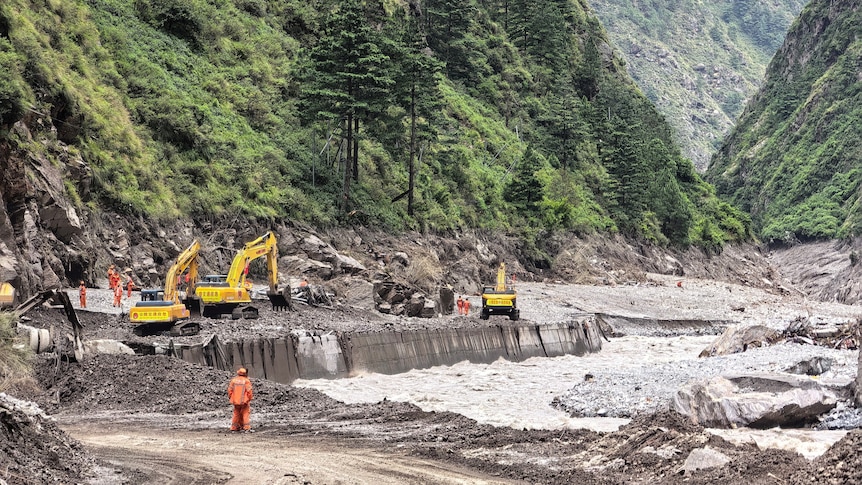
The image shows floods and mud streams hitting the border area on the Tibetan side. Image taken from the ABC report page, originally tagged with Reuters/China Daily.
The video disappeared quickly.
A surveillance footage showed that large amounts of ice, mud and floods hit the border gateway of Tibet to Nepal, and many escaped.The video once became an important on-site material for the outside world to understand the severity of the disaster, but then quickly became difficult to find on the Chinese network.
ABC analyzed this phenomenon in the context of China's long-standing cyber censorship system.The report noted that media and social platforms in China are strictly regulated, and content that does not meet official information management requirements may be restricted or removed.
It should be distinguished that ABC has confirmed the disappearance of the relevant video on the Chinese network, but the current public material does not disclose specific deletion orders for each disaster video or request information, so it can not be claimed that all relevant content is directly ordered by a government department to be deleted.
Foreign media interviews in Tibet rejected
ABC Chinese journalist Allyson Horn said in the report that after the disaster, she had repeatedly officially applied for interviews to Tibet disaster areas, including independent interviews and interviews to official organizations, but none were allowed.
According to her, the reasons China's foreign ministry gave were difficult conditions for local access and there was a risk of subsequent disasters.ABC also noted that other foreign journalists submitted an interview request to enter the disaster area was also rejected.
Despite the fact that post-catastrophe road damage, communication disruption and the risk of a second disaster may restrict journalists’ access, ABC believes that these objective difficulties do not fully explain the long-standing restrictions on foreign journalists’ access to Tibet.
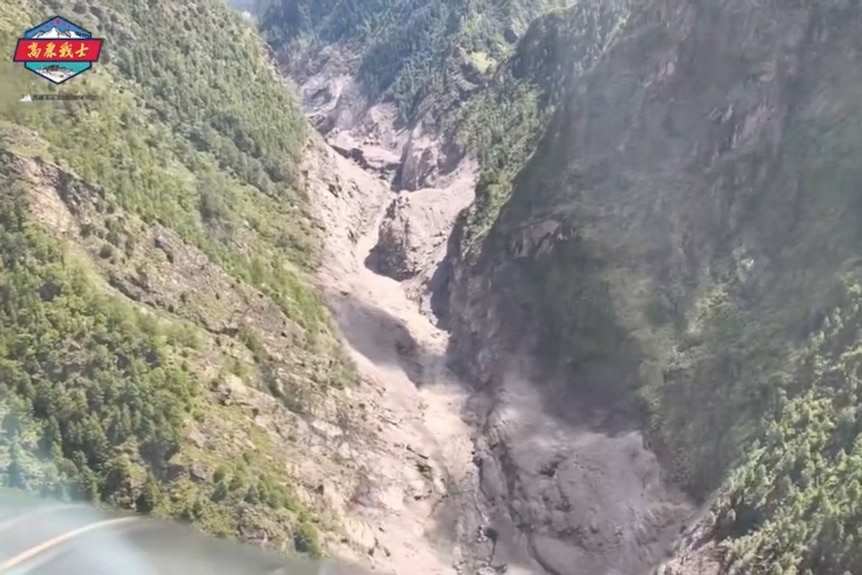
Image from the ABC report page, originally tagged as Reuters/PLA Tibet Military District/Handout.
Limited disclosure of personal information on the Tibetan side
Chinese authorities confirmed 558 people missing on the Tibetan side, including 260 foreigners, but did not further disclose the nationality of the missing foreigners and did not provide detailed information about the affected villages and residents.
In contrast, Nepal continues to publish more specific information such as missing tourists, travel groups and nationalities, and allows foreign journalists to enter the country to interview survivors and families of missing persons.
China's main official media has concentrated on the number of rescue personnel, road repairs and disaster rescue deployments.The report also mentioned that some smaller Chinese media had entered the disaster area and published interviews with local witnesses, but the relevant articles were withdrawn hours later.
Human rights groups worry about information control impact
The International Solidarity Movement for Tibet told ABC that some Tibetans may not dare to post disaster information and ask for help on social media because of concerns that the authorities will punish them.The group believes that in natural disasters, if information such as locations trapped, disappearances and road damage cannot be freely disseminated, it may affect the access of families and rescuers.
This is a ruling made by human rights organizations based on long-term observations, and it is not yet possible to attribute all the reasons for the non-posting or disappearance of individual residents to the threat of government punishment.
ABC also said it saw some Chinese netizens searching for help overseas on social media, hoping to get information that the mainland Chinese network could not access. One of the netizens tried to learn about a relative who worked on a construction site in the disaster area, and later learned from overseas information that the relevant site had been severely damaged.
Information disclosure in disasters
Chinese officials said they had deployed a large number of search and rescue forces and stressed that the road and on-site conditions were complicated and that Beijing had not given a more complete public explanation as to why foreign journalists continued to be unable to independently enter the disaster area, and why some disaster videos and reports disappeared from Chinese networks.
At present, it can be confirmed that severe floods and mud streams have caused mass disappearances; the ABC reporter himself has repeatedly applied for interviews in Tibet disaster areas and has been denied access; some live videos and Chinese media reports have become inaccessible after the release; and the disclosure of information on the disappeared and specific disaster-affected communities on the Tibetan side is clearly limited.
As for the specific review mechanisms behind each removal, where the removal instructions come from, and whether information controls have directly affected specific rescue operations, more public documents and independent evidence are needed to be verified.
Focus China will continue to track disappearance data in disaster areas, access to foreign journalists, deletion of online content and follow-up responses from relevant human rights organizations and Chinese officials.
Article discussion
Verified members can discuss this report publicly and manage their own content.
Checking member sign-in status…