

Beijing is expected to release new trade signals before Xi arrives in Washington. On 10 September, the Chinese business sector indicated that China and the United States were seeking to implement “at the earliest possible date” a reciprocal tariff reduction arrangement for some $30 billion in commodities; According to Xinhua, each party involved about $30 billion in commodities. United States President Trump and Xi are expected to meet in Washington on 24 September, which will be the third face-to-face contact in a year. At the same time, the tariff war, which escalated sharply last year, is still in a fragile truce, and the current arrangements will usher in new deadlines around 10 November.
This tariff exchange is more like a “risk management” rather than a return to old-fashioned Chinese-American relations. The choice of “non-sensitive goods” by both sides is precisely an indication that trade has been cut to two worlds: on the one hand, agriculture, consumer goods and manufacturing in general, which both sides are still willing to maintain; On the other hand, areas where it is increasingly difficult to move away from national security, such as chips, artificial intelligence, rare earth, advanced manufacturing and military-related technologies, are the most difficult. The logic of “more trade and more stable relations” in the past has been replaced by “what commodities can trade safely”.
$30 billion more politically than economies
原始来源 · apnews.com美联社:中国称希望尽早与美国就削减部分关税达成协议apnews.com ↗The Associated Press reported that the two sides were moving forward with negotiations on the establishment of a trade commission between China and the United States and that tariff cuts were an important part of that. Analysts have noted that, as tariffs, supply chain migration and enterprise risk have reduced bilateral trade dependence over the past few years, this size of tax reduction is not necessarily sufficient to reverse structural trends. However, it could create a tangible outcome for the Summit and send a signal to the market that both sides do not wish to resume a full-scale tariff war for the time being.
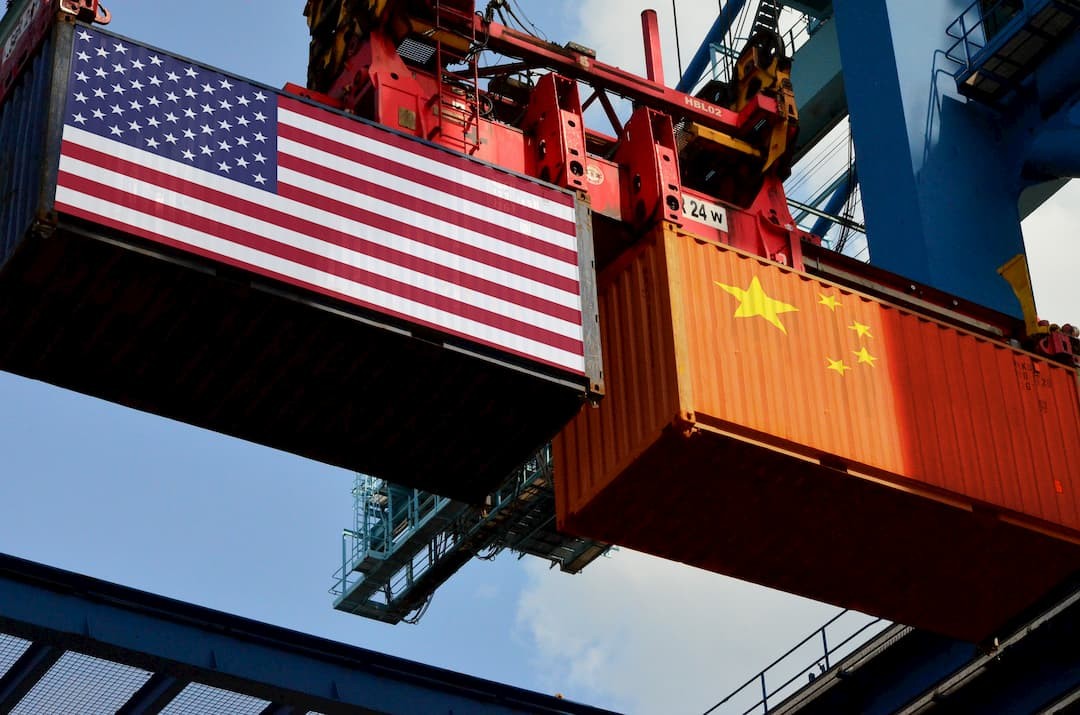
What is needed now is not mutual trust, but rather to avoid competition out of control. The value of tariff reductions begins with the establishment of a measurable buffer zone for such mistrust.
For the Trump Government, agricultural exports, manufacturing orders and inflationary pressures are all politically relevant. Reuters reported on 10 September that China had purchased about 1 million tons of United States soybeans this week, just before Xi was expected to visit the United States. Beijing, for its part, needs to stabilize external demand, avoid new tariff shocks and seek space for the United States to release some high-tech and investment restrictions. Both parties need “transactions” but are not prepared to give up strategic leverage.
Tariff battles have shifted from “how many rates” to “who controls the key nodes”
The first round of trade wars since 2018 has been mainly centred on deficits, market access and tariffs. Today, the core of the economic conflict between China and the United States has changed markedly. Washington is concerned with advanced chips, artificial intelligence, key minerals, excess capacity in Chinese manufacturing and security of investment in the United States; Beijing, for its part, has used rare earth exports, market access, agricultural procurement and vast manufacturing capacity as bargaining chips.
This means that even if the parties cut their tax rates on $30 billion for commodities, the following structural conflicts will not be automatically lifted:
-Technology controls: US will not easily ease restrictions on advanced chips, AI algorithms and sensitive equipment; - Key resources: Beijing still masters rare earth processing and some key supply chain advantages; - Industrial policy: China relies on national capital to expand new energy sources, chips and high-end manufacturing, while the United States and Europe are concerned about the spillover of production capacity; -Secret competition: Taiwan, the South China Sea and military technology will not be allowed to retreat because of trade concessions.
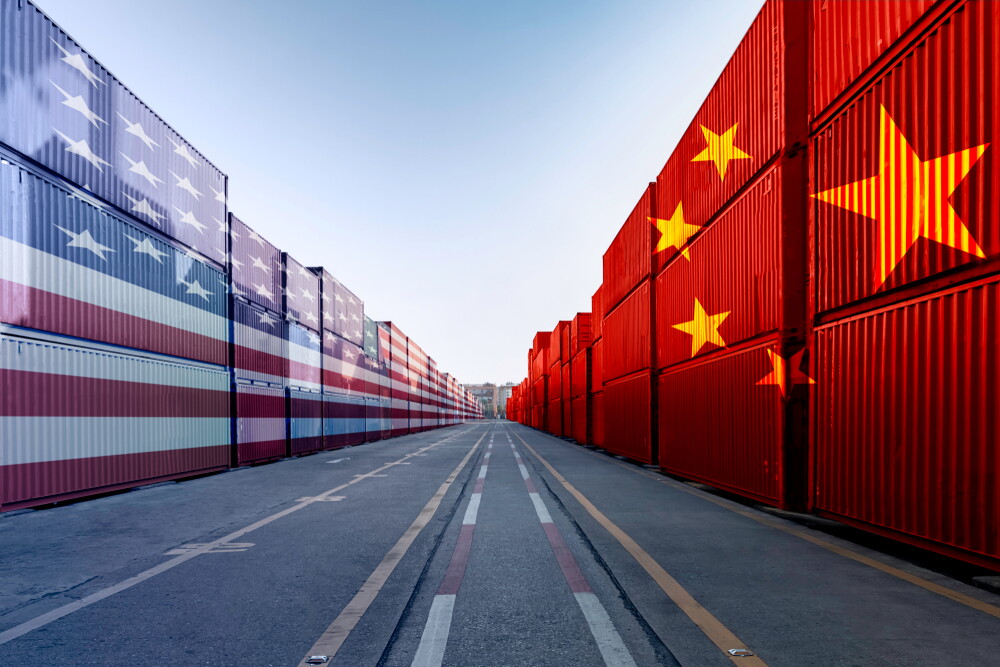
During a trip to China in May this year, China announced the establishment of a new trade and investment dialogue mechanism, and Beijing committed to expanding the procurement of American agricultural products, Boeing aircraft, etc. The White House described these arrangements as part of the “strategic stabilization” framework. The current $30 billion tariff negotiations are actually testing whether this framework can be transformed from a political statement by leaders into a sustainable rule.
Beijing needs to export, Washington needs controllable Chinese relations
China ' s exports grew by 25 per cent in August, with a trade surplus of $119.1 billion, and motor and semiconductor exports being particularly strong. While foreign trade continues to provide an engine of growth for the Chinese economy, it also increases the vigilance of the United States and Europe over the spillover of China ' s production capacity. At the same time, domestic real estate adjustment, under-consumption and local fiscal pressures have not been fully offset. For Beijing, it would be more practical than any diplomatic language to avoid another sudden closure of the United States market.
Trump, for his part, wants to turn the pressure on China into a visible return. If tariffs are exchanged for agricultural procurement, market opening and the supply of critical resources, the White House can package “pressure-trading” as a result without having to restore the almost out-of-control escalation of last year’s tax rate. This is also the difference between the Trump policy and the traditional engagement policy: the goal is not to end competition, but to make it price.
Focus China believes that what really deserves to be seen at the summit on 24 September is not whether the two leaders shake hands again, but whether the two sides can turn the temporary truce into a long-term “competition control mechanism”. Tariffs can be lowered, but the technical embargo will not disappear; Soybeans can be dealt with, but the Taiwan issue will not cool down; The Commission could be established, but the struggle between the two countries for ownership of the global industrial chain would continue.
As a result, $30 billion is not the starting point for a Chinese-American settlement, but the chips of a truce table. What both parties are doing is to minimize the short-term costs of long-term competition while preserving their strength for the next round of more difficult technology, industry and security games.
Article discussion
Verified members can discuss this report publicly and manage their own content.
Checking member sign-in status…