

A civil forfeiture suit published by the United States Department of Justice on 15 September linked Iran's sanctioned oil, Chinese buyers, Hong Kong incorporated companies and the global encryption money trading platform to the same financial chain. The United States prosecution sought to confiscate approximately $61 million in encrypted assets, which were from Iranian black market oil sales and were transferred through the Binance account of two Hong Kong-registered companies.
The significance of this case is not only that of another seizure of the encrypted currency. It shows how the sanctioned energy trade can break a single oil trade into a hard-to-trace financial flow through cross-border companies, digital assets and business nodes in Asia. The emergence of Hong Kong in this chain is particularly noteworthy: the prosecution ' s allegations against specific companies and accounts do not amount to direct involvement by the Hong Kong Government or Beijing, but it once again reveals how the highly internationalised company registration and financial infrastructure may be used by the sanctions circumventing networks.
原始来源 · justice.gov美国司法部:寻求没收逾6100万美元与伊朗石油销售有关的加密货币美国司法部公布民事没收诉讼及涉案资金链。justice.gov ↗The United States Department of Justice published litigation materials stating that the assets in question were related to the Iranian oil trade. The United States has long sanctioned the Iranian energy sector and considers the oil revenues involved as an important source of foreign exchange in Tehran. As the traditional banking system strengthens sanctions screening, the stabilization of currency, exchange accounts, cross-border trading companies and multiple-layer transfers are increasingly being pursued by law enforcement agencies.
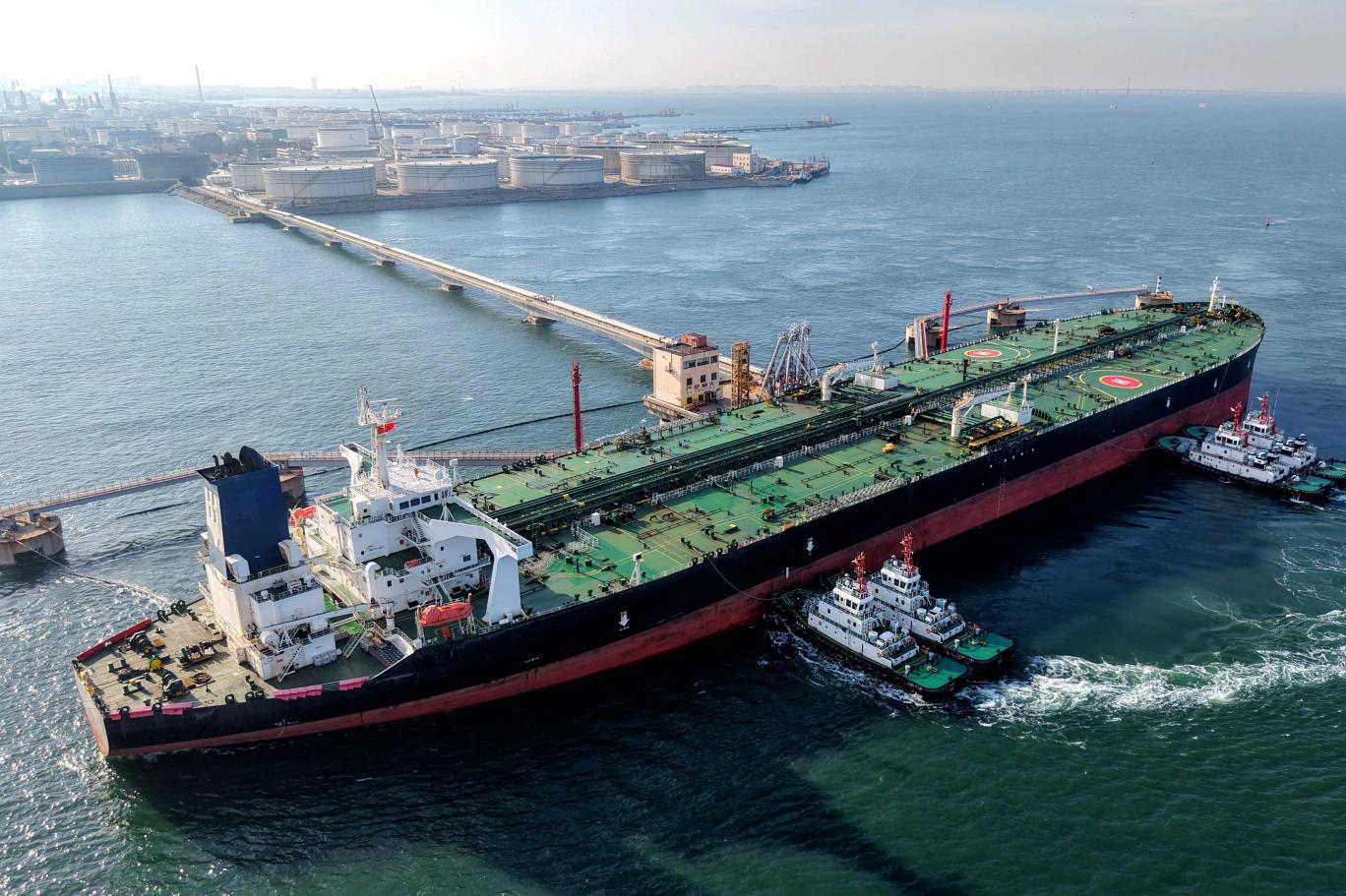
The case brought the Chinese factor into a more complex position. China has long been one of the most important final markets for Iranian crude oil. Under the United States sanctions system, trade is often not carried out in a transparent and direct general international settlement, but rather in the form of different arrangements for intermediate traders, re-identifying the source of the goods, ship-to-ship trans-shipment, non-United States dollar payments and digital assets. The US recovery is a equally crucial process after oil leaves Iran: how the money goes back.
原始来源 · reuters.comReuters路透社相关报道与国际制裁背景。reuters.com ↗Hong Kong companies are of concern not because “Hong Kong registration” can prove political responsibility per se, but because Hong Kong has a mature corporate service, international trade and cross-border financial infrastructure. Such business centres are natural for networks that need to convert, dismantle and cross-border transfer of energy revenues. Where there is a lack of sufficient transparency as to the actual operation of the company, the end-beneficiary and the use of the funds, the legitimate business infrastructure may be embedded in a chain of sanctions circumvention.
Binance was also a key technical node in the financial path in the case. The legal responsibility of the exchange itself must be distinguished from that of the account user, but centralized trading platforms have access to account registration, chain addresses, log-in and transaction records, which also serve as an important entry point for law enforcement agencies to link block-chain funds to real identity. Digital assets do not “disappear” the funds naturally; Conversely, once law enforcement has access to exchange data and has completed chain tracking, large-scale currency stabilization transfers can leave a more continuous technical trajectory than cash.
The United States has continued to use this tracking capability in Iran, the Democratic People ' s Republic of Korea and other sanctioned networks in recent years. Its policy logic has been extended from blocking bank remittances to the recovery of digital assets in wallets. Risks change for networks that rely on intermediaries and encrypted assets to bypass the dollar financial system: transactions can avoid traditional banks temporarily, but not necessarily block chain analysis, exchange compliance information and judicial seizure.
This has also exposed Hong Kong to a problem of direct relevance to its international financial centre status. After the implementation of the National Security Law and the re-establishment of the political system in Hong Kong, Beijing has continuously stressed that Hong Kong still has a separate customs area, common law tradition and international financial functions; Meanwhile, political and economic ties between Hong Kong and Mainland China continue to deepen. International business networks value this connectivity, and grey trade networks may also take advantage of it. It is not political propaganda that really determines whether Hong Kong will maintain its financial credibility, but whether it will be able to keep track and enforce the beneficial ownership of companies, the anti-money-laundering regime and cross-border financial flows.
In the larger geopolitical context, China ' s relations with Iran have both energy and strategic attributes. Beijing opposes unilateral United States sanctions and maintains economic, commercial and diplomatic relations with Tehran; Iran needs a stable oil export market to generate fiscal and foreign exchange earnings. Under this structure, United States sanctions and trade with China-Iraq will not simply stop the transaction, but will continue to drive the way to a more subtle and complex system of intermediaries.
This is the observation value of $61 million in recovery cases. The other end is the Chinese market, with Hong Kong registered companies, exchange accounts and encrypted assets. Modern sanctions evasion is not as simple as a tanker's clandestine porting, but a set of cross-border infrastructure that combines physical trade, corporate identity and digital finance.
For Beijing, such a network also reveals a real contradiction in its foreign policy: China wants to expand the renminbi, digital finance and non-Western settlement system in order to reduce the United States ' control over the global financial system; But as long as a large number of international transactions still require access to the financial, exchange and compliance systems influenced by the United States and its allies, Washington can still use judicial confiscation, secondary sanctions and chain-based tracking to exert pressure.
Hong Kong is at the crossroads of this competition. It is both a major gateway to global capital in China and a registration and settlement site for a large number of cross-border trading companies. When the oil revenues of the sanctions are able to access the network of encrypted assets through Hong Kong companies, the problem goes beyond the suspected illegality of a single company: the conflict between global financial openness and the power-driven, sanctioned regime seeking alternative funding channels is taking place at international nodes like Hong Kong.
Ultimately, the case still requires judicial proceedings to determine the legal attribution of the assets involved and the related subject ' s responsibility. But the financial path disclosed by the United States prosecution has shown that the Iranian oil sanctions war is extending from the “shadow fleet” at sea to the digital wallets in the chain. Oil can be renamed, re-shipped and trans-shipped, and funds can be converted from corporate to stable currency layers; However, each additional intermediate node would add new records, accounts and jurisdictional interfaces. The $61 million is not the size of the entire Iranian oil trade, but a slice that shows how the Chinese market, Hong Kong companies, and encrypted finance are simultaneously present in a chain of sanctions circumvention.
Article discussion
Verified members can discuss this report publicly and manage their own content.
Checking member sign-in status…