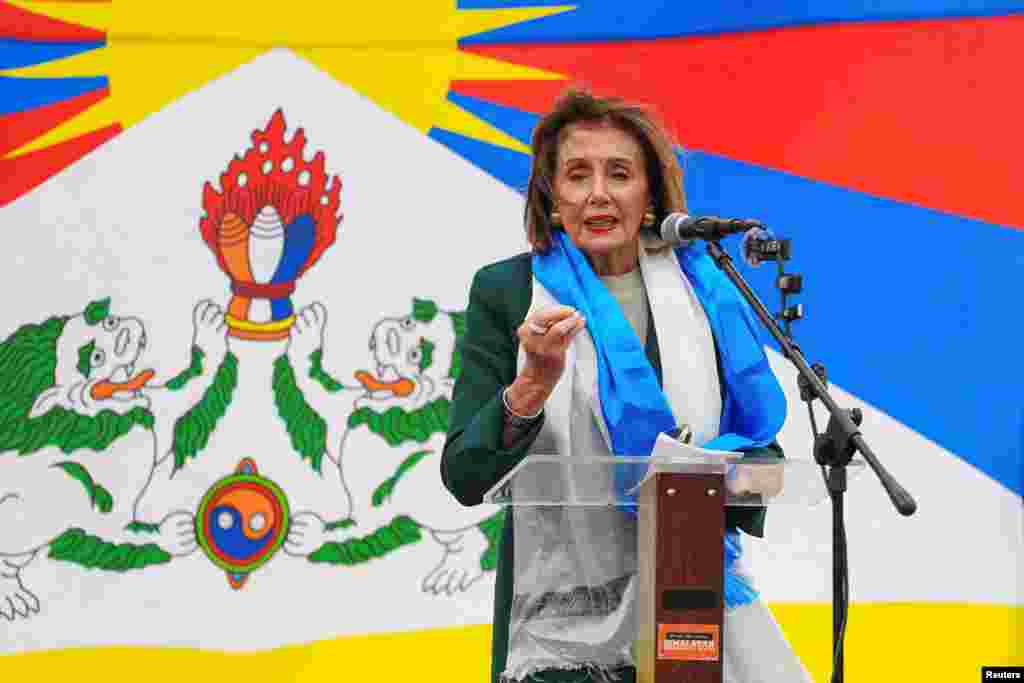
Chinese President Xi Jinping concluded his State visit to the United States on 25 September. While the White House meetings, the State Dinner and the National Archives were well-reported by official authorities, protests involving Hong Kong, Taiwan, Tibet, Uighur and religious groups continued in the streets of Washington. On the 25th of September, live reports of protesters gathering around the Chinese Embassy in the United States, around the White House and near Congress included political cases in Hong Kong, Xinjiang Human Rights, Tibetan religious and cultural rights, allegations of persecution of Falun Gong and the issue of political prisoners in China.
White House protocol goes hand in hand with street protests
The visit, published on 26 September by the Chinese Foreign Ministry and Xinhua, concluded that Xi had met with the President of the United States of America, Trump, and visited the United States National Archives in Washington, D.C., and left the United States in the afternoon of 25 days. China's coverage focused on bilateral relations, economic and trade gains and protocol arrangements.
Meanwhile, Voice of America journalists in Washington recorded the continued build-up of protesters along their journeys following the arrival of a number of self-proclaimers, Xi Jinping. On the evening of 24 September, hundreds of members of Hong Kong, Taiwan, Tibet and others demonstrated around the White House; There were also meetings of Falun Gong practitioners in front of the United States Navy Memorial Plaza.
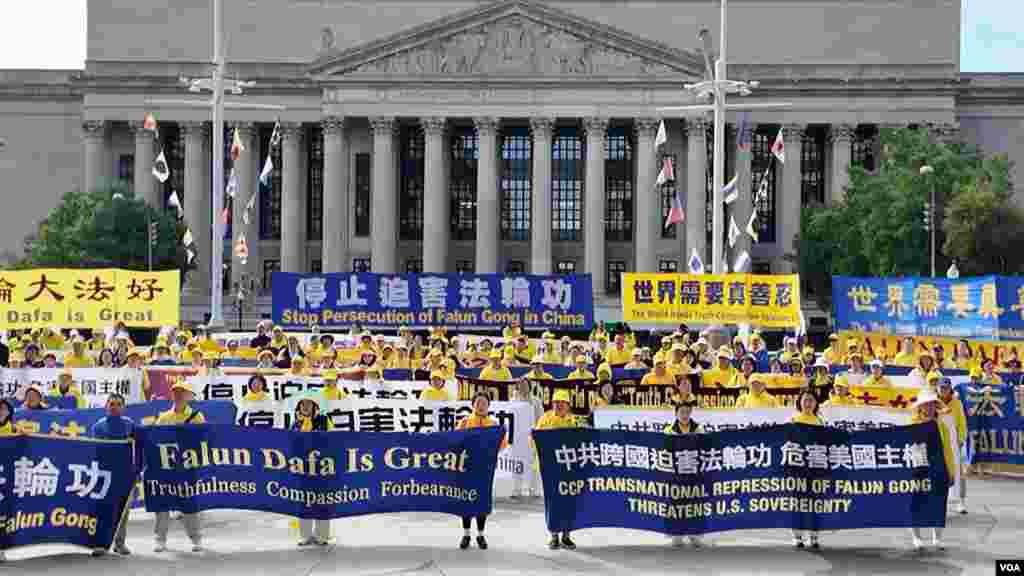
Protesters took cases from China to the Summit site
The Uighur, human rights and religious groups participating in the event brought a number of long-standing cases to the public agenda. In an interview with the Voice of America, the Executive Director of the Uighur Movement, Zoixen Abbas, mentioned that her sister, Gulishen Abbas, was still in detention by the Chinese Government. Hong Kong activists have protested around the national security laws, political cases and overseas wanted persons.
These groups have a clear and critical position against the human rights record of the Chinese Government. The Chinese Government has long denied allegations of “systematic persecution” in Xinjiang and has argued that Hong Kong's national security case is a matter of national security in accordance with the law. Both claims continued during the visit.
Protests also stand in opposition
During the visit, the presence of the family of Xi Jinping in the streets of Washington was welcomed along with the opposition. Voice of America photo reports indicate that the two sides are close to each other in some locations and that the police and the National Guard maintain order on the ground. Videos of push or dispute between the parties are also available online, but different sections lack complete context and are not used to judge specific responsibilities.
In the report of the end of the visit, Chinese officials reported that Chinese nationals and student representatives had been waving their flags at the United States and China to welcome Xi. Opponents questioned whether some of the welcome events had been organized. The public information at this stage confirms that both sides are involved in an organized manner and that there is insufficient evidence to support general conclusions with regard to the sources of personnel, funding and the modalities of specific mobilization.
原始来源 · fmprc.gov.cn中国外交部:习近平与特朗普夫妇在白宫茶叙中方9月26日发布的官方访问记录。fmprc.gov.cn ↗Human rights issues did not leave the delegation at the end of the Summit
In the light of the events themselves, the protests in the streets of Washington did not change the summit agenda, but it brought issues such as Hong Kong, Xinjiang, Tibet, religious freedom and political prisoners to the same public space as the Head of State’s visit. The supporters saw these gatherings as an expression of freedom of expression and assembly in American society; The Chinese Government, for its part, has consistently opposed its alleged interference in China ' s internal affairs through human rights issues.
Xi has concluded this visit, but the controversy over human rights in China, cross-border pressure and political mobilization abroad will continue. The factual boundaries of the dispute relating to the visit can be further determined in the event of a subsequent police law enforcement record, protest against the conflict investigation or the organization ' s mobilization of information.
Article discussion
Verified members can discuss this report publicly and manage their own content.
Checking member sign-in status…