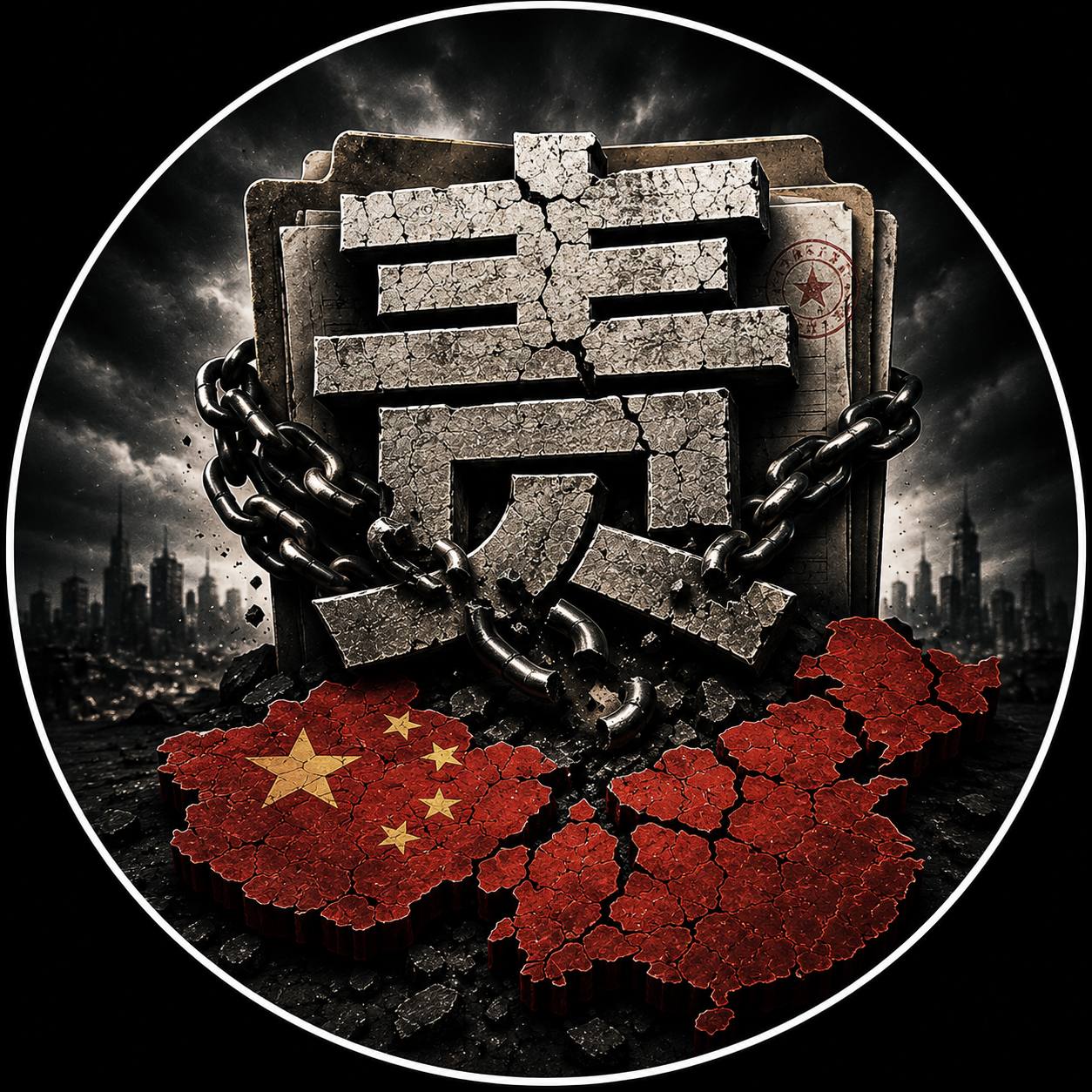
On 2 September 2026, citizen journalists spent their birthday in prison. Within one day, Hong Kong democracy activist Wong Sing again pleaded guilty to “collaboration with foreign powers” in the High Court of Hong Kong. Two people, two cities and two seemingly different legal systems, have a more and more similar political reality: under Xi Jinping, once a person has been identified by the regime as a dissident with continuing political influence, the completion of a sentence does not mean the end of political punishment, nor does release mean the restoration of normal citizenship. After the old cases have been completed, new surveillance, new charges and new sentences can be imposed until a person ' s public ability to express, organize and influence is completely depleted.
The term “lifetime crime” here refers not to the existence of a crime under the Chinese or Hong Kong law, which is known as the “lifetime dissent crime”, but rather to a political governance model that is becoming increasingly clear: dissent itself is considered a continuing security risk, and the punishment no longer ends with a single sentence, but extends to long-term surveillance, rearrest, re-prosecution and expanding national security vetting.
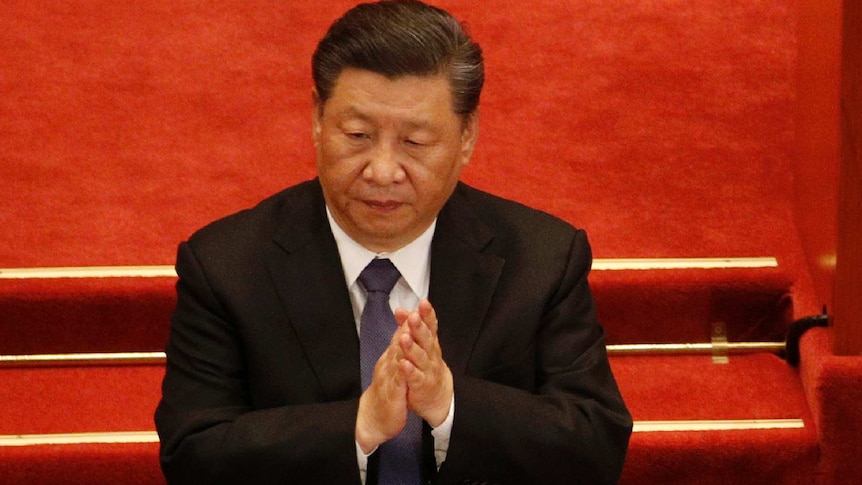
The experience of Chang is one of the most representative cases of this model in mainland China; The position of Wong Wing shows that Hong Kong is increasingly entering the same political logic.
Zhang's show is less than four months old and he's back in jail: "I'm finished with my sentence" and he's not free.
For the first time, Zhang was widely recognized by the international community because she travelled to the region in the early days of the Wuhan outbreak in 2020 to film, interview and publish live information as a citizen journalist. She was subsequently detained by the Shanghai police and sentenced to four years in December 2020 for “scathing”.
In May 2024, the first four-year sentence was served on Zhang ' s show. In any normal criminal justice logic, she has completed the sentence imposed by the Court and the restoration of liberty should have been the end of the case.
This is not the case at all.
Amnesty International has documented that after his release, Zhang was subjected to strict monitoring and continued harassment. (b) At the end of August 2024, she reportedly went to Gansu to express her solidarity with other human rights defenders and has since been lost in contact again; It was later confirmed that she was again detained by the Shanghai police. On 19 September 2025, the People's Court of the East Province of Shanghai again sentenced her to four years' imprisonment for “scathing”. That is, after her first four years in prison, she was only briefly given a few months of freedom and faced the same length of her sentence again.

In re-combineting the case in August this year, RSF stated that the prosecution's allegations in the second case included her publication in social media of a large number of “false information” officially identified as damaging to the image of the country. It also documented that Zhang was rearrested on 28 August 2024, sentenced to four years in 2025 after being tried in closed session and denied access to a lawyer of his choice in 2026.
This is the most interesting part of the case.
If a person has been free for four years because of his or her expression, then she continues to be watched after the sentence has been served; If she again expresses her opinion, she is again returned to prison on the same very broad charges, which have the practical effect of far more than the punishment for a specific act. It creates a clear political deterrent: the first sentence may not be the last, as long as you do not stop expressing it, and as long as you remain socially influential.
Amnesty International therefore explicitly believes that Zhang ' s second conviction is linked to her continued defence of human rights, her refusal to remain silent and her request for annulment and immediate release. RSF claimed that the second case was based on false allegations. These are the assessments of international human rights bodies and are not the findings of Chinese courts themselves, but constitute important external evidence to observe the nature of the case.
More worrying is the health and conditions of detention of her. (a) Amnesty International stated that the hunger strike that preceded the demonstration had been long and that the weight of the first sentence had dropped to about 37 kg; A hunger strike and suspected forced feeding were also reported after the second detention. In March this year, RSF stated that she was still on a partial hunger strike and needed appropriate medical care.
This is not a simple picture of “offender serving a sentence” in ordinary criminal cases, but rather a political conflict between the Government and a citizen who refuses to stop expressing his views for many years.
Xi Jinping's most dangerous juridical logic: you didn't do anything, but you were not the “uncontrollable person”
The importance of the show is not only because a journalist is in prison for the second time, but because she is a central expression of a change in the political control of Xi in the near-ping era: national security and social stability are increasingly placed before the fundamental rights of the individual, and “the acceptance of political control by the Communist Party” is becoming an important yardstick for determining the level of risk to a person.
In the traditional criminal justice logic, the criminal act must be as specific as possible: when, where, what acts were committed and what legal consequences were involved. But politically sensitive offences such as “silent state power” “inciting subversion” “harming state security” have long been criticized by human rights organizations in China's security system for their broad scope and scope.
The greatest danger of such a system is not just that one sentence is too heavy, but that it allows law enforcement agencies to constantly redefine a person ' s long-term political position, public expression and social networks as new risks.
Zhang Chang's first arrest was related to the Wuhan outbreak report. The second sentence was imposed against a backdrop of her continued involvement in public expression and solidarity with other human rights activists after her release. Thus, the real punishment is not just some online information, but her refusal to disappear from the public domain after the first four years of imprisonment.
From a political governance perspective, this model is very clear: imprisonment is not only a punishment of the past, but also a force to change the behaviour of the future. Once such “reform” has not achieved its purpose, new judicial proceedings may be initiated again.
That is why “release” does not amount to a genuine restoration of freedom for many Chinese dissidents, human rights lawyers and citizen journalists.
Yellow Beige: the original sentence is not over and the new security offence is punishable by life imprisonment
The day after the beginning, almost the same political logic emerged in Hong Kong.
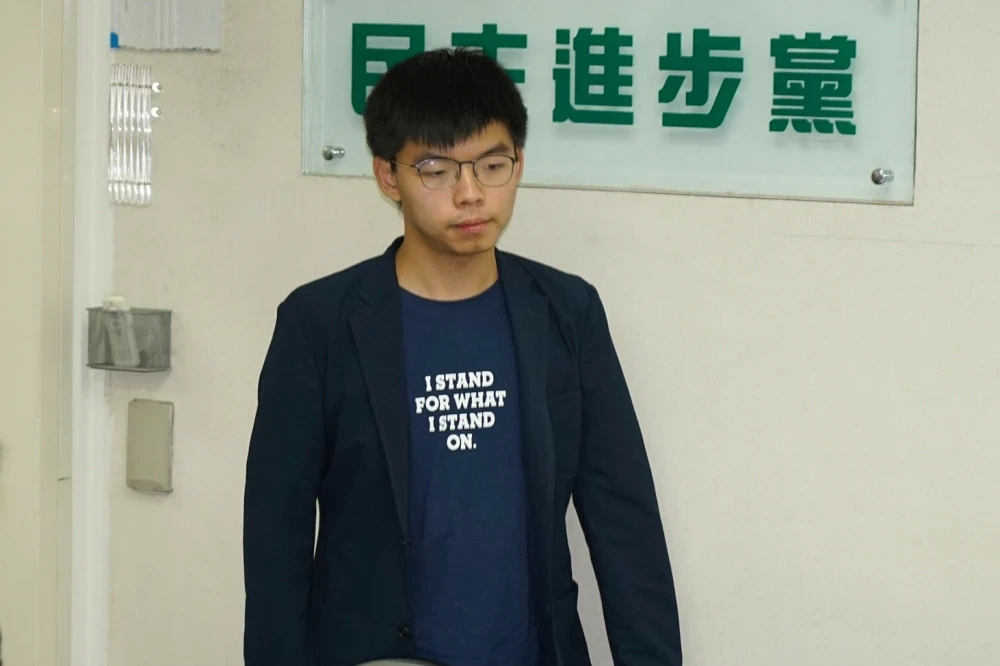
On 2 September, Wong Nobing, 29, admitted to the High Court of Hong Kong on a charge of “collusion with foreign forces”. According to court documents and Reuters, the prosecution accused him of seeking sanctions, blockades or other actions deemed hostile against Hong Kong and China by foreign Governments, institutions or individuals in 2020, together with Rongqian and others.
The maximum penalty for such offences under the National Security Act is life imprisonment. The court has not yet pronounced a sentence and cannot therefore write down that “maximum life sentence” has been imposed on him for life.
The problem is that Wong Wing is not a person awaiting his first sentence.
He is currently in prison and has been sentenced for four years and eight months for “coercion to overthrow the state's power” in the early 2020 elections for the Hong Kong Democratic Party. Reuters reported that his original sentence was expected to end next year. Today, he faces a second set of national security criminal proceedings, while the first national security offence has not yet been completed.
In legal form, these are two different cases and different charges, which should be judged separately, and it cannot be assumed that a new case would necessarily amount to political persecution because a person had previously been imprisoned.
But in terms of political effects, a problem that cannot be ignored has arisen: a person who has been involved in the Hong Kong Democratic Movement since he was a teenager, before completing a political-related sentence, has entered a new, potentially life-in-life sentence for past political activities.
In other words, even if the original sentence of Wong Gym was completed, he would not necessarily be able to leave the prison.
This is where the political metaphor of “lifetime crime” began to appear in Hong Kong. (a) The historical political identity of a person, which allows for continuous access to subsequent criminal justice processes; Past speeches, international contacts, political organization and electoral operations could all become new material for national security allegations.
Beijing has made the National Security Law, and the Li's government is responsible for making it the day-to-day government of Hong Kong
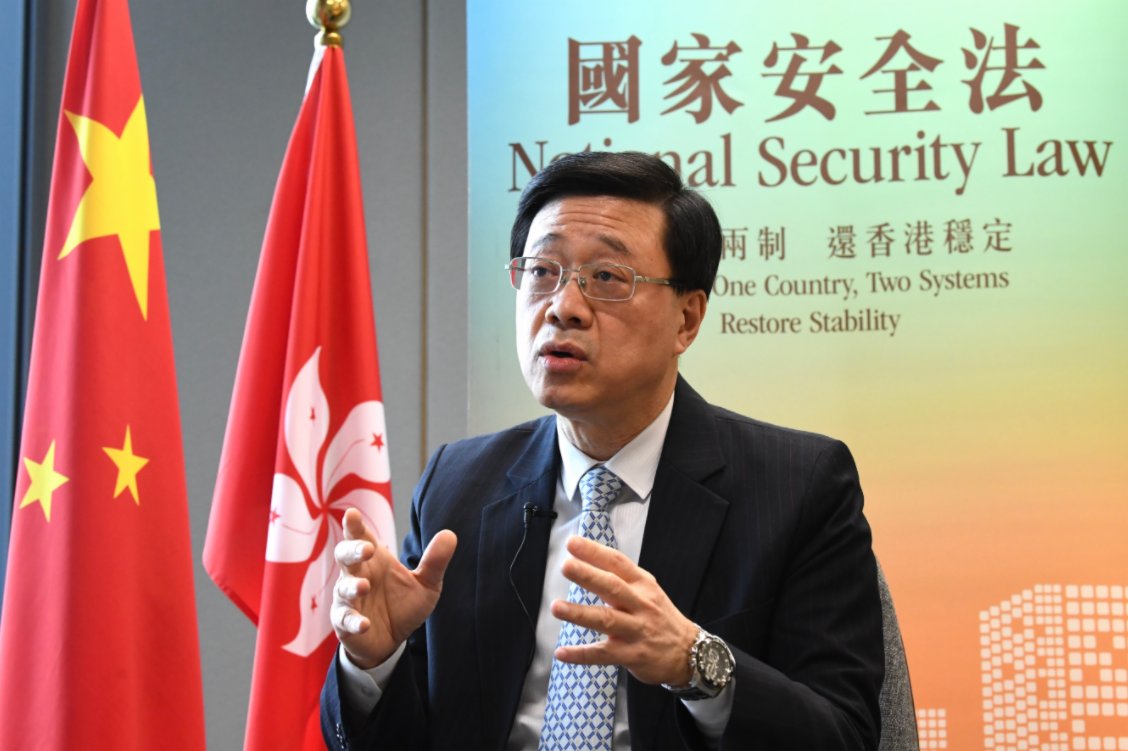
It is equally incomplete to simply blame Hong Kong's “courts” for what is happening today.
The National Security Act of 2020 was not enacted by the Hong Kong Legislative Council but by the Standing Committee of the Beijing National People ' s Congress and was directly implemented in Hong Kong. The National Security Act establishes not just a few new offences, but a new set of political-security-judicial structures.
One of the most symbolic systems is the “appointment of judges” system in national security cases.
Article 44 of the National Security Act clearly provides that the Chief Executive of Hong Kong shall be responsible for appointing judges from among the judges of the courts at all levels to deal with cases of crimes against national security; The judges are appointed for a period of one year. The system is also publicly documented in the Hong Kong Government ' s own national security law case-law information.
This means that the Chief Executive, while not deciding how to convict a particular case, has the legal power to designate “who enters the national security system”.
As such, he is not a symbol of Hong Kong's government of State security, far from the judicial process.
More importantly, the Li Jia Chao Government did not maintain minimum implementation under the Beijing National Security Law 2020, but in 2024 it furthered the completion of local legislation under article 23 of the Basic Law. The Regulation on the Maintenance of National Security entered into force on 23 March
- Li Kao-chul publicly stated that this was a “historical mission” for Hong Kong and stated that the HKSAR Government had not failed the trust of the Central Government and the State.
By 2026, the national security system was still being refined. The Hong Kong Government again amended the implementing regulations of Article 43 of the National Security Act in March this year; In June, Jia Chao Lee publicly stated that the Government continued to further clarify through subsidiary legislation which crimes were crimes against national security. The HKSAR Government, for its part, emphasizes that these measures do not add new offences, powers or penalties, but rather are intended to reduce the controversy in the courts as to what constitutes a national security offence.
These official interpretations must be recorded in the true light.
But it is also important to note that the Li's government has itself explicitly embedded “the maintenance of national security” in the entire government system. Its policy document requires all bureaux and departments to review codes, guidelines and procedures to ensure that national security responsibilities are met and to emphasize the responsibility of public officials to maintain national security.
Thus, “Hong Kong is replicating the pattern of political repression in the mainland” does not mean that Hong Kong is already in legal form exactly the same as mainland China. Hong Kong still has a common law system and a different judicial system from that of the mainland.
The real convergence is the basic principles of political governance: the definition of national security is expanding, the administrative system is assuming responsibility for proactively identifying and protecting against political risks, while political organizations, public expression, international contacts and activities against the central Government are increasingly being made more accessible to security and criminalization.
Li Jia-Chai is not a bystander of Beijing policy, but a political executive of Hong Kong's national security system
The evaluation of Li Jia-Chai's responsibility requires that a common error be avoided: since the Hong Kong National Security Law is from Beijing, the HKSAR Government is simply “forced to enforce” and therefore does not assume independent political responsibility.
This statement is not in keeping with the public facts.
The Li Jia-chul not only implements the National Security Law enacted in Beijing, but also takes the initiative to promote 23 pieces of legislation; The Chief Executive is the Chairman of the Hong Kong National Security Council and has statutory functions such as designated judges in national security cases, in accordance with the law. Li also repeatedly described the governance of the country as a necessary condition for Hong Kong to be “disturbed” to “regulated”, “regulated” and “surged”.
The Government of Hong Kong's 2025 Governance Report again stated that Hong Kong had “better-to-be-disturbed” since the implementation of the NSA and that the Government would continue to apply a “general national security concept” and be vigilant and risk-proof.
This language is already very much in line with the “general national security concept” of the Xi Jinping continental governance system.
The political responsibility of the Li Taicai regime is therefore not whether he personally decides to establish Wong Wing as a specific charge — which is the responsibility of the courts — but rather that he is one of the highest executives in the governance structure of Hong Kong's national security, which is extended, maintained and institutionalized.
It is a clear political choice to move from a city where rights and freedoms are the basic boundaries of governance to one where national security is the primary framework for the interpretation of political activities.
Li can't claim to have fulfilled the “historical mission” of national security while at the same time putting full responsibility before the courts or Beijing when the international community criticizes Hong Kong's deteriorating political freedom.
From “Searching” to “Conspiracy with foreign forces”, the two legal titles are based on the same fear of domination
The case of Chang and Wong Gwing is not directly related to the law.
One occurred in Shanghai and centred on “silent search”; Another occurred in Hong Kong, with the “collaboration with foreign forces” in the National Security Act at its core.
However, from the perspective of political governance, the two cases show a high degree of cautionary resemblance.
Zhang ' s first prison sentence did not lead to a “closure” in the political sense, because she still spoke when she came out; Huang Noboa has already served his sentence in the Democratic primaries and has not thus ended the prosecution of his previous political activities by the State security system.
The regime seems to have addressed more than just a specific act, but rather a more fundamental question: how to get a rallying dissenter out of public space permanently.
This is also one of the most typical logics of a system of power when dealing with objections.
What is really disturbing to a highly centralized regime is often not a single sentence of criticism, but the evidence that ordinary citizens can form their own information networks, social organizations and political actions without the consent of the party and the Government.
The danger of the show is that she travels to Wuhan with a common citizenship to record the scene that the country does not want to see from outside.
The danger of Huang's death lies in his proof, from the student age, that young people can organize their own political movements, form political parties, participate in elections and bring Hong Kong's political issues to the international community.
The case of both individuals therefore ultimately points to the same question: who has the right to define the public truth, who has the right to organize society and who has the right to communicate with the world.
The answers given by Xi's regime are increasingly clear — these powers must be subordinate to the political security of the ruling party.
The right of citizens to an independent political identity is the subject of a genuine “lifeless” sentence
Zhang Chang was sentenced to four years for the second time, and the second national security case of Wong Dynasty has not yet been sentenced. There is no reason, strictly based on the judicial facts, to say that both men were sentenced to “life imprisonment”.
But political “life sentences” do not necessarily require the court to write the words “life imprisonment” in its judgement.
(b) The continuous surveillance of a person after the first sentence has been served; When you make a sound again, you can get caught again. (a) When old political activities can be a new criminal case on a continuous basis; When a person ' s name is considered a long-term risk by the security system itself, then it is the real and indefinite limitation of the possibility of the person ' s being in society as an independent citizen.
This is the most alarming place to put the cases of Chang and Wong Gybong together.
China has long developed a long-term security mechanism for the control of dissidents from surveillance, summonses, detention, prosecution, sentencing and the completion of sentences. Hong Kong has had a clear institutional distance from this system, but it is narrowing after Beijing in 2020 pushed the country to the AN law, the Li's super-government completed 23 pieces of legislation and continued to expand national security governance.
The Beijing side and the Hong Kong Government would like to stress that all actions are conducted in accordance with the law and that the national security laws are directed at acts against national security, not at political opinions; The Li Government also maintains that the national security system has brought stability and prosperity to Hong Kong. This position should be recorded.
But whether a Government truly respects freedom depends not only on how it describes its own laws, but on what happens to those who criticize the Government, demand democracy and report on sensitive events.
Zhang Xiaoxing answered some of the questions in two periods of eight years ' imprisonment.
Yellow Wing is answering another part of the sentence of uncompleted imprisonment.
The most alarming change in Xi's era is not just the number of arrests and the number of laws that have been enacted, but the opposition is increasingly being redefined from a political expression protected by constitutional and international human rights norms as a “security issue” that must be addressed in the long term.
Hong Kong, which is under the authority of the Li, is moving towards this logic from a city that was clearly different from the mainland political justice model.
(b) When a regime must repeatedly detain persons who have already served their sentences in order to ensure that they do not speak out; When a city must expand its national security laws to ensure that opponents cannot be re-organized, it is not political confidence but a deeper fact: what Xi is really afraid of is never an exhibition or a yellow front, but rather an ordinary person who found himself entitled to say “no”.
Article discussion
Verified members can discuss this report publicly and manage their own content.
Checking member sign-in status…