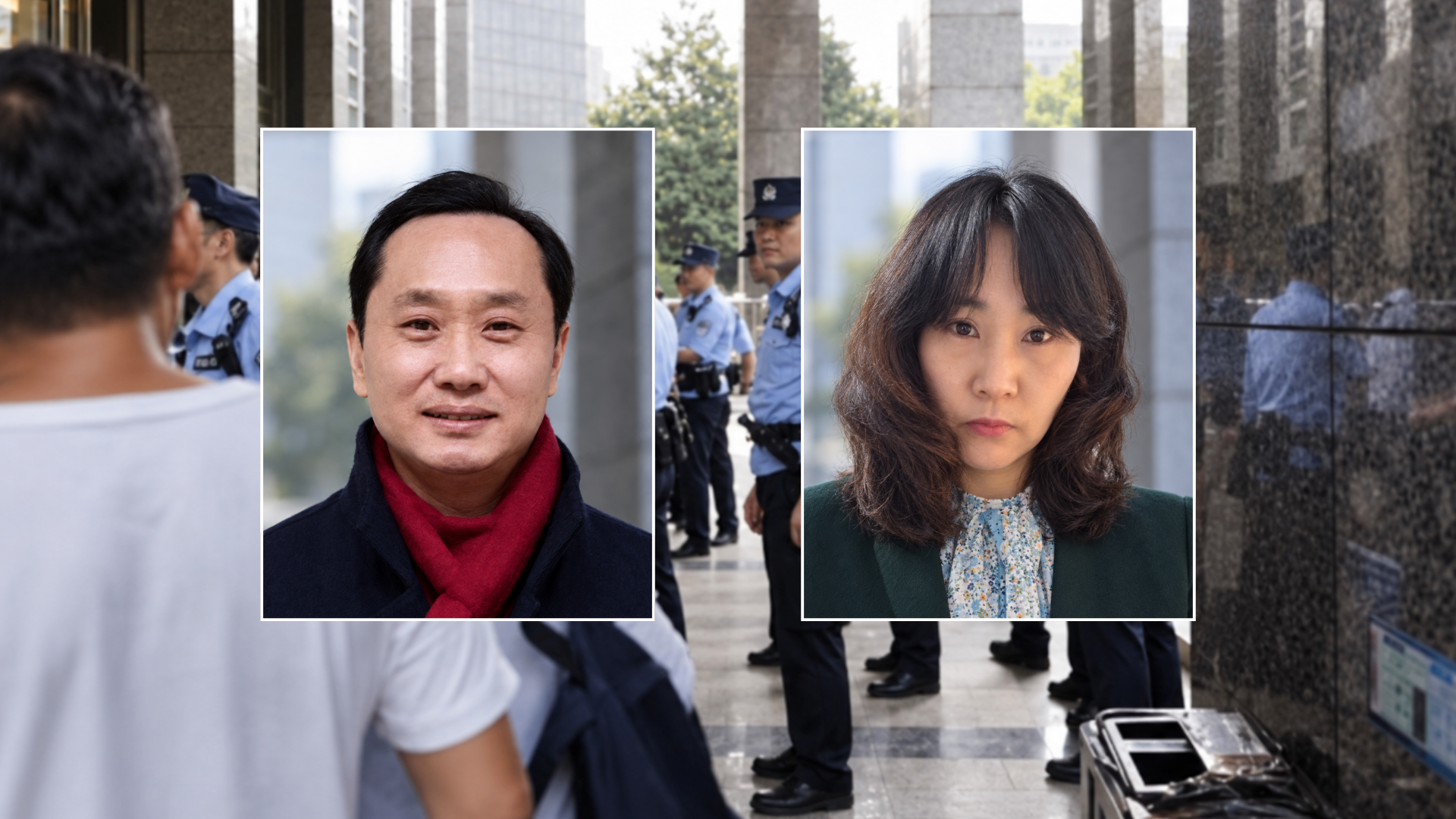
When the Beijing Qa ' Qa ' rith was preparing to celebrate its twentieth anniversary, it was not a general religious examination. The wife of pastor Zhou Zhou Zhou Hsien (belong Choi Fung) revealed that on the afternoon of 4 September, some 50 believers were setting up a meeting room in a hotel conference room in Beijing, with over 100 policemen and plainclothes auxiliary police surrounding the scene, registering the identity card, address and telephone number of the believer and taking their fellow workers from the church. During a few days, the entry and departure of persons was followed by the entry into criminal detention of Zhou Zhou Zhou and seven of his colleagues on suspicion of “fraud”.
As at 30 September, no public sources had been able to see the Beijing police to disclose the places of detention of eight persons, the alleged amount of fraud, the source or the specific victim, or the prosecution ' s indictment. In a public letter dated 29 September, ChinaAid reported that the family believed that the alleged fraud investigation had been directed to the Church of Jia Quan as a long-standing believer of the unregistered family church. More importantly, the operation was not the first time that the Church of Jia Quan faced national pressure: Choi was unable to return to Beijing to join her husband after having been denied a Chinese visa three years earlier, after the Church had been closed down for more than 20 years.
原始来源 · chinaaid.orgChinaAid:北京佳全教会牧师及7名同工因涉嫌诈骗被刑拘chinaaid.org ↗100-plus police officers took the priest to work together, and the Church of the Good Church has been under constant pressure to enter the criminal phase
The Church of Jia Quan was founded by Mr. and Mrs. Zhou Zhong Zhong in Beijing in
- ChinaAid quoted as an informed source that the network of the city ' s family churches has a gathering point in various parts of China, serving over 1,000 believers and conducting proselytizing and Christian music training. It does not enter the official religious management system led by the Communist Party.
CHOI Jin-young stated that during the operation on 4 September, most of the believers were allowed to leave after registering their personal information and seven of their co-workers were taken away; Zhou Zhou Zhonghong, who was visiting abroad at that time, was requested by the National Security Service to go to the police station. The two persons who were initially taken away were subsequently released and two other church leaders were taken away by the police, keeping the number of detainees at eight. The family also claimed that the detainee had chronic illnesses and that the incident had not been accompanied by medication.
The organization ChinaAid described the operation as a further escalation of the ongoing crackdown on the Chinese Independent Family Church. The United States International Commission on Religious Freedom (USCIRF) has also been keeping in its database cases of unregistered Christian pastoralists detained and sentenced for religious activities in China. For the Church of the Jia Qian, the closure of the meeting points for 20 years and the inability of the families of the priests to return have now led to the simultaneous criminal detention of the priests and the core of the work together.
This is not a case of loneliness: "Fraud" is being directed at dedication in multiple cases of the Church of the Family
Another almost identical case was being pursued in the Siyan at the time of the Caucasian case. The priests of the Light Church of XianZion, Gao Chifu, his wife Pang Yu and Pastor Tang Yong Yi were also charged with fraud. (a) The indictment materials published this month by ChinaAid show that the prosecution has counted nearly 20 years of Church dedication as proceeds of so-called fraud and refers to the establishment of religious groups by others such as Gao Chongfok without the approval of the Government and his activities as an unrecognized teaching officer; The prosecution recommended a sentence of 12 to 13 years ' imprisonment for Mr. Gao Chi Fu, who was close to the age of 70.
原始来源 · chinaaid.orgChinaAid:西安锡安之光教会奉献诈骗案起诉书chinaaid.org ↗In Anhui, Pastor Zhou Songlin and Elder Ting Zhong Fok were also sentenced for fraud charges related to the activities and dedication of unregistered churches. Zhou Songlin was listed by the USCIRF as a Christian shepherd detained for religious activities and was explicitly considered to have been used for fraud against unregistered family churches. After the massive inter-provincial arrest of the Zion Church in Beijing in 2025, several priests and co-workers were still detained by 2026 for fraud and illegal business.
原始来源 · uscirf.govUSCIRF:周松林宗教或信仰自由受害者记录uscirf.gov ↗The common denominator of these cases is not simple financial disputes, but rather the fact that the investigating authorities first include unregistered status of the church, pastoral qualifications, gathering activities and income from dedication, before they advance on common criminal offences such as fraud, illegal business, etc. (a) The organization of religious freedom describes this model as religious persecution of the family church; The Chinese Government has placed the relevant actions within the policy framework for the management of religious affairs and the fight against illegal crime in accordance with the law.
The Communist Party has received from administrative authorities the Party's unified war system
It is important to understand why a dedicated case of a church would involve a state security and a large number of police, and not just criminal law. The CPC Central Programme for the Reform of the Deepening Party and State Institutions of 2018 explicitly provides that the Central Command of War “unity in the management of religious work” and that the National Directorate of Religious Affairs is incorporated into the Central Command of War and maintains only the signs of the outside world; The document clearly states that one of the aims of this reform is to strengthen the central and unified leadership of the Communist Party of China in religious work and to adhere to “religious Chineseization”.
原始来源 · app.www.gov.cn中共中央:中央统战部统一管理宗教工作app.www.gov.cn ↗Since then, religious governance has continued to extend to the grass-roots level. The CCP has publicly concluded that the party committees at all levels are responsible for the main religious work and that the main head of the committee is the first responsible person; Religious work leadership groups or joint meetings are generally established locally and religious work networks are formed at the county, village and village levels, and in some areas religious matters are integrated into social networking management and joint law enforcement.
Xi further called for “religious Chineseization” at the National Conference on Religious Work in 2021, allowing religious figures and believers to promote their identity with the Communist Party of China and Chinese socialism, and for a general national security perspective and better management of religious affairs on the Internet. The Law on the Management of Places of Religious Activity, which was introduced in 2023, directly incorporates the “Societyist System” of the “leaders of the Communist Party of China” and the implementation of the Chinese socialist ideology of the new era of Xi Jinping into the management requirements of places of religious activity.
原始来源 · nopss.gov.cn全国宗教工作会议:习近平关于宗教中国化与党的宗教工作nopss.gov.cn ↗原始来源 · moj.gov.cn司法部:《宗教活动场所管理办法》moj.gov.cn ↗This system means that unregistered family churches are not faced with an ordinary administration independent of the Communist Party system of power. Religious policy is administered by the CCP-UCPS, with the local party committees assuming primary responsibility and the religious affairs departments, public security and grass-roots governance systems working together; Once the case has entered criminal proceedings, the public security, prosecutor ' s office and the courts re-enter the follow-up chain.
The Religious Affairs Ordinance limits the acceptance of donations by unregistered churches and public security officers to criminal investigations conducted under fraud
(a) Article 41 of the present Ordinance on Religious Affairs stipulates that religious activities may not be organized or religious donations may not be accepted by non-religious groups, secular institutions, places of non-religious activity or places of non-designated temporary activity; Article 69 provides that the activities may be investigated by the religious authorities, in conjunction with the public security, civil affairs and other authorities, for the confiscation of the proceeds of the offence and of the illegal property, and provides that “the offence constitutes an offence and shall be subject to criminal liability in accordance with the law”.
原始来源 · beijing.gov.cn国务院《宗教事务条例》beijing.gov.cn ↗The official interpretation of this provision by the National Institute of Religious Affairs explicitly recognizes that “religious donation” is itself a religious act whereby believers voluntarily donate their property on the basis of religious feelings, beliefs and customs. A key institutional contradiction arose: while dedication could be voluntary religious behaviour by believers, the ability of a church to accept it legally depended on its access to a nationally recognized system of religious organizations and sites.
This administrative control and criminal prosecution have begun to overlap in cases such as those of the Caixian Church, the Light of Cyansian and the Magnificent Springs Church. (a) The lack of registration first places the church ' s meetings, pastoralism and dedication in officially recognized illegal or unrecognized positions; Public security can then access dedicated records, bank accounts and testimony from believers and include financial relations in fraud investigations.
It's not "the church collects money" that really needs to be pursued, but who turned dedication into a crime of torture
The most lacking in the case of the Church of Jia Quan is not the religious statutes, but the criminal evidence of the Beijing Bureau itself. The police need to be made public: who decides which police station and the State Security Department to handle the case, who decides to use more than 100 police on 4 September, what the detention notice for eight persons states, what the amount of the fraud is, how many followers report it voluntarily, who the dedicated persons claim to have been deceived and where the Church funds actually went.
The Light of the Sion case has shown the importance of such a tracing. The indictment published this month by ChinaAid stated that the prosecution had found fraud totalling approximately 2.5 million yuan, of which approximately 2.3 million was for 235 persons classified as victims; The remaining large amounts of money, which correspond to specific victims and deceptive acts, have become the focus of the case. This type of digital and evidentiary structure is the source of the material that must be obtained in the next step of the Church of the Good.
If the Beijing police can prove that Zhou Zhonghong was false, defrauded and illegally seized, it should be demonstrated by specific evidence; If the actual basis of the case is mainly the failure of the church to register, the lack of official accreditation of pastoralists and the long-term dedication of the faithful, it is the same as the many family church convictions in recent years.
Thus, the detention of eight members of the Church of Jia Quan cannot be written as a legal dispute over the legality of the "religion" alone. It is taking place in the context of the integration of religious affairs into the integrated management of the General War system by the Central Committee of the Communist Party of China, the continued “religious Chinaization” of Xi, the prolonged closure and monitoring of unregistered churches and the alleged fraud of multiple pastoralists for their dedication. The next step in reporting is to continue to follow up on Beijing ' s police and decision-making chain, and to follow down on every so-called fraud and every so-called victim, in order to determine what position this 100-plus police operation is in the CCP ' s overall system of governing the family church.
Article discussion
Verified members can discuss this report publicly and manage their own content.
Checking member sign-in status…