

Originally scheduled for a Human Rights Forum held in Buenos Aires City Council on 24 August, it was eventually forced to move to a local German club. The change occurred after Uighur human rights activist Dolkun Isa confirmed the presence.Infobae cites three different sourcesChina's Embassy in Argentina has made an interview with the Argentine Ministry of Foreign Affairs, and the Ministry of Foreign Affairs has communicated with the city council; the head of the forum host CADAL has also publicly accused the activity of pressure from the Chinese embassy.Issa himself confirmed again in an interview a week after the event.The meeting was changed due to pressure from the Chinese embassy.
A local parliamentary forum, why shock foreign embassies
Forum by Human Rights Organization ArgentinaLatin American Opening and Development Center(CADAL) organization, which deals with 21st century totalitarianism, democracy and the international human rights system. Isha was originally scheduled to participate in the discussion entitled “Is there hope for international human rights defence?”
According to Infobae’s investigation, the Chinese embassy entered into negotiations after being informed of Isa’s participation; the Argentine Foreign Ministry’s Asia-Oceania Division and the Secretariat for International Economic Relations were allegedly involved in communications with the city council. The head of the relevant departments, Luis Fernando del Solar Dorrego and Fernando Brun, were named after the report, but there was no evidence that the two had made independent political decisions, so the responsibility should be distinguished between the chain of execution of the diplomatic system and the city council agency that ultimately determined the location.
原始来源 · infobae.com阿根廷外交部与市议会被指因中国压力改变人权论坛场地infobae.com ↗
CADAL Director-General Gabriel Salvia has publicly said he is concerned that a foreign embassy will put pressure on the Argentine Foreign Ministry and the Foreign Ministry will put pressure on the city council to restrict the public discussion of human rights issues.
The explanation by the city council to the host is the existence of administrative documents regarding the procedure for the borrowing of the venue. It has been confirmed that the event has indeed been removed from the city council and held in a German club; the Chinese embassy pressure led to the decision of the responsibility for the change of venue comes from three sources from Infobae, the head of CADAL, and Issa himself. The Argentine Ministry of Foreign Affairs has not commented on the initial Infobae investigation.
The embassy led by Wangwei is alleged to have interfered, affecting the chain pointing to the Argentine diplomatic system
Infobae that the Chinese embassy in Argentina was listed as the initiator of the negotiation and noted that the embassy was headed by Ambassador Wangwei.The public report also said that the Chinese side expressed gratitude for the relevant coordination after the event could not be held at the City Council.
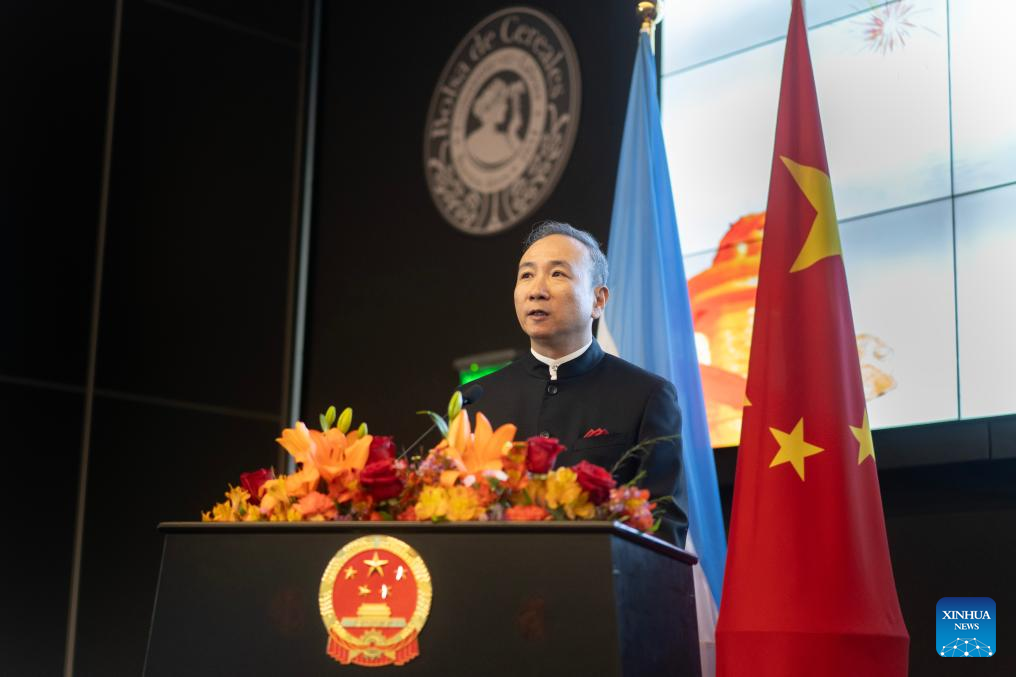
China's ambassador to Argentina Wangwei's public information photos can only be used to identify the head of the diplomatic agency involved, not the scene of the August 24 negotiation.At present, public evidence does not disclose Wangwei's diplomatic letters, emails or conference records sent by himself, so the report can confirm the pressure allegations at the embassy level and their multi-source testimony , and can not attribute specific communication actions to Wangwei individuals.
This distinction is important: the investigation of cross-border political implications can’t just stop at the concept of “beijing pressure,” but needs to continue to look for verifiable nodes such as who calls, who sends letters, who receives orders, and who ultimately withdraws from the venue.
This is not the first time in 2026: another China-themed event was also cancelled four months ago.
Follow-up reports from Infobae, April 2026, the University of Buenos Aires Belgrado was originally scheduled to hold an academic event discussing China’s political communication and human rights.The report indicated that Chinese embassy personnel were in contact with the university, and three diplomats visited the school in person; the event was eventually cancelled.
The two events were in different locations—one at the university and one at the local legislature—but the same thing is that the activities involved criticism of China’s political and human rights situation, and that they did not take place as planned after Chinese diplomatic institutions were allegedly intervened.
Isa’s experience makes “cross-border repression” more than just a diplomatic dispute
Durkheim Isa, who has long lived in Germany, has served as chairman of the World Uighur Congress and currently heads the Uighur Democracy and Human Rights Center. In an interview with Infobae on August 30, he said he has been unable to return to China for more than 30 years and has been detained or searched at the borders of several countries because of China-sponsored international police information.
原始来源 · infobae.com多尔坤·伊萨谈中国跨境压力与维吾尔人权infobae.com ↗He described the exchange in Buenos Aires as part of the Chinese government’s extension of pressure to the public space of a democratic country. Isa also said that the Chinese embassy would put pressure on activists through domestic families of overseas Uighurs to prevent them from participating in political or cultural activities.
These individual experiences do not automatically justify every administrative decision in Argentina’s events, but they explain why international human rights agencies have included state behavior against overseas dissidents, their families and spaces of activity into transnational repression studies.
The real need for Argentina to answer is: Who has accepted this request?
Outside the Red Wall, it is not why the Chinese embassy opposes a Uighur activist’s speech – Beijing has long been openly opposed to overseas Uighur political organizations – that the incident is most deserving to be tracked – but why a democratic government agency changes its civil society’s arrangements for human rights activities in local parliaments through the interference of foreign diplomatic agencies.
The next investigation should focus on several specific records:
- whether there are written notes or conversations between the Chinese Embassy and the Argentine Ministry of Foreign Affairs;
- what communications the Ministry of Foreign Affairs of Asia and Oceania Division and the Secretariat for International Economic Relations has carried out separately;
- who the city council has decided to withdraw or reject the venue;
- what specific documents are missing, the so-called "administrative documents" and why similar activities in 2025 can be allowed;
- whether there is the same diplomatic personnel or the same pressure mechanism between the university activities in April and the parliamentary activities in August.
If these records confirm the political demands of foreign embassies being transformed by the Argentine administrative system into practical restrictions on the space for public discussion in their own country, then the question has gone beyond general diplomatic lobbying, and into how democratic systems can resist cross-border political pressure.
Article discussion
Verified members can discuss this report publicly and manage their own content.
Checking member sign-in status…