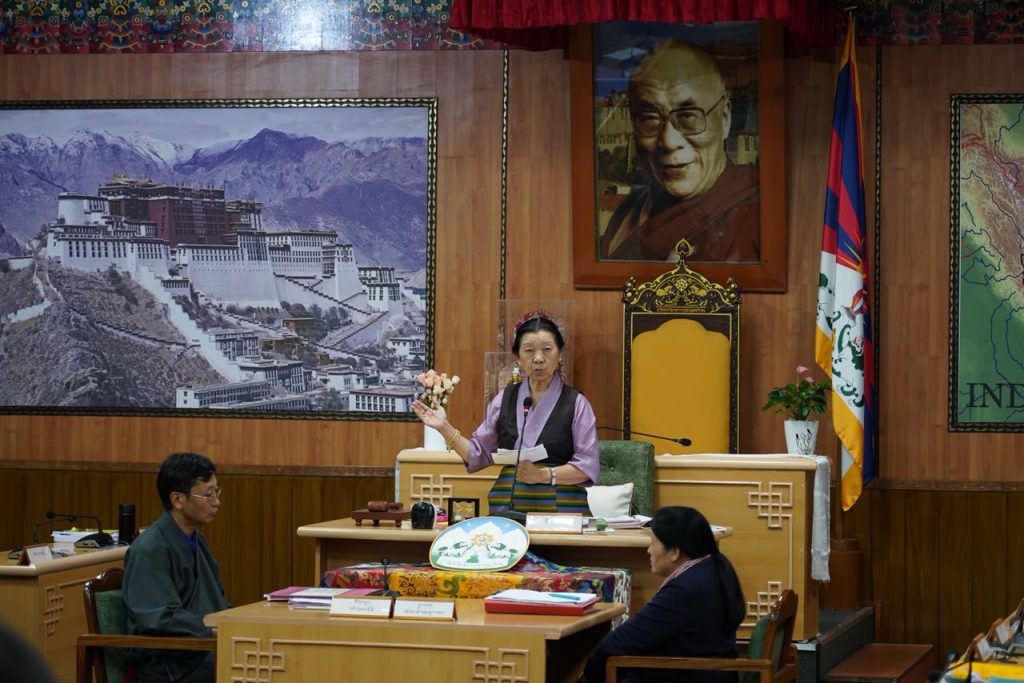
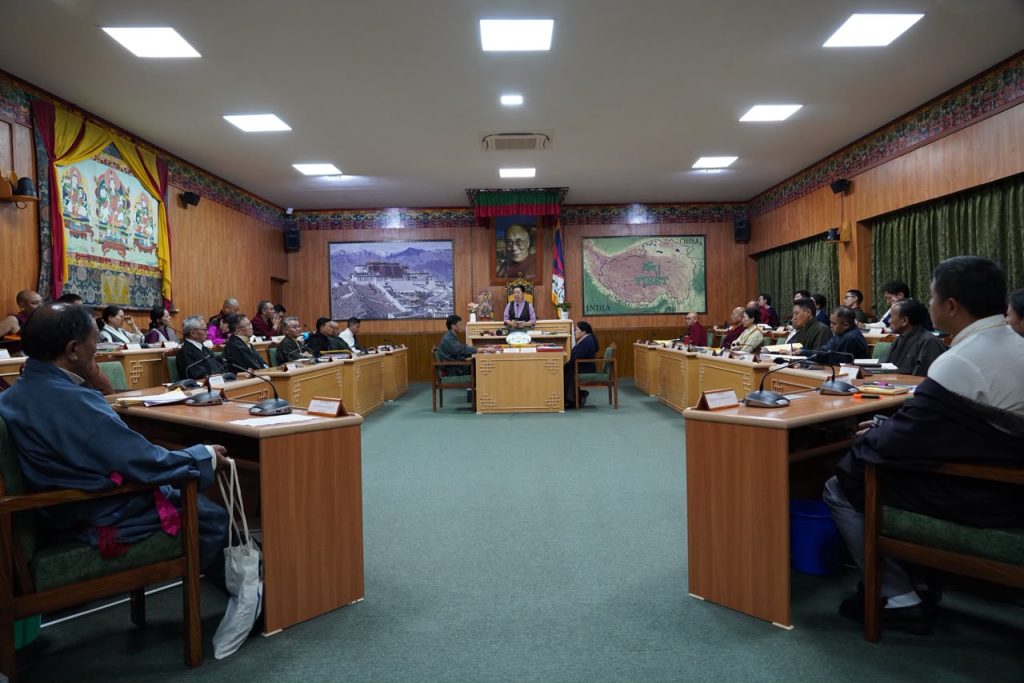
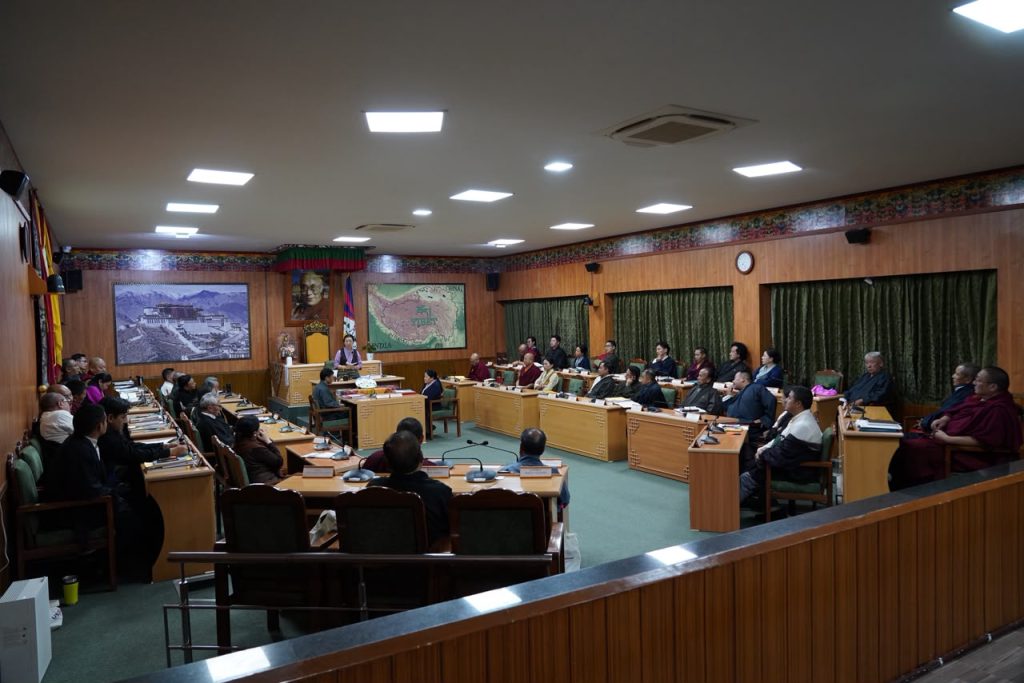
The second session of the 18th Tibetan Exile Parliament concluded on 25 September in Daransala, India. The record of the meeting of the Tibetan Exile Parliament on 25 September and the follow-up reports from several Indian media outlets on 26 September showed that the National Solidarity and Progress Promotion Act, implemented by China on 1 July this year, was one of the topics of repeated discussion at this meeting.
The nine-day conference puts the “National Solidarity and Progress Law” together with the language issue to discuss
In the opening report of the Tibetan Exile Parliament, Parliamentary Speaker Dolma Tsering Teykhang explained to lawmakers the agency's opposition to China's National Solidarity and Progress Promotion Act and said that previously it has sent 837 open letters to governments, parliaments, the UN and the European Union.
The September 23 meeting record shows that parliamentarians re-discussed the law during the review of the annual report of the education sector and viewed Tibetan language education and cultural preservation as an important link to responding to changes in Chinese national policy.
These resolutions restrict only the administrative and parliamentary system of exiled Tibetans and do not have legal effect in China, but the agenda shows that exile political institutions are shifting language and cultural conservation from initiative issues to internal institutional arrangements.
The Chinese law puts "the consciousness of the Chinese national community" into the system framework.
The National People's Congress of China passed the Law on the Promotion of National Unity and Progress on March 12 this year, and the law came into effect on July 1.The official text states that the goal of the law includes "building the awareness of the Chinese community", promoting interchange and exchanges between the various ethnic groups, and requiring schools and other educational institutions to use the language of the country as the basic language of teaching and teaching, while retaining the space for national language and language education in accordance with the law.
The law also stipulates that network operators have a management responsibility for information identified as undermining the progress of national unity; Article 63 further stipulates that foreign organizations and individuals who carry out acts of “undermining the progress of national unity and creating national division” against China shall be prosecuted for legal responsibility according to law.
Beijing describes the law as improving the governance of national affairs, promoting equal unity and common development.The National Civil Commission and official media emphasize that the law aims to counter ethnic discrimination, safeguard the legitimate rights and interests of ethnic minorities, and promote common prosperity.
The exile Tibetan agencies are concerned about “identification” rather than anti-discrimination clauses in the general sense
Criticisms from the Tibetan Exile Parliament and several Tibetan organizations have focused on the background of another set of articles and policies. They believe that the “Chinese Community” and the national universal language education, if combined with shelter schools, religious management and “religious Chineseization” policies, could further compress the space of Tibetan language, religious education and unique cultural identity.
This judgment belongs to the political and human rights assessment of exile Tibetan institutions, and is not a judicial interpretation by Chinese courts of the law. To judge the actual impact after the implementation of the new law, it is necessary to continue to observe local supporting regulations, school curriculum language proportion, religious site management measures and specific administrative or criminal treatment under the law.
原始来源 · policy.mofcom.gov.cn中国政府公布的《民族团结进步促进法》文本法律于2026年3月12日通过、7月1日起实施,全文包括教育、网络管理及境外责任等条款。policy.mofcom.gov.cn ↗Foreign liability clauses are also concerned
Article 63 is sensitive to exile communities, as it directly refers to “organisations and individuals outside the People’s Republic of China”.The article itself does not list specific enforcement methods, jurisdictional connections or cross-border enforcement procedures, so the actual scope of application still depends on future cases and supporting rules.
This also links the law directly to the international initiatives of Tibetan exile communities.In the fourth week of September, Tibetan organizations such as in Europe are holding "Tibetan National Identity Conservation Week" to publicly oppose the law and promote relevant petitions.The Tibetan Exile Parliament has previously listed the fourth week of September each year as the time for relevant cultural and initiative activities.
From the closing parliamentary session on September 25, this domestic law in China has become part of the political agenda of Tibetans abroad. The core of the controversy is not just the goal of "national unity" itself, but the extent to which the state can interfere with language, education, religious and cultural expression when shaping a common identity, and whether foreign opponents can be included in the legal responsibility.
Article discussion
Verified members can discuss this report publicly and manage their own content.
Checking member sign-in status…