
Nanjing Human Rightsist Shitenfu died suddenly while serving his sentence at Xinjiang Sha River Prison, approximately four months after serving his sentence. #Diagnosed the evening of 22 September, when the son of Stensford received a prison call that night, told him that his father had died of a “heart attack” at 5 p.m. and that his body had been taken to the funeral home. To date, no medical identification, complete rescue records, post-mortem findings or official written prison notification have been found in the public information.
The responsibility for the death of a person in a place of detention under the full control of the State should not be summed up by a “heart of the heart”. The prison has his routine, his medical history, his medication, his visits, his first aid and his medical care, and controls all original records. As long as the information is not made available to families and independent professionals, official verbal information cannot be a substitute for a complete death investigation.
原始来源 · chinahrc.org权利运动:史庭福狱中突然死亡chinahrc.org ↗Stensford is not without past health problems. Public records indicate that he has suffered from hypertension, pneumonia and asthma; In April 2025, he also expressed in his phone with his son that he felt weak every day. These medical histories do not automatically prove that there is medical negligence in the prison, but they do mean that it is more important that the prison keep a continuous record of medical monitoring, treatment and first aid. The longer the illness, the more specific the care and care responsibilities of the regulatory bodies.
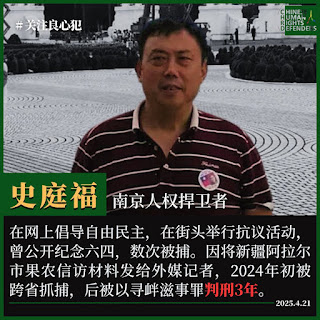
Born in 1959, Stinford has been a permanent participant in visiting and human rights activities. In January 2024, he was arrested across the province by the police of Aral City for "prosecuting the crime of sedition" and transferred to Xinjiang in October
- The first division of the town of Ksuwensinghjee served its sentence in the Sha River Prison. In other words, he entered the national penitentiary system from a case of defence and expression, and eventually died in a detention environment that was about to end his sentence.
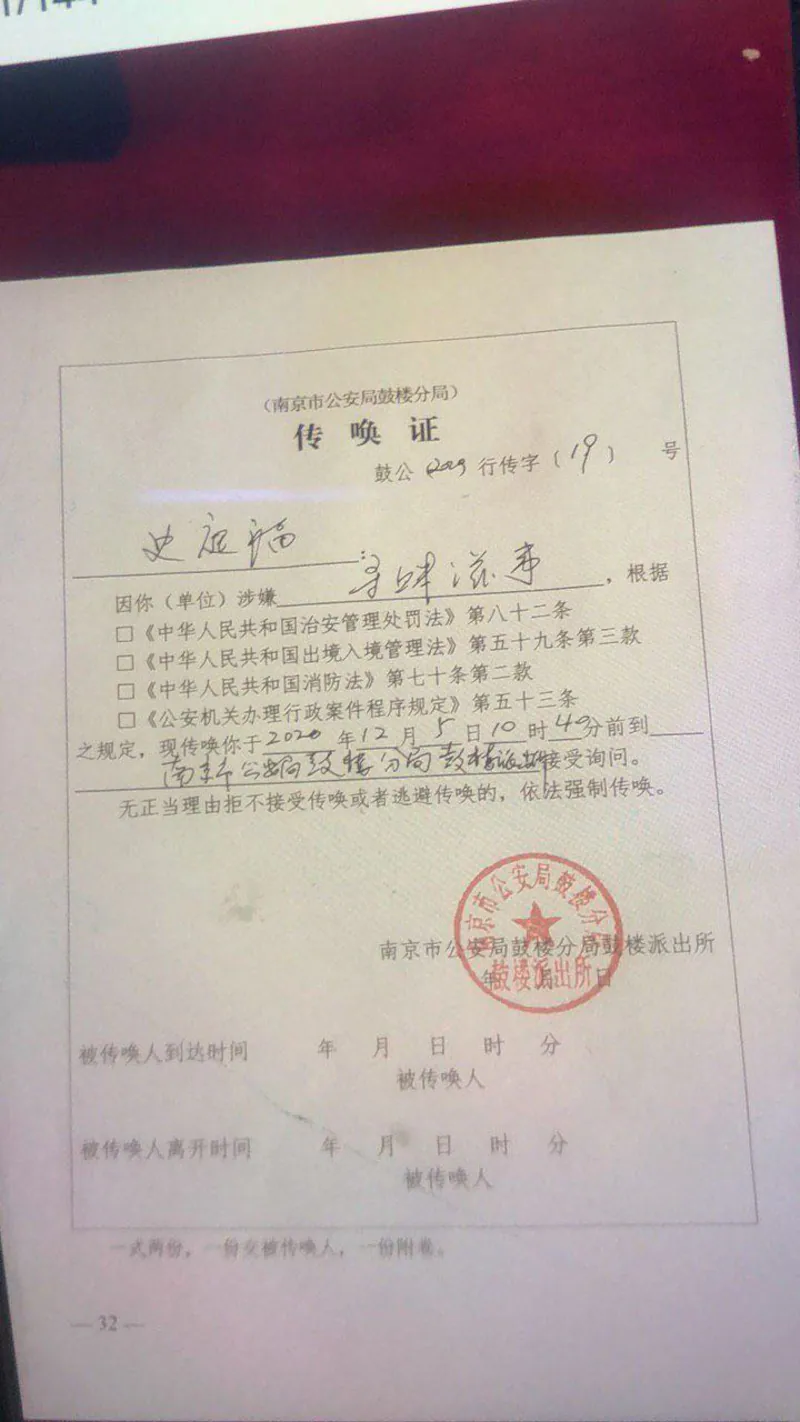
On several previous occasions, Stéphane was subjected to public security treatment for political expression. In 2017, he was charged with “silentness” for publicly commemorating and speaking at the sixty-fourth session, and sentenced to one year's imprisonment and one year's and six months' probation in
“Silents” have been repeatedly used in China's cases of rights, speech and street expression. The experience of Stéphane has brought the consequences of this crime to a more serious end: from public expression, inter-provincial arrest, criminal conviction, to death in prison. The chain cannot be examined beyond “natural death” and must also include the reasons why the State resorts to criminal action to defend rights and whether it has fulfilled its basic life and medical security obligations while serving its sentence.
There is no public evidence to support the fact that Stéphane was subjected to lethal sexual violence, and that outbreaks of disease cannot be ruled out simply because family visits in the near future have not been unusual. This does not, however, reduce the obligation of the prison to describe. The prison population is unable to choose its own hospital, doctor and first aid resources, and the State therefore has a higher level of care and record-keeping responsibility.
What is most needed now is not a vague “waiting investigation” of Stéphane's death, but a set of verifiable materials: time of onset, duty records, vital signs, past medical history, medicines, first aid measures, medical referrals, when to declare death, body examination and autopsy arrangements. Without such information, the family is unable to judge how the father moved from a prison sentence to a death.
Only about four months before the end of the sentence, Stéphane did not leave the prison. Whatever the final medical findings, this death entails a public accountability of the custodial authorities: since the State controls a person ' s freedom, it must leave a complete and verifiable record of his or her life during the period of control.
Article discussion
Verified members can discuss this report publicly and manage their own content.
Checking member sign-in status…