

A humanoid robot who scraps, walks, or handles finely at a show can only prove it’s “doable”; it’s another test to run the same movement for thousands of hours in a row and get the factory willing to pay for it.
原始来源 · reuters.comSpirit AI targets mass production of humanoid robots in 2027路透社9月18日报道Spirit AI创始人披露人形机器人量产计划。reuters.com ↗Reuters on September 18 that Chinese robotics startup Spirit AI plans to start large-scale production of human-like robots in 2027 and take manufacturing, assembly and other industrial environments as an important landing scene.This timetable pushes the company directly from technology demonstration to a more concrete question: can robots turn from samples into industrial equipment that can be replicated,ined and calculated for return on investment.
Spirit AI’s technology pathway revolves around craftsmanship, visual perception, motion control and artificial intelligence models. For industrial customers, these capabilities will not eventually be settled in demonstration actions, but will be exchanged for success rates, task speed, continuous run time, failure frequency and actual costs of replacing or assisting after work.
China’s humanoid robotics industry has absorbed a lot of capital and policy concern over the past few years. In addition to the manufacturer, joints, reducers, sensors, craftsmans, batteries and computing platform suppliers are also rapidly entering the industry chain. Supply chain expansion has lowered the manufacturing threshold, while pushing the competition toward a more cruel supply chain: who can stabilize production, who can control costs, and who can keep customers in use.
Spirit AI has previously demonstrated its robotic operational capabilities publicly at events such as the Beijing World Robot Conference. These on-site displays provide a window to observe product iterations, but the exhibition environment is often pre-set and can not replace real factory long-term testing for safety, stability, pace and maintenance.
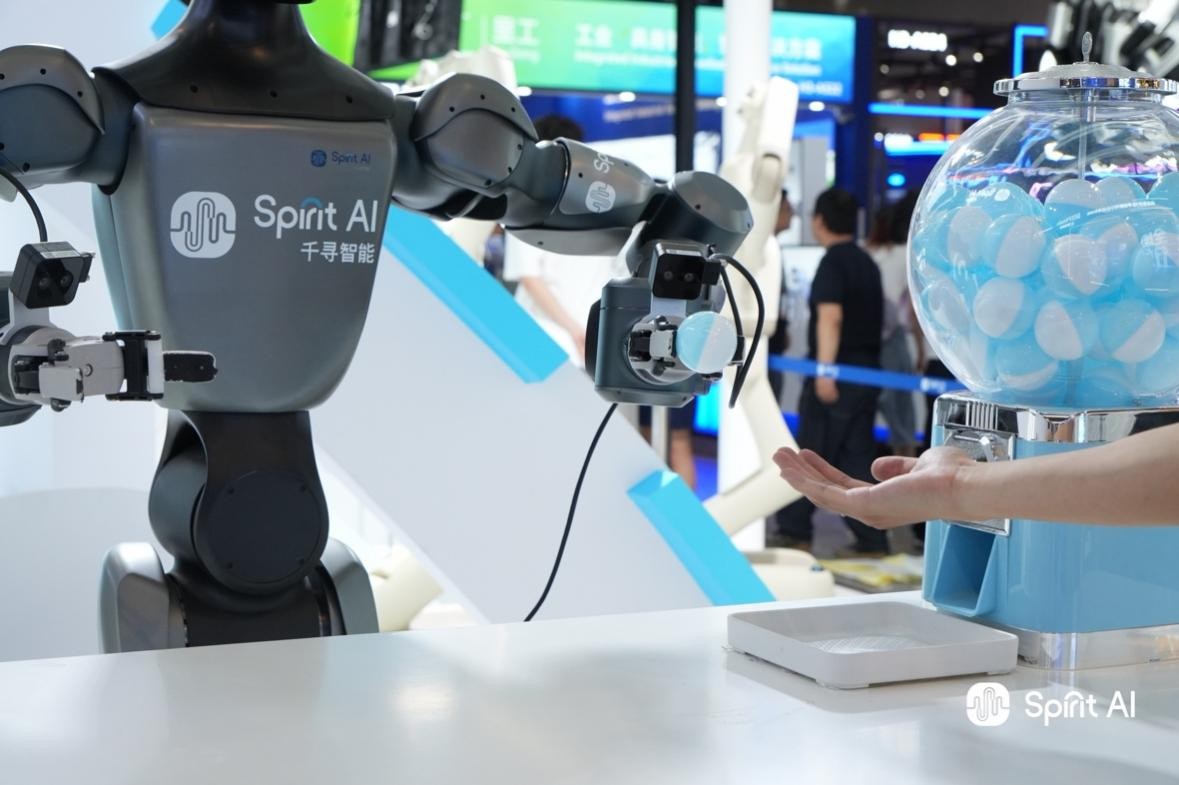
The debut at the 2026 World Conference on Artificial Intelligence puts Spirit AI into another industry picture: Human-made robotics enterprises are competing intensely for manufacturing companies, supply chain partners and investors. For buyers, the most important question is not whether the robot is enough to attract the lens, but how long it takes to recover one stop, how long it takes to replace parts, whether software updates affect production, and how long a machine can recover input.
Therefore, the year 2027 is more worth recording than a separate technical parameter. It sets a node for the Spirit AI’s mass-production promise to be verified by actual delivery. The indicators for measuring the outcome will be very specific: how many units were produced, how many factories entered, how long it ran, how high the failure rate, and whether customers added orders.
China has a huge manufacturing scene and a more complete robot supply chain, which provides test and iteration conditions for domestic enterprises; but the industrial advantage does not automatically translate into commercial success. Human-like robots if they really want to enter the manufacturing system from capital markets and science and technology fairs, they must demonstrate that they can not only complete the action, but can also complete the action at a long-term and stable price that the enterprise can afford.
Spirit AI wagered 2027, in fact, a line of separation for itself. The one side of the line of separation is sampling, financing and demonstration, and the other side is production capacity, failure, cost and order.
Article discussion
Verified members can discuss this report publicly and manage their own content.
Checking member sign-in status…