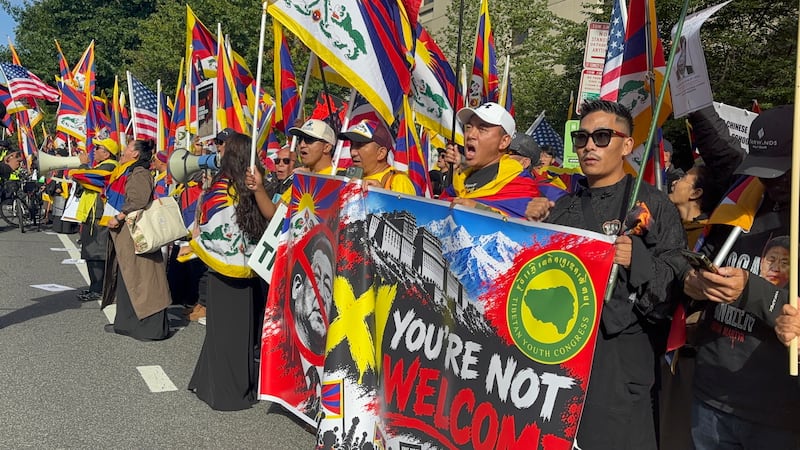
On 24 September, in Washington, on the occasion of a meeting with President Trump, Tibetans and supporters from many parts of the United States protested in the vicinity of the White House and the Chinese Embassy in the United States. > Radio Free Asia live reports show demonstrators waving Tibetan flags, showing photographs of Tibetan detainees and demanding Beijing to stop its repression of Tibetan religious, linguistic and political expressions.
The protest was in stark contrast to the state diplomacy in the White House. When the Head of Government spoke of trade, strategy and bilateral relations, the crowd outside the Embassy attempted to re-establish another issue into the public space: under the highly centralized political system in Beijing, Tibetan religious activities, language education, political expression and public activities related to the Dalai Lama have been under strict and permanent control.
Photo of political prisoners taken to the streets
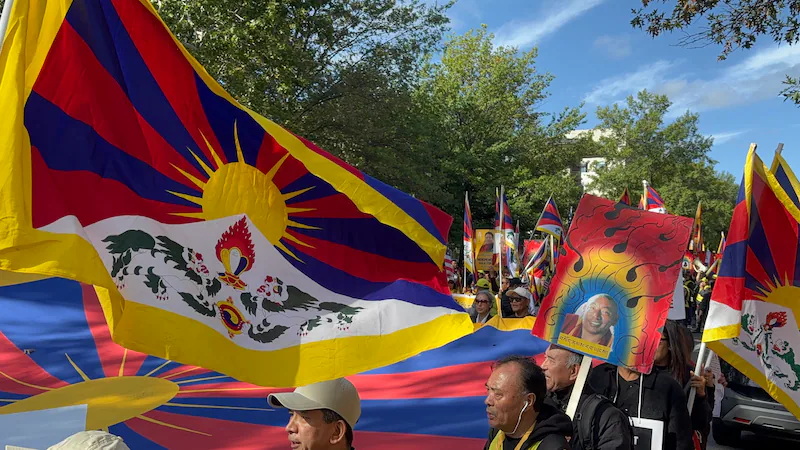
The photographs showed protesters not only using flags and banners, but also carrying photographs of many of the detainees. Such expression reduces the abstract “Tibetan question” to a specific individual — the arrested, the serving of sentences and those who have been unable for a long time to express their views freely and publicly.
The activists interviewed by Radio Free Asia stated that they wanted the Trump Government to include human rights in its agenda in its contacts with Xi Jinping. Protesters also called for the release of Tibetan political prisoners and opposed political interference in Beijing with the Tibetan Buddhist system and the rebirth of the Dalai Lama.
Under Xi Jinping, religion and ethnic governance are further politicized
Since Xi took office, the Communist Party has strengthened social governance within the framework of “religious Chinaization” and national security. Religious institutions, education and cross-border contacts in Tibet are thus not only regarded as social matters, but also subject to political loyalty and national security scrutiny. The Beijing side has long declared that the policy is aimed at maintaining stability, promoting development and opposing division; Critics, for their part, believe that this model of governance incorporates culture, belief and identity expression into the continuing control of party power.
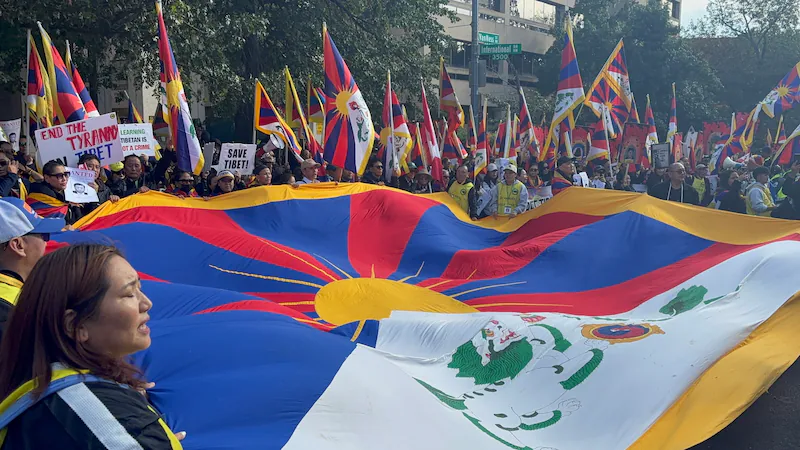
That is why the protests in Washington are politically significant. The Central American Summit was usually organized around tariffs, security, science and technology and international strategies, and human rights issues could easily be pushed to the margins of the diplomatic agenda. Street protests cannot replace intergovernmental negotiations, but they give a new visibility to the compressed issues.
The diplomatic talks are over and the rights issue will not leave the convoy
The Chinese Government could demonstrate its national power through diplomatic ceremonies, but it could not overcome the long-standing controversy that had been left behind by Tibet's policy by international summits alone. The treatment of peaceful expression, religious beliefs, minority languages and different political views in a political system is an important measure of whether power is restricted.
The final outcome of Xi ' s Washington trip, which will be subject to a specific agreement, is economic and trade or strategic; However, the photographs of political prisoners outside the embassy are another reality: the public criticism that is difficult to make in China, and the greater space for expression that can be given to them in the streets abroad. This contrast is in itself an axiety of the shrinking space for civil liberties under the one-party system of the Communist Party of China.
Article discussion
Verified members can discuss this report publicly and manage their own content.
Checking member sign-in status…