The name and telephone number of a protest documentary issuer have been turned into a tool of intimidation, and the police have been asked to call the real victim again and again to explain the case published by the Taiwan Land Commission on 1 October, which shows that the means of interference with the dissemination of State Organs on the stage have gone further from direct bomb threats to identity and judicial harassment.
The victim was the head of the lion's video and video department, who was in charge of the building of the Zhongqing. He introduced the Canadian documentary State Organs into Taiwan in
- The film was organized around allegations of forced organ removal in China and recorded testimonies from families, doctors and other interviewees of disappeared persons. After the film was released in Taiwan, the cinema, the screening agencies and associated individuals continued to receive bomb, shooting and cyber-attack threats.

This time, the attackers no longer merely asked for “stop the screening”.
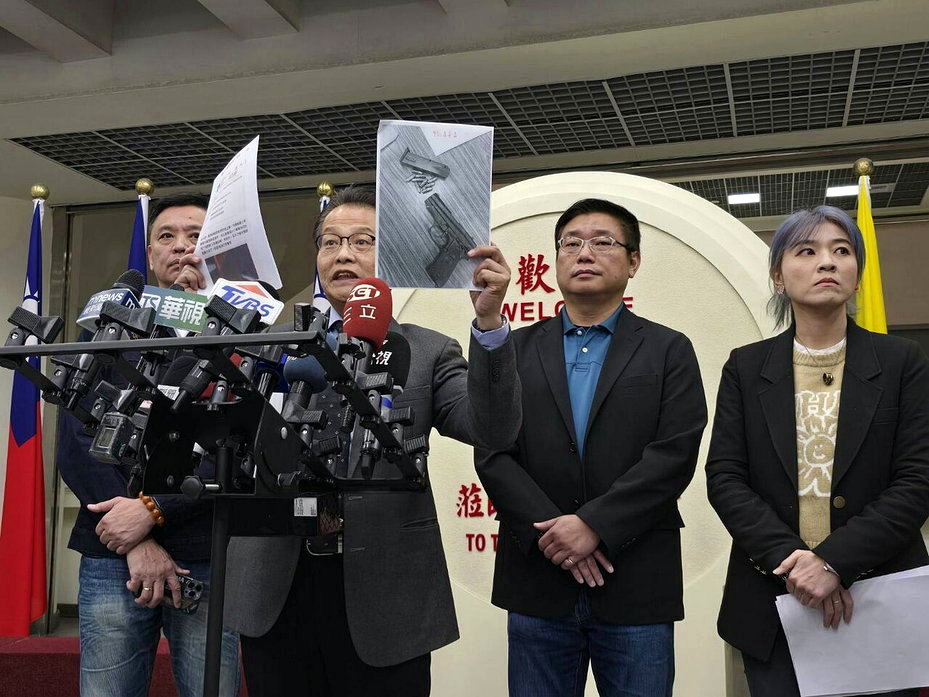
On October 1, Liang Wenjie, Vice-Chairman and Speaker of the Taiwan Marine Commission, revealed at a press conference that unknown individuals had been using their own management to establish loyal identities and intimidate others at least three times. (b) In November 2025, a telephone number of the pipe was used to intimidate a lawyer and to demand money, and the police summoned the police to call for the Jiaqiang statement; Similar incidents occurred at the Black Bear College in December of the same year; On 29 September this year, the Taiwan Falun Gong Society was threatened with the use of its telephone number by a man who had taken the liberty of acting as a Zhengjian.
As a result, a special harassment mechanism has emerged: the attackers are hiding in the far-off, but true loyalty must be constantly confronted with reporting, investigation and cross-regional arrival. Liang Wenjie described the purpose as “driving to the point” of “during the day” for the management of the institution. The Commission has assisted him in reporting the cases to the police and has indicated that these cases will be dealt with in a comprehensive manner with the Police Department and the Ministry of Justice.
原始来源 · cna.com.tw中央社:国有器官引进者遭冒名恐吓 陆委会称跨境镇压新手法cna.com.tw ↗From preventing audience to victim status
This clue is important because it shows a change in the logic of harassment.
When State Organs were released in Taiwan in 2024, the most direct form of pressure was through the threat of violence against cinemas and organizers. The Taipei City Council also received threats of knife attacks when it planned to show the film. The Taiwan criminal police system was tracking some of the threatening mail and found that the sender used an offshore IP and VPN to hide its sources. Jianjian subsequently indicated that the number of anonymous intimidations received by the business owners and related units continued to increase.
The identity that now emerges is an impostor that extends the target from “stopping an activity” to undermining a person's social identity. As long as the attackers are able to forge telephone numbers, names or correspondence identities, third parties can view loyalty as a source of threat; When a third party calls the police, the enforcement process itself creates the time, legal and psychological costs of genuine good governance.
Such an operation does not require the presence of the attackers in Taiwan or the actual carrying out of a bomb attack. It uses systems in which open societies must address threats of violence and investigate reports, and in turn turns a normal law enforcement response in a democratic society into a lever for victims of harassment.
Taiwan's official place this case in the framework of "cross-border repression" for the first time
Liang Wenjie stated that the reason why the Commission suspected that the incident had a cross-border repressive background in China was that it was not a mere impersonation or individual intimidation but a systematic one. He said that it was currently classified as a case of cross-border repression, and that it was still the judicial authorities that continued to pursue the perpetrators.
This distinction is crucial: the judicial authorities in Taiwan have not yet published the true identity of those who carry out these threats, so that the specific operators still need to be investigated; However, the Taiwan authorities responsible for cross-Strait affairs have placed successive incidents within the framework of cross-border repression and have begun to coordinate police and judicial responses.
The core of so-called cross-border repression is not necessarily the direct cross-border arrest of persons by the secret police. For dissidents in exile, religious groups, journalists, activists or cultural communicators, cyberthreats, pressure from family members, identity theft, malicious reporting, harassment of proceedings and intimidation of places of activity can all have the same purpose: to raise the cost of speaking out, allowing organizers, locals and ordinary participants to choose silence over time.
The State Organs incident has made this mechanism particularly clear. The video touched allegations of forced organ removal, which the Chinese Communist Party has long strongly denied; In Taiwan, the attackers could not rely on mainland Chinese censorship to directly lay down their films, and pressure shifted to cinemas, host institutions and the issuer himself. The film is not officially banned, but those who continue to disseminate it bear the security and administrative costs.
"Who is threatening" still to be pursued, "What does intimidation cause" is already visible
The key to the investigation is the ability of the police to restore the real operator from the phone number, e-mail, VPN node, communication account, payment or equipment records and to ascertain whether the cases in different years originated from the same network.
But the fact that the liability investigation has not been completed does not mean that there are no real consequences. Over the past two years, the State Organs screening in Taiwan has on several occasions increased police capacity and changed activities due to threats of violence, and some sites have been affected by security pressures. Today, the issuer's identity itself is the subject of attacks.
The most effective repression of extraterritorial criticism by the CPC does not always allow an article to disappear or a film to be completely banned. As long as each screening is accompanied by a bomb inspection, each organizer fears death threats, and a publisher is constantly called by the police to explain that freedom of expression, even if legally still exists, is actually cost-added.
It is this cost-making mechanism that Taiwan needs to crack down on the successive cases of impersonation that it has consolidated this time. Only by following up on the perpetrators, the technical chain and the organizational relationship can it be judged whether these threats, which are dispersed at different times between the different affected units, are organized and whether it is part of the same cross-border operational chain as the previous threat network against the State Organs.
Article discussion
Verified members can discuss this report publicly and manage their own content.
Checking member sign-in status…