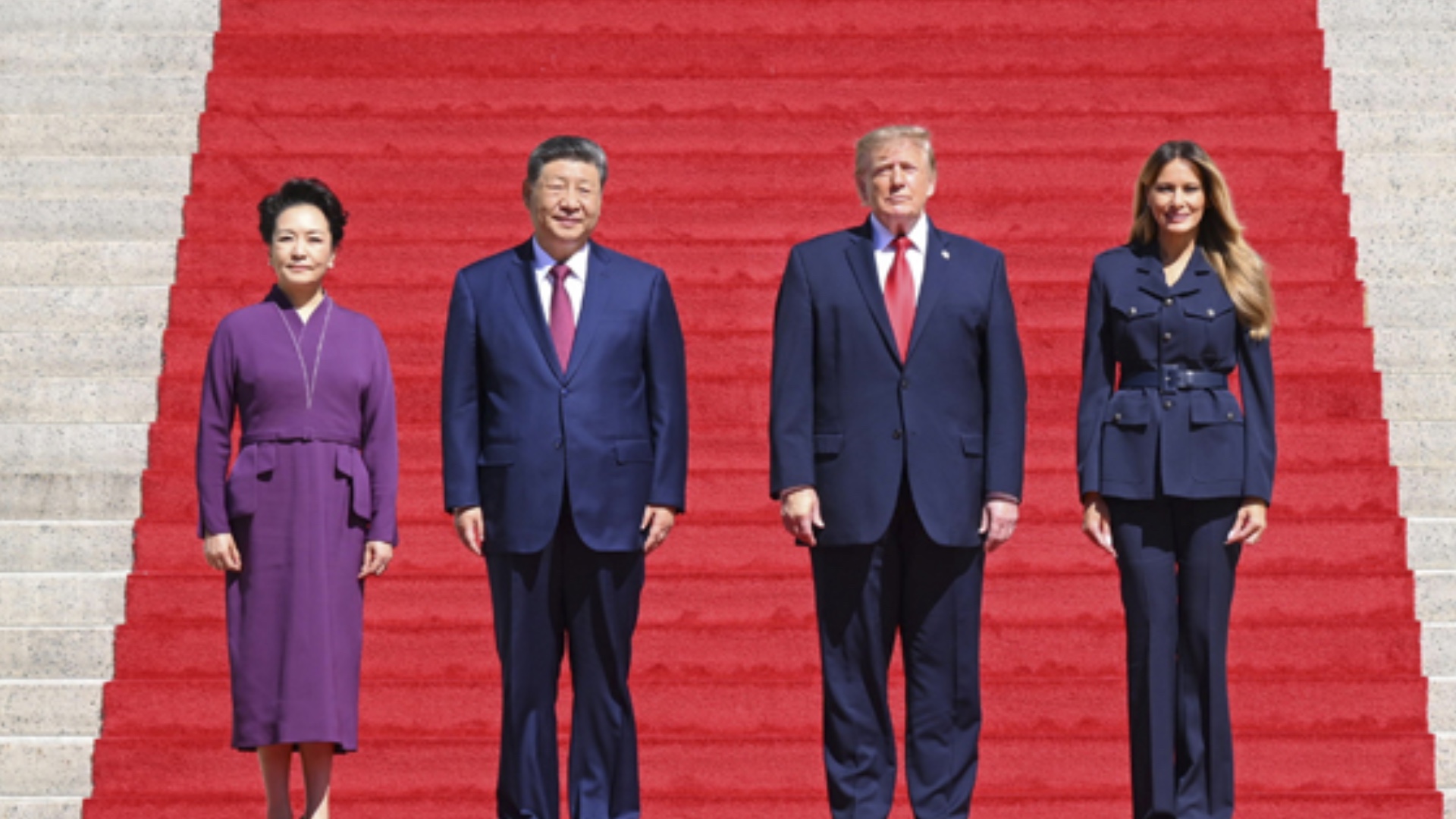
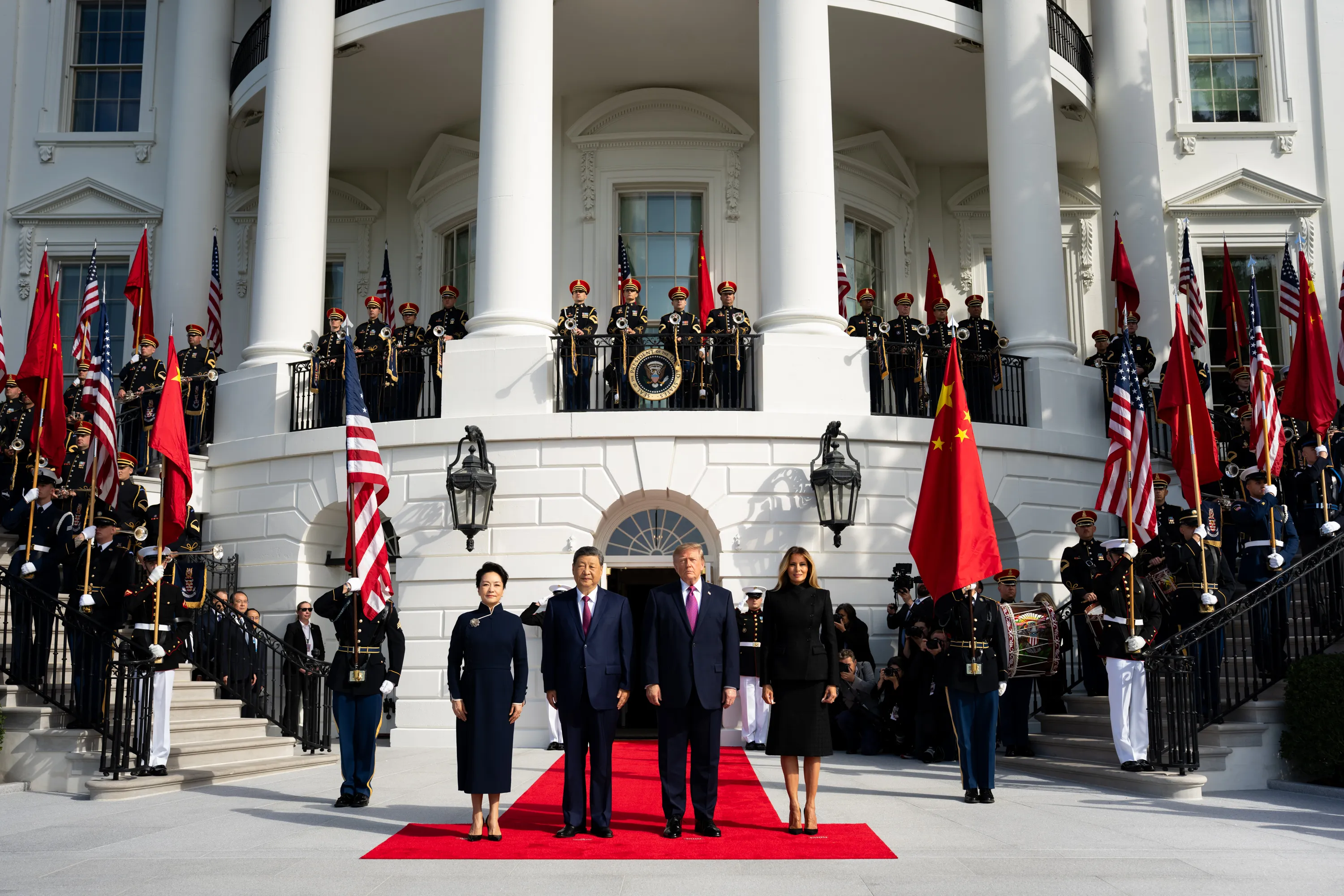
After Xi ended his country visit to the United States, Beijing outlined this as “strategic stability” in Central American relations, mutual respect and continued engagement at the highest levels. However, a much more interesting clue than the diplomatic communiqué emerges from the rearrangement of the site details of the three days of the visit: the United States revolutionary military joys are playing the welcoming ceremony, and the B-2 invisible bombers and the F-22s fly over the White House; The national feast to commemorate the opening of the United States of America's wine-blowing event in 1972 by Nixon, and the musical play " The Tragic World ", One Day More; The following day, the Trumps personally accompanied Mr. and Mrs. Xi to the United States National Archives to watch United States founding documents such as the Declaration of Independence, the United States Constitution. The presentation list disclosed by Lutherans also includes the 1951 San Francisco Peace Accords, which are closely related to Taiwan ' s post-war history.
These arrangements took place in the context of Xi’s direct presentation of the Taiwan question to Trump during his visit to the United States, and also gave the country’s visit two distinct images: the red carpet, the national feast, the handshake and “strategic stability” on the one hand, and the history of the American revolution, military force, cultural works against tyranny and the founding documents that restrict government power on the other.
# The country feasts on The Tragic World #
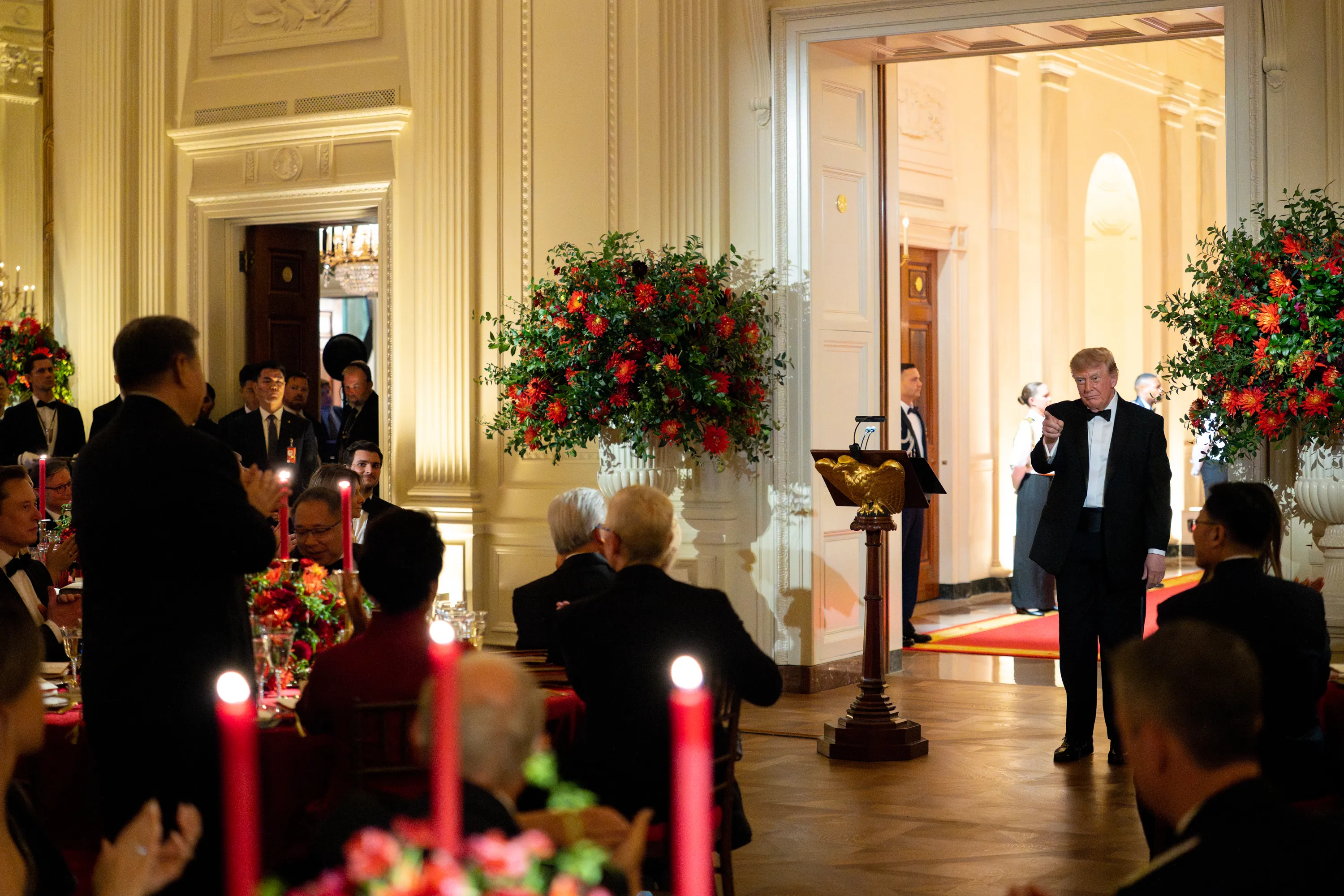
On the evening of 24 September, the White House East Hall hosted a national reception welcoming Mr. and Mrs. Xi. In his toast, Xi specifically mentioned that the Trumps had made “a number of special arrangements” for the visit. One of these details quickly drew attention overseas. Live videos released by White House officials show the United States military musicians playing One Day More of the musical " Tragic World " at the national feast. The song was subsequently covered by Lutherans as an important news point, and other karate media followed up on videos released by White House officials.
One Day More is not a general party background music. In the drama of The Tragic World, this song appeared on the eve of the Paris Barrage uprising, where different figures sing their own choices on the night before deciding their fate, and then the story enters the climax of student and revolutionary participation in the uprising. There's another story from the live show about the music that night. Do You Hear the People Sing? The elements of the "Standard" The latter was subsequently used by protest movements in different parts of the world, particularly during the democratic protests in Hong Kong.
The White House has not publicly interpreted the selection of The Tragic World as a political warning to the Communist Party; Lutherans and overseas opinioners have read the song politically in the context of the revolution, the history of dissemination in the Hong Kong protests and the presence of Xi Jinping.
♪ A glass of wine to bring Xi back to 1972
If the national music leaves room for interpretation, the history of the wine list is publicly described by the White House itself. The dinner was a party with the American Schramsberg Blanc de Noir. The White House explained that this was chosen to commemorate President Nixon's historic visit to China in 1972, when the same wine bar was used for the historic party of 1972, which was “peace toast” with Zhou En.
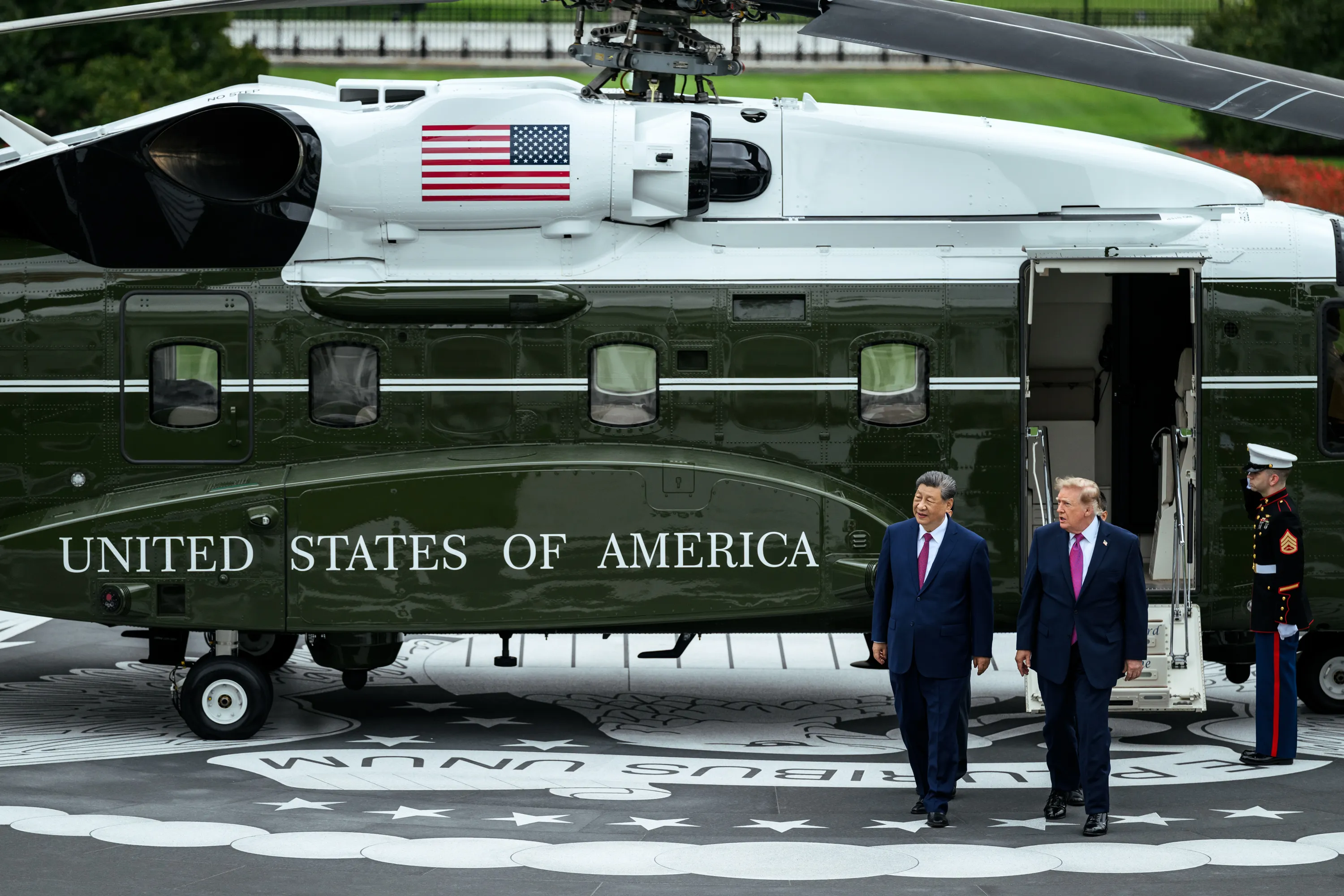
This means that Xi's first glass of wine in front of Xi, bringing China-United States relations back to its roots more than 50 years ago: Nixon, Zhou Eunyi, 1972 and China-American icebreak. The whole national feast has thus produced a rather special historical combination. On the one hand, the “peace toast” to commemorate the movement of China and America from hostility to contact, and on the other hand, the music of the night before the uprising in The Tragic World. Cooperation, peace, revolution and resistance were put in the same White House east hall.
♪ Revolucionary military music, B-2 flying over the White House ♪
This arrangement, which is a combination of history and reality, began when Xi arrived at the White House. The White House's advance welcome service programme showed the presence of the United States Army Old Guard Fife and Drum Corps, the Marines' silent gun line and military music units. Among them, Old Guard Fife and Drum Corps continued the military music, instruments and dress tradition of the United States Revolution-era army.
During the welcoming ceremony, a B-2 “ghost” strategic and invisible bomber and four F-22 “Traper” fighters formation flew over the White House. This is part of the White House's prior public arrangements. The United States had publicly demonstrated its sophisticated military power while giving a courtesy to Xi on a visit to the State of Xi. Diplomatic courtesy and strategic strength have been accompanied by a ceremony to welcome the Supreme Leader of China.
Tramp Zi Jinping watching the Declaration of Independence
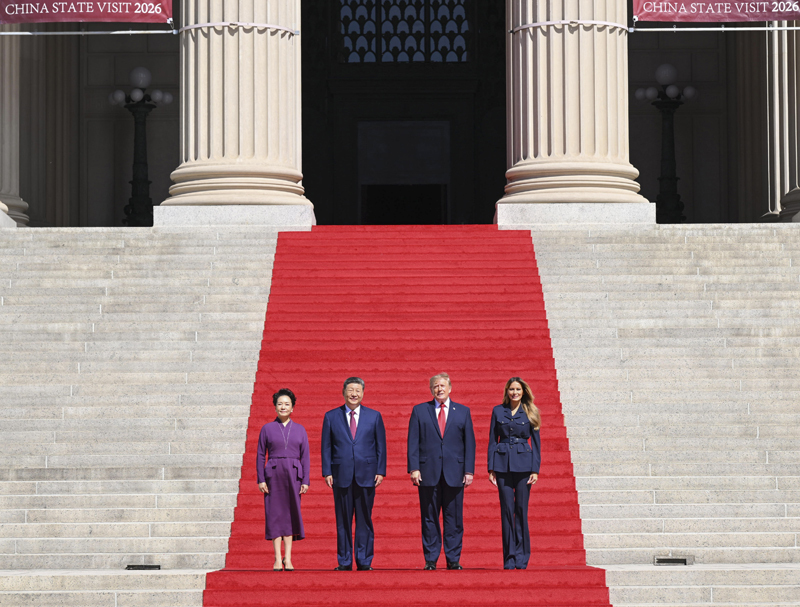
On the morning of 25 September, the Trumps first held a tea session with the Xi Jinpings in the White House Red Hall. After the tea shout, Trump and Melania accompanied Xi Jinping and Peng Li-Lion to the United States National Archives. The White House had previously announced that the visit would present important archives related to the 250th anniversary of the founding of the United States and the history of relations between China and the United States.
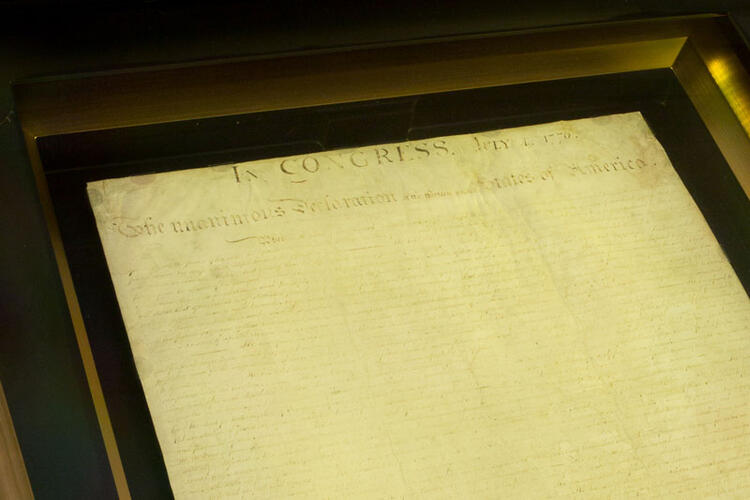
After entering the National Archives, a group of Xi Jinping confirmed in live reports that they had seen documents such as the Declaration of Independence and the United States Constitution. The Declaration of Independence states that the legitimate authority of the Government derives from the consent of the governed; The United States Constitution establishes the framework of checks and balances between the federal Government and its powers; The Bill of Rights further restricts the Government ' s violation of fundamental freedoms of speech, publication, religion, etc.
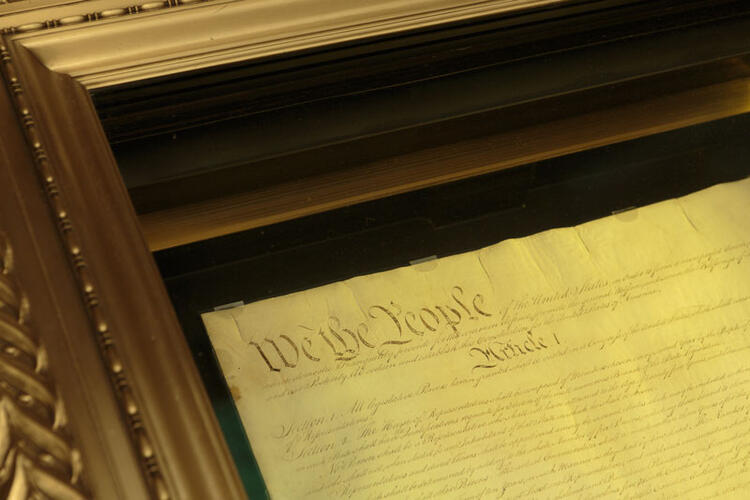
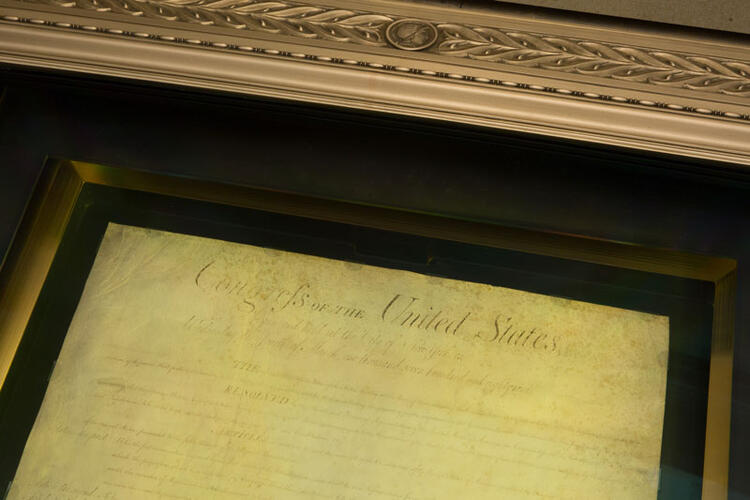
This was the most historic contrast between Xi Jinping's visit to the United States: the Supreme Leader of the Communist Party of China stood before the Declaration of Independence and the original American Constitution.
Xi said on that day that China and the United States “have different cultures, social systems, paths of development” and that they should recognize and respect each other. From the Beijing perspective, this statement emphasizes that the United States should not interfere with the political system chosen by the Chinese Communist Party; But in the face of these American founding documents, “regime differences” also inevitably raise the question of whether power is subject to people's oversight, civil liberties and institutional constraints.
Seeing San Francisco Peace Treaty from the American-Chinese History Treaty
Lutherans subsequently disclosed that, according to information available to them, the historical materials shared by Trump and Xi included the 1844 Treaty of Vision between the United States and the United States, the 1858 Tianjin Treaty, the 1895 Sun-Kindian letter to the President of the United States, Grover Cleveland, and the 1951 San Francisco Peace Convention. Of particular concern was the emergence of the San Francisco Peace Accords, where Xi had raised the issue of Taiwan with Trump at the Kawakawa Moction the previous day.
原始来源 · ludepress.com路德社:习近平访美与国家档案馆展示文件路德社对国家档案馆展示材料及政治含义的报道。ludepress.com ↗Article II of the San Francisco Peace Accords, which deals with Taiwan, provides that Japan renounces all rights, grounds and claims to Taiwan and Lake Luen; This provision does not specify the transfer of sovereignty over Taiwan to the People ' s Republic of China. The legal status of Taiwan after the war was linked to the Cairo Declaration, the Potsdam Proclamation, the Japanese surrender document, the San Francisco Peace Accords and the subsequent international political realities, with different legal and political discourses that persisted.
Lutherans has thus interpreted the arrangement of the San Francisco Peace Accords in Xi ' s material for the visit as a response to a historical document of the Beijing Taiwan narrative. The White House did not publicly define the presentation as a policy statement against Xi Jinping Taiwan's claim, but the sequence of three facts is worth recording:
- 24 September: Xi Jinping raised the issue of Taiwan with Trump in the talks;
25 September: Trump accompanied Xi to the United States National Archives; - Same presentation: According to Lutheran, the 1951 San Francisco Peace Convention appeared.
Beijing emphasizes “strategic stability” by diluting the archives' specific documents
China acknowledges that Xi visited the National Archives of the United States and that he heard presentations by the Archives and “Main displays”, but that official reports focused on Xi's statements on the differences in the Central American system, mutual respect and the search for “the largest number of conventions”. Throughout the visit, the central term for Beijing advocacy has been “constructive strategic stability relations”.
The red carpet, the national feast, the handshake of the Führer and the high-profile reception given by Trump to Xi Jinping are easily transformed by the Communist Party's propaganda system into a “Power status” and proof of international influence by leaders; But diplomatic courtesy and institutional recognition are two different dimensions. The United States Government and Xi are talking about trade, holding a national dinner, and establishing a mechanism for artificial intelligence and crisis communication, serving first and foremost the national interests of the United States and the real need to avoid conflicts in the major Powers.
China comments: Red carpets cannot hide the CCP's institutional dilemma
Xi’s visit to the United States is a historic one, not just a national visit that was highlighted by the Beijing media, but a series of events he experienced in three days in the United States: the military music of the American Revolution, and the flying of the White House by B-2 and F-22; In 1972, the bubbling of the ice-breaking ice was brought back to the table, and the music of The Tragic World was followed by a sounding sound; The next day, Trump also went to the National Archives with Xi Jinping, standing before the Declaration of Independence and the United States Constitution. Among the exhibits disclosed by Lutherans is a San Francisco Peace Pact that can re-invert the controversy over the history of the post-war sea.
Whether each of these arrangements is given a political connotation by Trump himself against the CPC and can be pursued. But they were observed in the same State visit, and the system that had been created was in contrast. Xi stressed in Washington that the United States should respect China's “social system” and “development path”, and the United States founding document before him recorded another set of political principles: that government power came from the people, that the holders of power must be restricted, and that citizens had fundamental rights that could not be arbitrarily deprived by the Government.
Focus China believes that this is what the Chinese Communist Party must face as a matter of “system confidence”. The Communist Party has long tied its parties, nation and nation to a political concept and has been strengthening the political narrative that “anti-communist is against China”. But China is not the Communist Party, and the Communist Party cannot monopolize the concept of “China”. The rule of a political party cannot be equated with that of a State and a nation itself.
No one can write down the exact date of the political transition in the way the ruling of the one-party party in the CCP ends and when. Historical power regimes may suddenly collapse, or they may experience reform, fragmentation or a long transition. The editorial position of Focus China is that the one-party dictatorship of the Chinese Communist Party is not the natural end of China ' s history and does not have the natural right to rule the Chinese people permanently. The future political system in China should be decided by the Chinese people themselves.
What we are looking for is not the disintegration of China, social chaos or political retaliation against any group, but the ultimate history of the one-party monopoly of political power by the Chinese Communist Party, which enables the Chinese people to really determine their own Government, supervise those in power and change their leadership through a peaceful system. By that date, the Communist Party could leave the historic stage, and China would remain China.
The Red Carpet will be withdrawn, the National Dinner will end, B-2 will fly away from the White House and the last note from The Tragic World has fallen. But the documents that Xi faces in the National Archives of the United States will continue to exist. Is a regime the master of the people or a tool that the people authorize and have the right to change — the CCP propaganda department can choose not to report, Xi can choose not to answer, but it will not disappear from China's history.
Article discussion
Verified members can discuss this report publicly and manage their own content.
Checking member sign-in status…