

Taiwan's security discussions have long been dominated by “will there be a full war” but it is more likely that they will come first, perhaps a grey zone crisis that has not formally declared war but is sufficient to force the government to make significant political choices. Eyck Freymann, a researcher at the Hoover Institute of Stanford University, recently suggested at the Taipei Security Dialogue that Taiwan and the United States cannot prepare for a full-scale war, as Taiwan ' s fate is more likely to be determined by a crisis than by a traditional war.
This judgement is important because the pressure on Beijing in recent years is itself deliberately avoiding the threshold of war. Military aircraft crossing the median line of the strait, the entry of marine police into sensitive waters, the proximity of drones to outer islands, damage to submarine cables, economic constraints, legal warfare and information operations can create factual pressure without declaring war. On its own, each operation does not seem to be sufficient to trigger a military response; The accumulation could deprive Taiwan of a step-by-step space for action.
The most dangerous is not a missile, but an incalculable crisis
The full-scale invasion is at least clearly identified: military build-up, missile attacks, landings quickly trigger military and diplomatic mechanisms. But the grey zone crisis is the opposite. Suppose the Chinese Navy announced “law enforcement inspections” on one of Taiwan's outer islands, merchant ships began to be stopped, the Navy supported the more peripherals, and Beijing insisted that this was only domestic law enforcement — should Taiwan and the United States define it as a blockade, a dispute over law enforcement, or an act of war?
The strength of the grey zone strategy lies in forcing the opponent to argue first that “this is not war”, and the actors are already changing reality on the ground.
原始来源 · focustaiwan.tw中央社英文网:学者示警台湾应优先准备灰色地带危机focustaiwan.tw ↗Such crises do not require a one-time occupation of Taiwan's island. It can start with restricted ports, cut-off cables, inspection of merchant vessels, siege of outer islands or continuous drone intrusion. Beijing could continuously test political resilience if it allowed each step to be lower than the clearly defined military red line between the United States and Taiwan.
The blockade and the “quasi-block” may be more realistic than landing
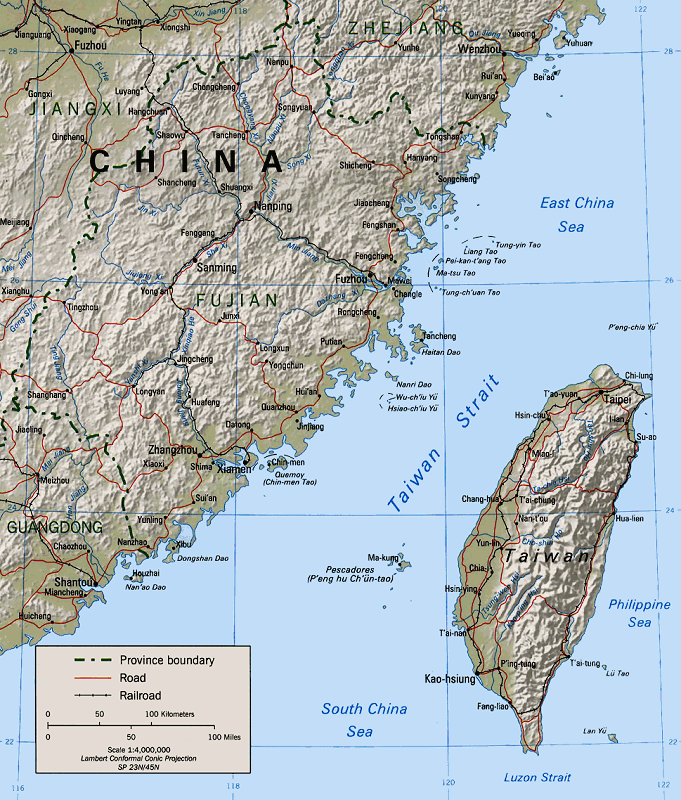
China ' s launch of a full amphibious landing would require a great deal of risk, such as weather in the Taiwan Strait, beach conditions, logistics and possible United States-Japan intervention. In contrast, the “quasi-block” of the maritime police, navy, militia and executive orders is less costly and more easily escalating.
A grey zone crisis may include:
- Selective inspection of merchant vessels to delay shipping in the name of “customs” “security checks” or law enforcement;
- Surrounding outer islands, reducing supply and movement of personnel without direct fire;
- Damage of communications and infrastructure, creating a vague space that is difficult to distinguish between accidents and deliberate action;
- Sync information battles, spreading the narrative “the United States military will not come” “resistance will only cause economic collapse”;
- Limited military display, to keep the naval and missile forces in context, and to enhance the deterrent effect of the maritime police operations.
Such actions may not necessarily be aimed at immediate occupation, but may be aimed at forcing the Government of Taiwan to negotiate, accept new maritime rules or test the willingness of the United States to take the risk of military escalation for a “non-war event”.
The hardest answer for the United States is not “to defend Taiwan, or not”, but when to defend
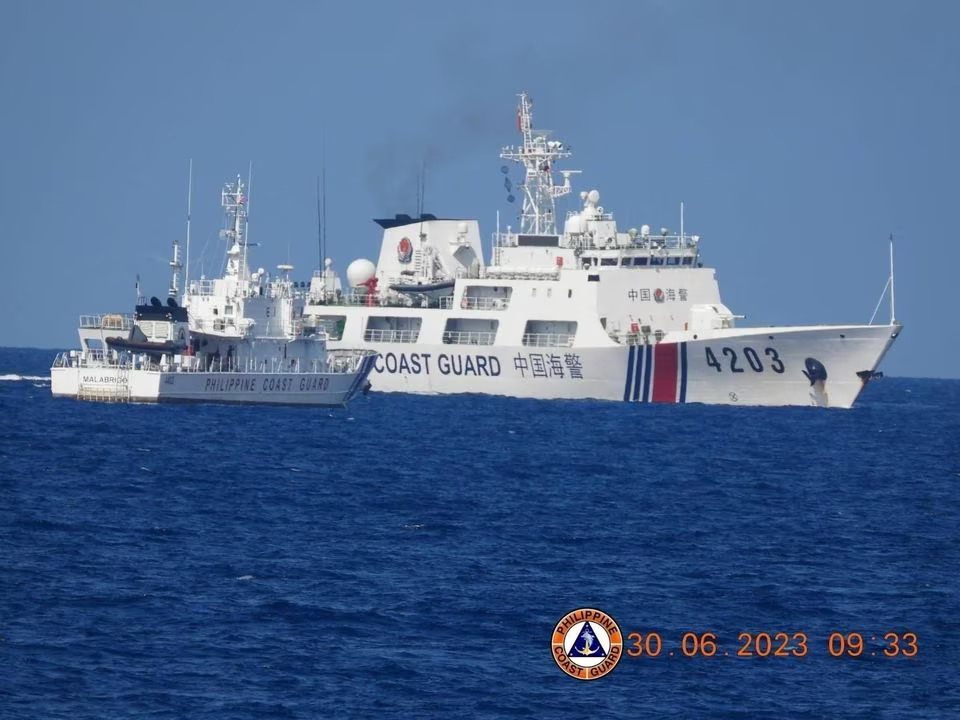
The United States policy discussion on full-scale invasion is relatively mature: military deployment, ammunition, bases and ally coordination have established frameworks. But in the face of the grey zone, the problem has become more politicized. If China only sends the navy, not the navy, and without the first shot and no mass casualties, at what point should the United States intervene? Sanctions, escorts, maritime police cooperation or direct military involvement?
Beijing can use the slow decision-making process in democratic countries and the different risk preferences of coalition members to design the crisis as a series of “small issues” that need to be revisited. Every time an ally's internal dispute gives more time to move on the ground. That is why Taiwan cannot simply base its security strategy on what the United States would do after the war.
What Taiwan needs is crisis resilience, not just weapons of war
Preparing for a grey zone crisis does not contradict the procurement of warplanes and missiles, but the focus of capacity differs. Taiwan needs to ensure that ports, cables, electricity grids, banks, communications and government information systems remain operational under continued harassment; The maritime patrol force must also have sufficient vessels, legal authorization and cross-sectional command to respond to the scene of “no navy but military back-up”.
More important is the decision-making process. The Government must provide an advance answer to what constitutes a blockade, what triggers international assistance, what requires naval intervention and how to provide a quick account to society. Strategic initiative is lost if the crisis is defined for longer than the other party creates it.
Taiwan society also needs to face psychological war at the economic level. Once shipping risks arise in the Straits, even without a genuine blockade, insurance premiums, stock markets, energy transport and supply chains can fluctuate rapidly. It is quite possible that Beijing will use this market reaction to magnify the panic and make the “war yet to occur” itself a political pressure.
Beijing's most wanted is for war to be effective without war.
From the perspective of the leadership of the Communist Party, the risk of a full-scale war is enormous: casualties, economic sanctions, regime stability and international engagement are unpredictable. It would be much lower if pressure could be exerted through the grey zone to force Taiwan to make political concessions. Therefore, the continued development of maritime police, legal warfare, information warfare and economic coercion in Beijing is not a substitute for a full-scale war, but a complete pressure spectrum.
Focus China believes that one of the greatest areas of error in Taiwan's security policy is to focus all attention on “the day when the PLA lands”. Perhaps a crisis in which no one has declared war is really possible: several marine police ships, an executive order, a cut-off sea cable and a financial panic are enough to test the resilience of Taiwan's social and ally system.
How the war was prepared to win and how the grey areas were prepared to settle without being forced to surrender before the war. These two are equally important for Taiwan. The ideal way to change the status quo in Beijing is never to pay the huge price of landing wars, but to allow Taiwan to accept new realities without realizing them. A truly effective deterrent is to make this low-cost path equally impossible.
Article discussion
Verified members can discuss this report publicly and manage their own content.
Checking member sign-in status…