
Reuters's investigation of 10 September revealed that Iran converted the proceeds of the sale of sanctioned crude oil into a credit line for goods purchased in China through an arrangement similar to the “oil for commodities” that is estimated to be between $2 billion and $2.5 billion. The mechanism involves entities with special purposes in China, and funds are not required to pass through the traditional dollar-based clearing network in exchange for goods such as medicines, vehicles, communications equipment, etc. The report also mentions some dual-use or military-related items.
原始来源 · reuters.com路透调查:伊朗如何以石油信用换取中国商品reuters.com ↗The importance of this chain is not that it replaces a barrel of oil with a car, as is the case with traditional barter trade, but that it combines oil, credit, offshore structures and China to create a parallel settlement system that bypasses United States financial sanctions. For Iran, this is a survival tool; For Beijing, it is a package deal for energy, security and geopolitical influence.
The sanctions are really bypassed, the control of the dollar
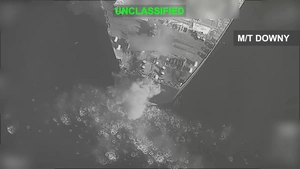
The United States sanctions against Iran have been based on dollar liquidation, international bank compliance and a global shipping insurance system for a long time. As long as transactions go through these nodes, Washington can magnify the pressure through secondary sanctions. But when oil revenues are converted into credit for accounting in China and then used for the procurement of Chinese goods, traditional financial sanctions are partially bypassed.
This is not a simple trade technique, but a microcosm of the fragmentation of the international payment system. While the targeted countries, such as Russia and Iran, have been trying to reduce their dependence on the United States dollar network, China has a sufficiently large manufacturing, banking system and energy demand, which can provide a realistic basis for such an alternative mechanism. Beijing does not necessarily need to publicly declare “an anti-dollar alliance”, and as long as more and more transactions are made outside the United States dollar, the marginal effectiveness of the sanctions instrument will decline.
What is truly worth the US and Europe’s vigilance is not whether or not a single Iranian oil has been sold successfully, but whether a sanctioned country can obtain a long-term replicable “export for survival” closed loop in the Chinese market.
China gets more than cheap oil
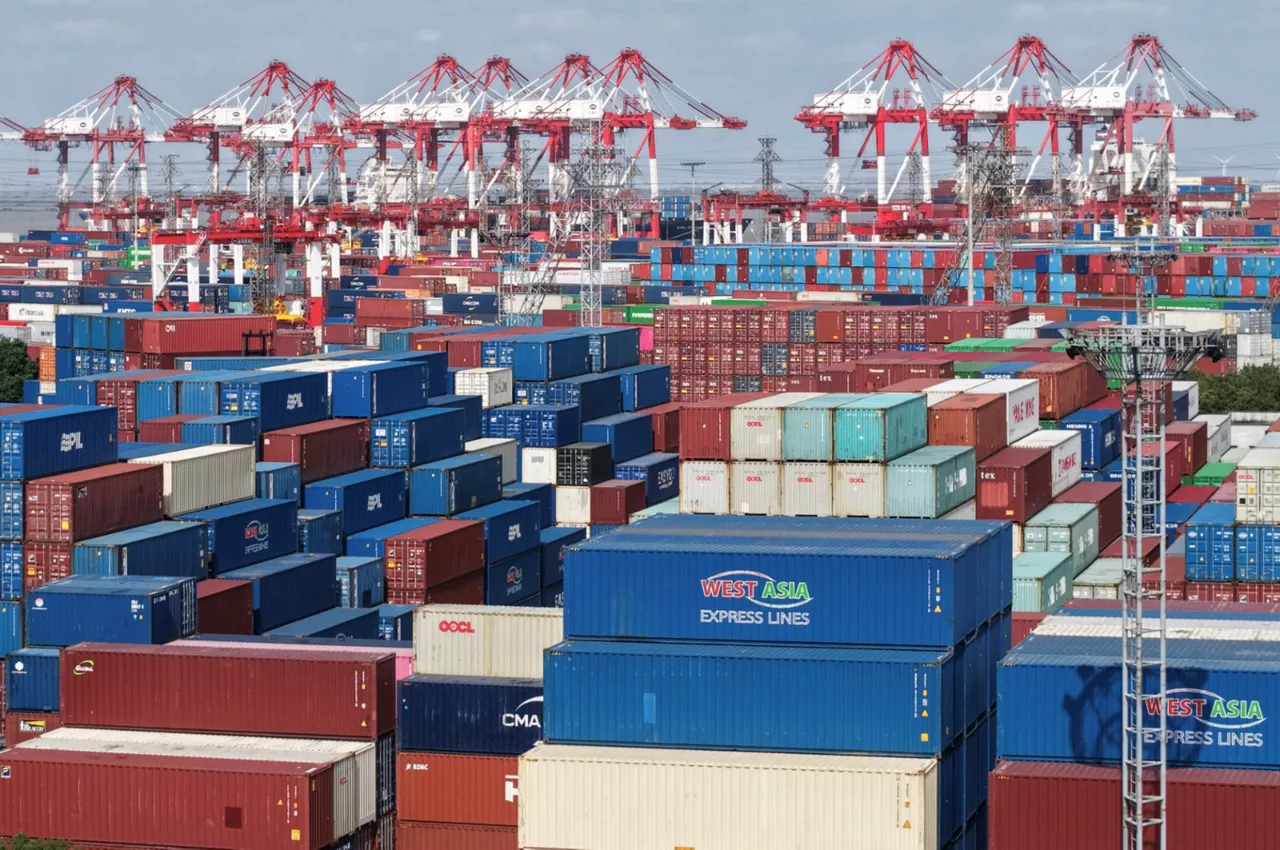
Iran needs to stabilize buyers, and China needs to diversify its energy sources. For Beijing, the purchase of sanctioned crude oil usually implies a stronger bargaining power; More importantly, Chinese enterprises can export domestic industrial goods, cars, communications equipment and other commodities to Iran, creating a “bi-directional digestion”: both energy and manufacturing capacity.
This arrangement is highly compatible with China's current capacity structure. China ' s manufacturing industry faced inadequate domestic demand and rising barriers to trade abroad, and markets like Iran could not replace Europe and the United States, but could be a conduit for exports of some industrial, equipment and infrastructure products. Economic interests therefore naturally overlap with geopolitical interests.
Risks are also synchronizing
If the United States determines that more Chinese enterprises, financial institutions or logistics nodes directly assist in the evasion of sanctions, the secondary sanctions may be further expanded. Chinese enterprises will then have to choose between the US financial system, the European market and Iranian operations. This is not cost-free for large State enterprises; For smaller companies with limited international exposure, the cost of circumvention may be lower.
The mechanism revealed at least three trends:
- Sanctions are forcing more non-United States dollar, non-traditional banking structures;
- China's enormous manufacturing capacity, which makes it natural to have “commodity clearing centre” conditions;
- The relationship between Beijing and Tehran is increasingly not just a diplomatic gesture, but a network of interests, specifically in energy, shipping, settlement and supply chains.
Iran and China have both long criticized the lack of legitimacy of United States unilateral sanctions. Beyond political positions, reality is even more noteworthy: As long as China is willing to provide market, commodity and clearing space, Washington will find it difficult to cut Iran’s external economic cycle completely by the financial blockade alone.
According to Focus China, this oil-for-commodity system is indicative of the fact that the global sanctions war is entering its second phase. The first phase was the use of the United States dollar and the financial system to block opponents; The second stage was the establishment of alternative corridors by the targeted countries around the Chinese market. Beijing will not play “life savers” for free, in exchange for energy discounts, market influence and geo-mechanical leverage. Iran was breathing, China was being leveraged, and the United States dollar-led sanctions order was being worn down.
Article discussion
Verified members can discuss this report publicly and manage their own content.
Checking member sign-in status…