
According to the judgment, due to the reality of state-owned enterprise policy restrictions, the establishment of a platform company in the name of natural persons, the funds are used for unit projects, subsequently the higher-level units are confirmed, the formation of a unit debt relationship, i.e. business registration appears as a natural person shareholder, still does not constitute a crime of abuse of public funds. The encounter of the 72 year old state-owned enterprise cadres, Yuan Jian, is very similar to this public trial case. The same is the state-owned enterprise is in business difficulties, the same policy is restricted only to register a new company in the name of an individual, the same movement of public funds is used for the refinancing.
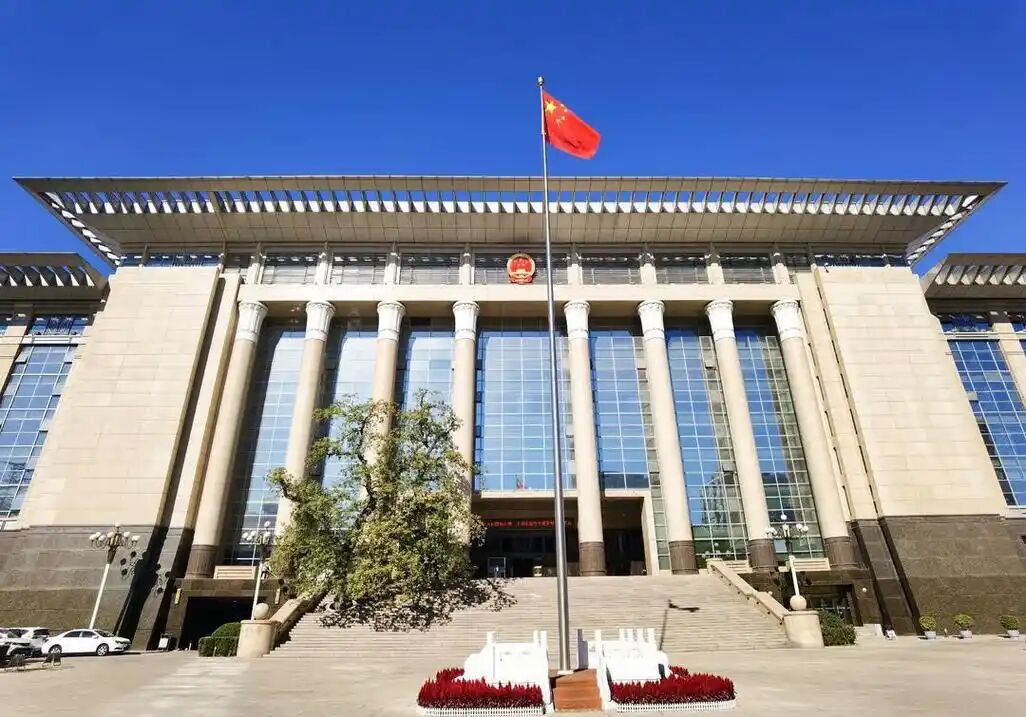
What is the real misuse of public funds? It is not simply to see whether the funds are passed through a personal account, nor is it only to look at the name of who is written in the business and business registration. The record of the Supreme People's Court economic crime trial is clear: the head of the unit disposes of public funds for the benefit of the unit, does not seek personal private benefit, does not be convicted of misuse of public funds. The High People's Court of Guangzhou (2001) Nanjing High Penalty 2 final sentence No. 175 comes into effect, is a typical manifestation of this judicial spirit. Misuse of public funds no crime case: the leadership of the state enterprise directs others to establish a company to obtain a loan of one million, there is a debt relationship innocent.
In this case, the provincial green production office plans to set up a project in Tianjin, to allocate 1 million yuan in financial transfers. The original plan was to be handed over by ZTE, but ZTE could not meet the warranty conditions, and the project was blocked. In order to preserve the government-established KTE Window project, the parties agreed that, under the restrictions of the policies at the time, the company could only be established by ZTE, in the name of natural persons, to undertake this government project, and the funds were used for the operation of the project. The case authorities initially accused the two of constituting a public crime. The first trial made a criminal verdict. The two were judged innocent, and the core of the judgment is very worth thinking:
Although Longsun Company's industrial and commercial registration belongs to natural persons, the company actually undertakes the government's Qingdao Window Project; after the provincial Green Production Office meeting confirmed, Longsun Company undertakes the renewal project, undertakes the obligation to return 1 million yuan of transaction money, and forms a creditor's debt relationship with the competent unit.
The case's key arbitration logic: it can not be mechanically applied to the surface information qualitative cases of industrial and commercial registration, to penetrate the form to see the substantive purpose; funds are used for the unit project, after the case, the competent unit confirms the acceptance of the subject, confirms the repayment obligation, forms the unit-level creditor debt; there is no evidence to prove that the perpetrator seeks personal private gain, does not meet the core component criteria of abuse of public money "public money for personal use".
Return to the Yin Yuan case: There is a very similar reality situation with the above cases. Twelve years of a labor model flooded: after adhering to the principle, hoping for a rule of law fair response and looking back on Yin Yuan, the background of the two cases has a stunning similarity. In 2007, Yin Yuan Yuan Yuan Yuan Yuan Yuan has stopped operating for four years as a state-owned company. Enterprise business license failed to handle coal management qualifications, hundreds of employees lost their livelihoods and sustained pressure was great. By the policy of the time, the approval threshold for state-owned enterprises to set up new companies in different countries was very high, and the new state-owned entities could not be directly registered.
In order to complete the refinancing, 550 million yuan were transferred from the company's account to be used for the company's registered refinancing. The short-term turnover of the funds, returned 5.4 million yuan within ten days, and the remaining 100 million yuan were fully refunded in the trial phase.
Subsequently, the Shaanxi Energy Corporation issued several official redhead documents, confirming that the Shaanxi Corporation belonged to the direct subsidiary of the company; the case authority also in 2009 transferred all the license procedures of the Shaanxi Energy Corporation to the Shaanxi Energy Corporation to take over.
But the end of the innocence case in Guizhou is different: the final judgment in this case is based only on the business and business registration showing natural shareholders, determining that the company belongs to a private private enterprise, the funds belong to the use of public funds for personal use, and the judgment that the Yunnan constitutes the crime of the use of public funds.
Combined with the full set of complaint materials submitted by Zhou Yuan, in contrast to the judgment of the Guizhou High School of Innocence, this case emerged multiple legal disputes:
Controversy 1: Looking only at business registration, do you ignore the substantive background of the case? The judgment of the High Court of Guizhou has suggested that business registration is only a public form, the judicial conviction should penetrate the real purpose of the form of review of the behavior. The evidence submitted by Yang Yuan is that the starting point for the establishment of a promotion is to solve the state-owned enterprise crisis, the resettlement of employees; the start-up costs are reimbursed by the state-owned enterprises, all certificates are transferred to the state-owned headquarters after the case, and the issued letter of the higher-level units confirms the identity of a direct enterprise.
Controversy 2: the circulation of funds, is the personal misuse, or the state-owned system internal transfer? the misuse of public funds crime was established, the core element is "to the personal use", requiring the perpetrator to have the subjective intentional central disciplinary commission for personal gain... In the case of Guizhou, although the funds entered the newly established company account, but because the project belongs to the unit project, the competent unit confirmed the repayment obligation, form the debt between the units, so it is not recognized as misuse. In the case of Yuan Yuan, the 5.5 million funds are only used for the circulation of capital, the full amount is returned, does not cause the loss of state-owned assets; after the cancellation of the working group, the company has also
Dispute 3: How to judge the effectiveness of key evidence? A core evidence in this case, for April 3, 2008, the company's written reporting material to the company's headquarters, copies marked by the company's archive manager "compatible with the original" and attached to the publication, the year submitted to the Zhejiang Central Court, the commitment officer also called the company's head to verify the source of the material. The original trial can not find the original copies of the archive to deny the effectiveness of the copy. and the state enterprise has repeatedly relocated, archive management omissions, in reality is not seen.
Controversy 4: The scale of the handling of the case brings reasonable suspicion the actual operation funds transferred, Cao幸, was arrested in the same period as Yang Yuan, the subsequent prosecution agency withdrew the prosecution with evidence change. and leading the state-owned enterprise self-saving Yang Yuan was convicted. the same funding incident processing results differences, let the case facts determine whether to meet the criminal criteria of "exclude all reasonable suspicions", a question mark.
In addition, the people's procuratorate issued a letter in 2023 to confirm the authenticity of several documents of innocence, while disclosing that the prosecutor in the original case had been punished by the disciplinary committee, and suggested that the accepting authority fully reviewed the case.
The scale of the law: Distinguish between business violations and criminal crimes The Supreme Law "The National Court of Economic Crime Case Trial Work Symposium Report" clarifies: When the head of the unit decides to use public funds to individuals for the benefit of the unit, it is not to be convicted of abuse of public funds. If the act causes loss, it can be treated according to discipline and prosecution, but does not rise to criminal crime.
In the years of the reform of state-owned enterprises, many state-owned enterprises will encounter policy barriers, and in practice there are "formally individual shares, substantially unit management" practices. Such behavior, often belonging to the business level of violations, whether it is necessary to use public funds for abuse criminal evaluation, has been a difficult point in the trial of criminal offences. The judgment of the Guizhou High School of Justice, reflects the judge's thinking of "penetrating the form, examining the substantive purpose, distinguishing violation of discipline and crime".
Now 72-year-old Zhu Yuan is still on the way to appeal. He does not seek compensation, but only hopes that the judiciary will be able to fully examine all the evidence, in line with the spirit of similar effective judges, to re-clear the boundary of crime and non-crime.
A judgment is not the end of justice, the establishment of judicial supervision procedures is to leave a way to correct cases that are doubtful. A judgment is not only about the late innocence of an elderly person, but also for the same type of state-owned enterprise historical legacy cases. We look forward to the judiciary to comprehensively review all the evidence and give a factual, legal and historical testable answer.
Article discussion
Verified members can discuss this report publicly and manage their own content.
Checking member sign-in status…