

Sichuan human rights defender, a member of the Church of the Autumn Covenant, Chen Yun Fei, again lost his liberty.
According to the latest information, Chen Yun Fei was previously held in administrative detention by the local police during his trip to Gansu province. After the administrative detention had expired, he was not released to his personal liberty, but was handed over to the Chengdu police by Gansu police, who are currently detained in the Winjiang district of the city. It is a matter of concern that, to date, it has not been possible to ascertain which specific place Chen Yun Fei is being held in or what legal measures the police have taken against him. The police report states that they did not indicate whether he was in a detention centre, other places of detention or in a state of surveillance.
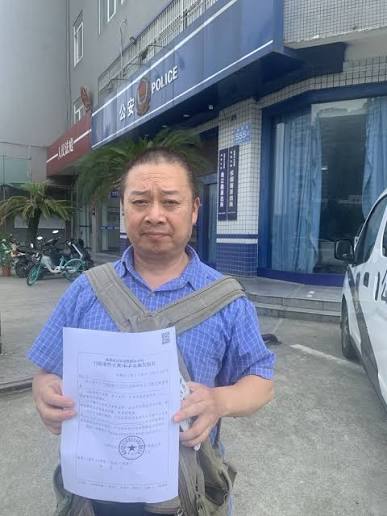
On 23 August, Autumn Church members contacted Chen Yun Fei ' s nephew, Chen Peng. Chen Peng told the general public that Chen Yun Fei was currently in Winkang and was “no problem”. However, when Chen Peng was further informed, the police did not disclose the specific place of detention. The police also asked Chen Peng Soo for contact information for Chen Yun Fei ' s daughter, who refused to provide it on the grounds that she was abroad; The police subsequently stopped disclosing further information to Chen Peng on the grounds that he was not a direct relative.
This raises a crucial question that must be asked: What is the legal basis for Chengdu's continued restriction of his personal liberty by the Gansu police, since the administrative detention of Chen Yun Fei has expired?
The public information is not yet sufficient to confirm that the police have taken criminal custody, residential surveillance or other coercive measures against Chen Yun Fei and therefore cannot make legal characterizations ahead of time. But at least a few basic facts need to be publicly stated by Chengdu police: where is Chen Yun Fei? (a) Which public security organ or unit is responsible for the investigation of the case; What legal measures have been taken; (b) The law and the specific grounds for the continued restriction of his freedom; Has the relevant legal procedures to be fulfilled by law been completed?
In ordinary cases, these issues are basic procedural information; But it is difficult to observe this loss of liberty alone from his experience of the past nearly 40 years.
Chen Yun Fei was born in Sichuan in
- In 1989, he joined the 899th People ' s Movement. After the repression, he returned to Sichuan but did not stop public expression as a result. For decades, he has been involved in helping people visit, honouring the victims of the six or four deaths, demanding that the official ' s property be made public and participating in civil rights activities on a continuous basis. These activities are the subject of repeated surveillance, warnings, house arrest, detention and even criminal sentences.
(b) On or about 4 June 2007, Chen Yun Fei was taken away by the police and subsequently placed under surveillance for the publication in the Chengdu Evening newspaper of an advertisement in tribute to the mother of the six or four victims; In 2008, he was warned by the police for his involvement in blood donation to commemorate the 64th. During the Jasmine incident in 2011, he was again subjected to restrictions on his freedom. Relevant human rights information has long documented this series of experiences.
In 2013, Chen Yun Fei further pointed political expression towards the open question of power. He participated in the presentation of an open letter to the Standing Committee of the Sichuan People ' s Congress and the proposal of citizens to request senior officials to disclose their property, and in the artistic and behavioural protest against the restrictions on leaving the country. These actions are not about violence but about political expression, public oversight and citizens ' rights.
For the first time, Chen Yun Fei was admitted to prison for a long time.
On 25 March 2015, Chen Yun Fei and over 20 human rights defenders travelled to Chengdu Sin, where they were buried by the students of Shao Jie and Wu Guo Feng, who died in
- On his return journey, he was placed under police control and subsequently detained and authorized to be arrested on criminal charges of “inciting subversion of State power” and “silent crime”. The charges of “inciting subversion of State power” were subsequently dropped and the case was eventually prosecuted for “silent crimes”.
On 31 March 2017, the People's Court of Wuhuo District of Cheng City sentenced Chen Yun Fei to four years' imprisonment for “scattering”. After his appeal, the Chengdu Court of Central Jurisdiction did not hold a public hearing and the second hearing upheld the sentence. The public counsel's material indicates that one of the core objections to the first instance judgement was that his actions did not constitute “silentness” in the criminal law sense.
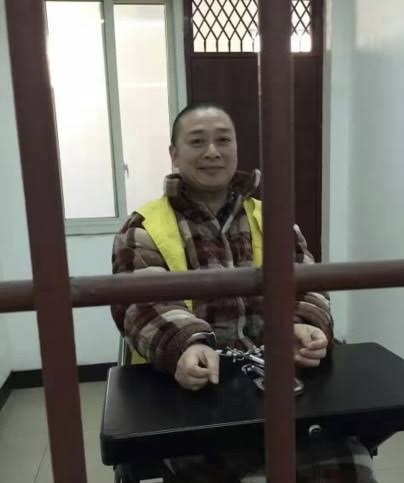
More worth pursuing is what happened in custody. (b) The fact that his lawyer publicly disclosed that Chen Yun Fei was subjected to punishment in the Sinjin County Detention Centre, including handcuffs, shackles and injuries to his wrists; Counsel then made representations concerning the treatment and was prepared to take legal action. This means that when Chen Yun Fei is returned to a non-transparent detention today, outside concerns about his physical security and treatment in detention are not without historical reasons.
On 25 March 2019, Chen Yun Flying was released from prison. However, the “expiry” did not mean that he was truly free of the continuing control. Public information indicates that in September of the same year he was again held in criminal custody by the Chengdu police and was given a guarantee after one month; In 2020, he was again under police control for, inter alia, his participation in the sixty-fourth anniversary of the Internet.
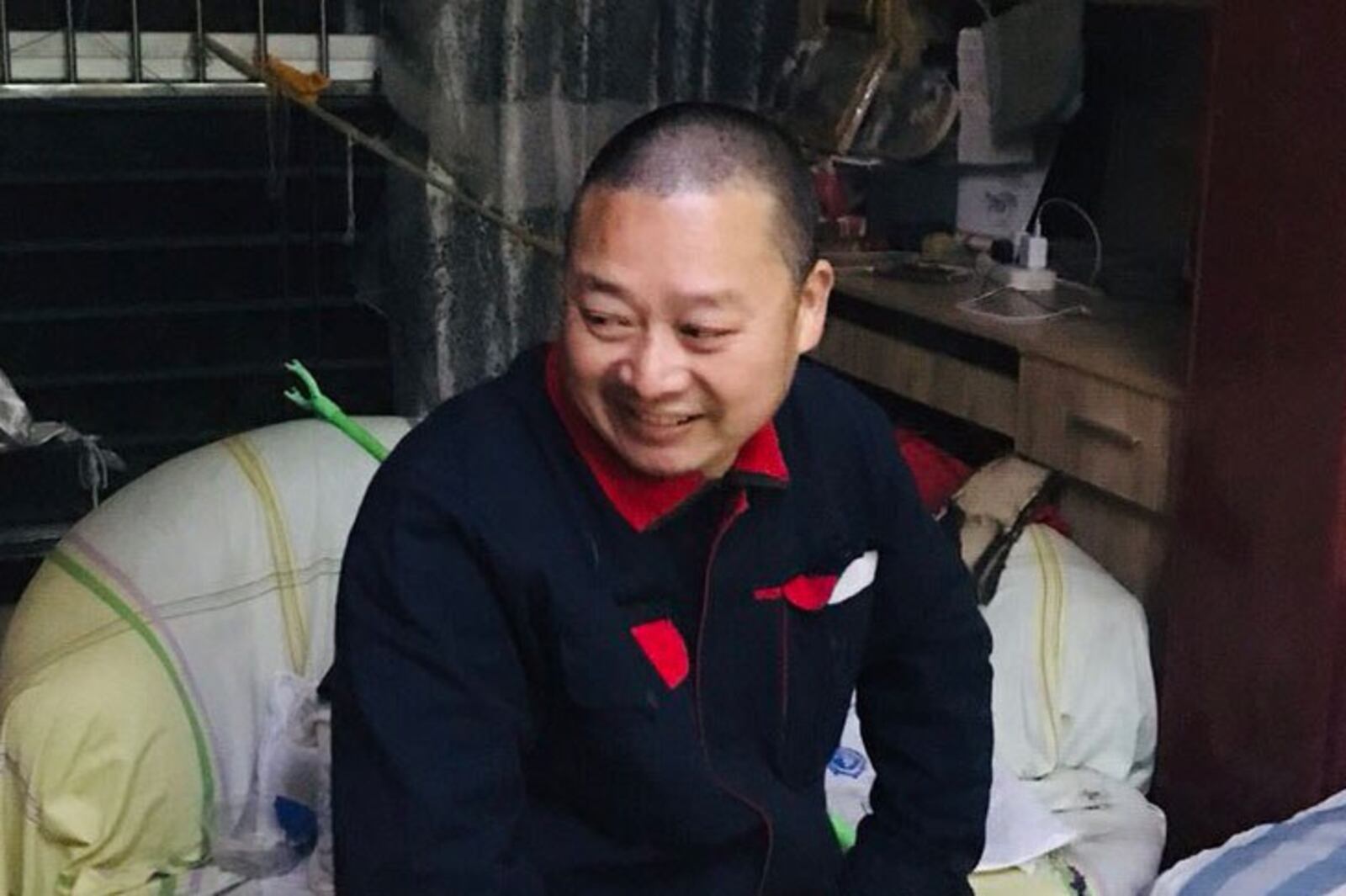
On 25 March 2021, Chen Yun Fei was again arrested. Public human rights information indicates that he was formally arrested in April of the same year, tried on 3 December and again sentenced to four years ' imprisonment until his release on 24 March 2025.
However, after the second sentence, control over Chen Yun Fei remained to be completed.
In June 2025, Radio Free Asia interviewed Chen Yun Fei-Tu, who reported that less than three months after his sentence had expired on 24 March, he had been taken away for questioning by the police on several occasions for statements and forwarding in social media. Reports also indicate that on 3 June he was again taken away by agents of the State Security and Police Stations of the Chengdu district, where interrogations lasted for several hours.
原始来源 · rfa.org陈云飞出狱后警续骚扰 母亲财物失踪生活陷困境中国成都异议人士陈云飞刑满出狱尚不足三个月,再度陷入打压旋涡。警方多次传唤讯问、限制其行动自由,其91岁老母在他服刑期间不仅遭强制驱离、受伤,家中财物亦神秘消失。陈云飞维权无门,正准备提起民事诉讼。rfa.org ↗After entering 2026, Chen Yun Fei appeared in another round of law enforcement incidents because of his membership of the Church of the Autumn Covenant. On 14 June this year, the Church of the Holy Covenant in Autumn Rains was brought to the scene by members of several government departments during a meeting held under the line of Sichuan River Oil and took away several members of the church. The relevant information indicates that Chen Yun Fei is also one of the persons under control; After his release, he claimed that he had been beaten during his period of control and that his request for medical treatment had not been met. This is partly due to Chen Yun Fei ' s own statements and those of the Church, and no public statements on the allegations have been made by the law enforcement authorities concerned.
Two months later, he again lost his freedom.
If the time is extended, the most noteworthy of Chen Yun-Yung's experience is not just one arrest, but a cycle that has lasted for nearly 40 years: participation in the 89th PLM, commemoration of the 64th, demand for public property, assistance to defenders, political opinion and participation in the activities of the family church, often followed by surveillance, summonses, restriction of movement, administrative detention, criminal detention and even long periods of imprisonment.
It is particularly noteworthy that he has twice completed the full sentence handed down by the Court. The first time that he had served his sentence in 2019 and the second time in 2025, after each time he had left prison, neither his political stability nor police control had really ceased. The second time served until this time, but for more than a year.
This is where Chen Yun Fei's case transcends personal fate.
If a State has a penal system with clear boundaries, the completion of a person ' s sentence means that the punishment imposed by the State on the basis of an effective sentence has been completed. The restriction of his personal liberty should be based on new and clear facts and legal procedures, and should not allow a citizen to de facto enter a “focus” state of administration without an end end to his political identity.
From the university students in 1989, to the public commemoration of the 64th anniversary in 2007, to the arrest of the six-and-four-year-old victims in 2015, from two four-year sentences to 2026, Chen Yun Fei ' s life was almost complete, spanning decades of steady control of dissidents after the 6-four-year repression of China.
The question that needs to be answered most is not a complex one.
Since administrative detention of Gansu has ended, why can't Chen Yun Fei go home?
If the Chengdu police have initiated a new case, the appropriate legal procedures should be made known to the outside world; If new coercive measures are taken, their nature should be clarified by law; If Chen Yun Fei is still restricted in his personal freedom, then at least one of the most basic questions — where is he being held?
As of the time of the submission, the public information available only confirms that the legal measures currently taken by Chen Yun Fei in the Chengdu Win River District, the specific place of detention and the Chengdu Police are still unclear.
From the six and four sacrifices to two jails, and to today’s loss of liberty, Chen Yun Fei’s experience leaves a record of not only personal suffering of dissidents, but also a file of how China’s political stability system has worked for specific individuals in the long term.
China will continue to follow up on the specific places of detention of Chen Yun Fei, the legal measures taken by the Chengdu police, the case-in-chief and their access to a lawyer.
Article discussion
Verified members can discuss this report publicly and manage their own content.
Checking member sign-in status…