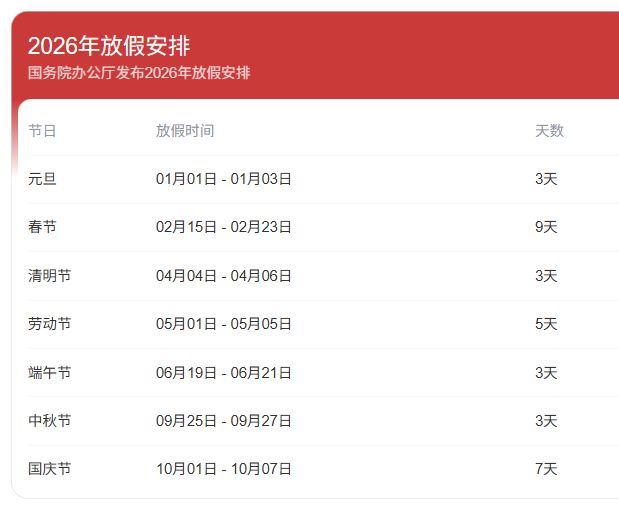
China will be on the Fourth of October 1-7. The 2026 holiday arrangements, published by the State Council Office, provide for 7 days of holiday on the National Day, to be observed on Sunday, 20 September, and Saturday, 10 October. The holidays have not yet begun, and the issues of “replacement”, weekends and double-leaves have once again become a focus of public opinion. Reuters reported on 29 September that discussions around the right to rest were expanding from individual complaints to consumption choices, business evaluations and legal advocacy.
As of Reuters, the topic “Voices against holiday breaks cannot be ignored” had about 360 million views and 120,000 discussions. Suzy Li, a 27-year-old tourist worker, told Reuters that she intended to reduce the consumption of travel, take-out and taxis during vacations, as she believed that the arrangement of long leave through the use of weekends weakened the normal rest time of the workers.
Readjusted to work days on 20 September and 10 October
The 2026 Leave Circular issued by the Office of the State Council in November 2025 clearly states that the National Day of the State will be on a break of absence for seven days, from 1 to 7 October, and that it will be open for work on 20 September and 10 October; The circular also encourages employers and individuals to combine paid annual leave to create longer leave periods and to promote a wrong peak.
The administrative logic of the break system is to re-assemble the scattered weekends and the statutory holidays into consecutive holidays; The dispute arises as to whether workers actually get more rest after their personal time has been rescheduled. For jobs where a single, overtime or shift system already exists, continuous leave does not necessarily amount to an increase in rest time.
“Twin shopping” makes working conditions visible to consumers
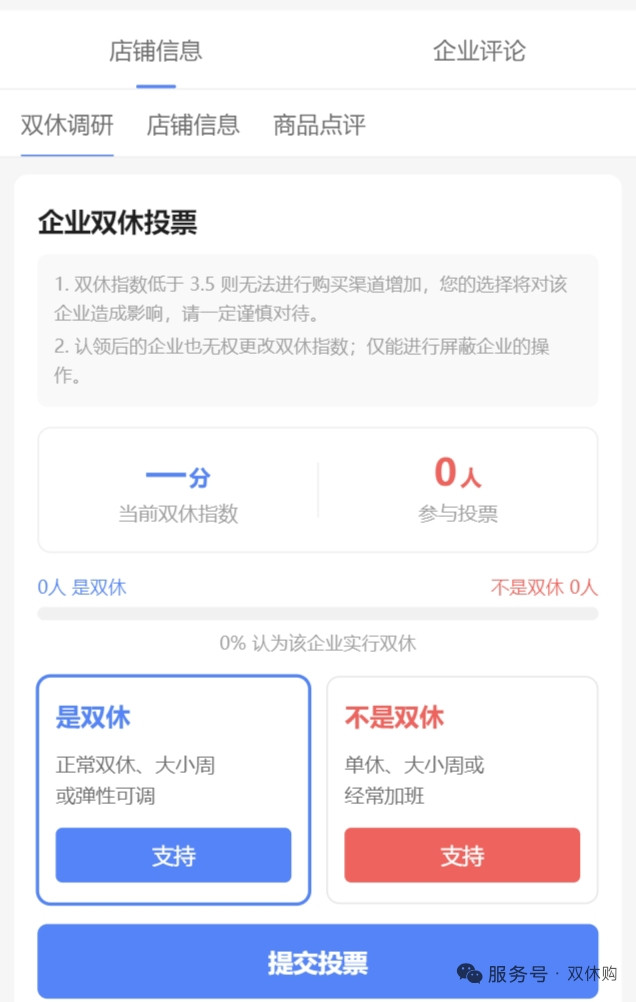
Reuters reported that in July this year, a Twitter application called “Wift-over-the-Wift” went online, where users could query, evaluate and encourage consumers to give priority to the business of double-suspension. The application ceased operations in September after attracting some 150,000 participants; The report cites public information that the reasons relate to unspecified regulatory issues.
原始来源 · cqnews.net华龙网转载极目新闻:“双休购”平台与消费者行动cqnews.net ↗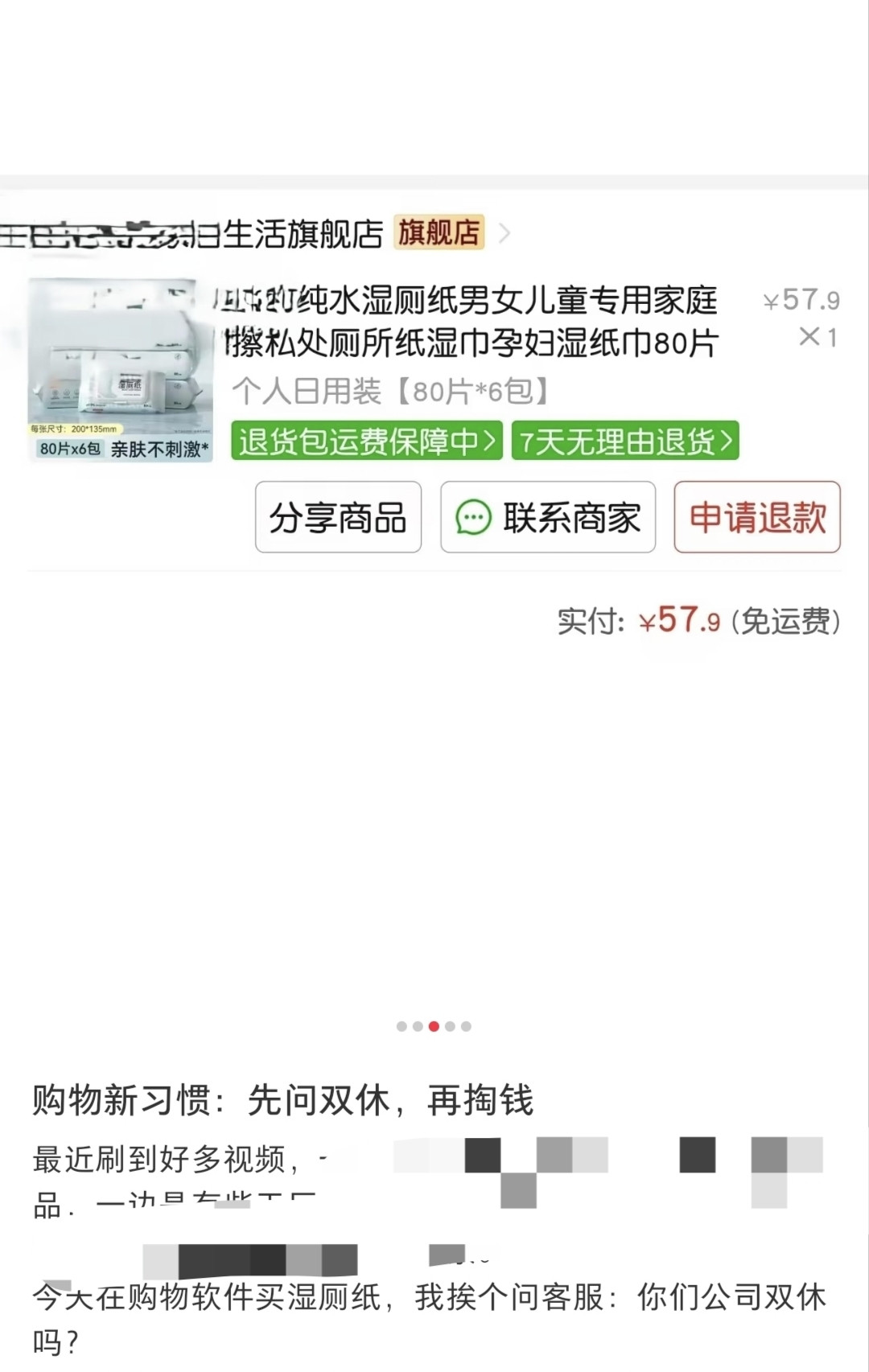
If a labour issue can only be dealt with within the enterprise, it is often difficult for the public to know which companies are long-term dependent on overtime work; The “twixt-twice” attempt to translate internal working conditions into information that consumers can identify and compare. It also touches the regulatory boundaries of China ' s Internet platform and social mobilization.
Reuters also mentioned that search and discussion related to the application was subsequently limited on some platforms. This restriction has been interpreted by external observers as a measure of the authorities ' vigilance against social organization and the spread of collective action; This explanation is an analytical judgement and cannot be a substitute for specific reasons for disposal that have not been publicly stated by the platform or the regulator.
Labour disputes have increased, indicating that the problem is not just “how to schedule vacations”
Reuters quoted the Supreme People ' s Court of China as saying that, in the first nine months of 2025, courts at all levels had handled 648,000 labour disputes between workers and employers, an increase of 37.5 per cent over the previous year. This figure covers a wide range of labour disputes and cannot be directly equated with a break, but it shows a marked increase in labour relations litigation over the same period.
The report also mentioned the continuing online controversy over the dismissal of current graduates, unpaid overtime and overtime work since the current year. The Ministry of Human Resources and Social Security, the National Office of Information on the Internet, did not respond to requests for evaluation from Reuters.
The time off is decided by who, and is becoming a governance issue
The break, which is ostensibly a calendar arrangement, is linked to administrative decision-making, enterprise labour and labour law enforcement. Under the current Chinese system, national holiday arrangements are issued by the State Council Office, and workers and enterprises can express their views on specific implementations, but there is no public procedure for workers to participate directly in determining the national holiday system.
This does not mean that all disputes over the break should be politicized. It is worth monitoring how administrative arrangements affect the actual working hours, whether enterprises pay compensation for overtime in accordance with the law, whether workers have stable access to weekends and paid leave, and why consumer evaluation and networking tools developed around these issues are subject to regulatory restrictions.
From this perspective, the controversy before the Fourth of July is no longer just “no worth the long vacation”. Together with the growth of 360 million browsing, “twisted shopping” applications and labour disputes, an increasing number of workers are beginning to regard rest periods as a specific right and are attempting to provide feedback to businesses and policymakers through consumption, public evaluation and legal procedures.
Article discussion
Verified members can discuss this report publicly and manage their own content.
Checking member sign-in status…