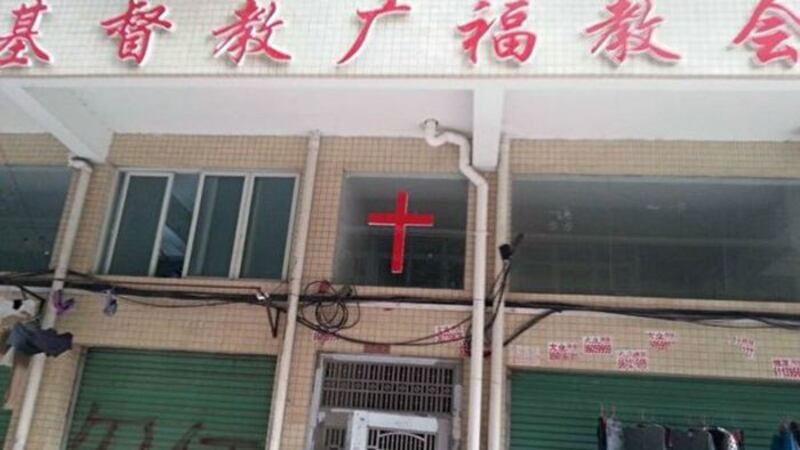
The Guangfu Family Church in Guangzhou, on 27 September, was again admitted to the meeting place by the police. On 30 September, ChinaAid reported that the police had seized on the spot the church ' s paper fan, evangelical plaque and requested the church to leave the existing meeting space. The church said that the fan was used by believers to share Christian faith in their daily lives, with a two-dimensional code of evangelical information.
原始来源 · chinaaid.orgChinaAid:广州广福教会福音材料被没收并被迫离开聚会空间chinaaid.org ↗This operation is not an isolated incident. Public records show that the Guangfu Church has been continuously engaged in local religious, public security and grass-roots intervention since at least 2015: the meeting place was closed and the followers were transferred to worship outside the house; In 2019, local people demanded that the Church fly the Chinese flag and receive religious policy and “religious Chineseization” education; In 2026, the police entered the meeting site again, confiscated missionary material and demanded that the church be moved.
27 September: police entered the meeting place and evangelical materials were confiscated
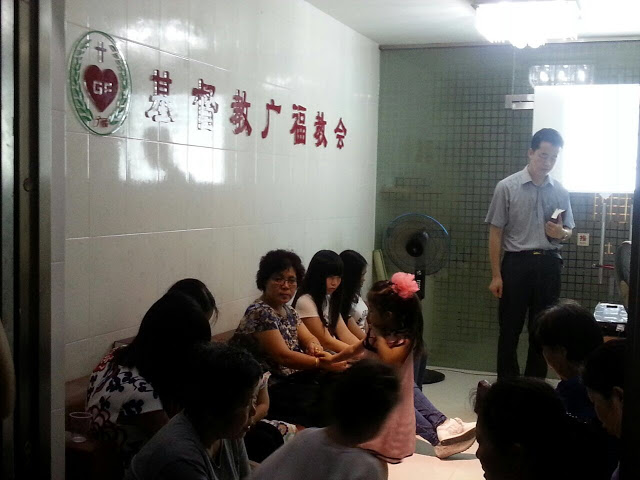
Citing church information, ChinaAid stated that on 27 September the police had entered the meeting space of the Guangfou Church in Guangzhou, confiscated a group of paper fans with evangelical content and 2-dimensional codes and asked the church to leave the site. To date, public reports have not revealed the specific police stations, the number of police officers involved in the operation, nor have they shown whether the police have issued a seizure list or the specific administrative and criminal provisions on which the statement is based.
This information determines how the legal nature of the operation can be accurately judged. If the relevant authorities find the relevant material to be in violation of the law, the specific law enforcement subjects, the legal basis and the seizure procedures should be further identified; If the actions are also intended to compel the Church to stop meeting at its current location, it is also necessary to confirm whether this requirement arises from the public security, religious affairs, grass-roots government or the decision of the landlord under administrative pressure. The public material available is not sufficient to answer these questions.
The Guangfu Church is a family church that has not joined the official Sansagna system. ChinaAid stated that the Church had long insisted on independent gatherings and had repeatedly been pressured by local governments over places and missionary activities. The confiscation of paper fans and evangelical material used to disseminate religious messages once again touched the real boundaries of the non-registered religious communities for missionary purposes, the publication of religious material and the maintenance of meeting space.
2015: Place sealed and worshiped by believers
The conflict between the Guangfu Church and the local law enforcement authorities in Guangzhou dates back to at least
- ChinaAid reported that the church meeting place had been closed by the authorities and that the worshippers had continued to worship outside the door. Historical photographs show believers gathering outside closed meeting places to sing poetry and pray.
In July of the same year, defenders and the overseas media also reported that the Guangfu Family Church in the White Cloud area had been attacked by public security officials and that several of its followers had been taken away. The events in question were a period of continued closure, landlord pressure and party intervention in many of China ' s family churches.
These early events have shown that the places have been important for local authorities to intervene in the family church. For churches that do not enter the official system of religious organizations, the meeting places may face different regulatory requirements, such as religious registration, house use and fire protection; Following the forced interruption of a site, the church moved to private space, and new sites may still be brought back into the custody.
2019: Request for flag, “religious Chineseization” to specific sites
In December 2019, Radio Free Asia reported, based on information provided by the Church, that the Guangfu Church was under constant pressure from the local government. The head of the church, Hae-jun Ma, said that local people had asked the church to fly the Chinese flag at the meeting place and that believers should learn about the Government's religious policy and the so-called “religious Chineseization”.
原始来源 · rfa.orgRFA:广州广福教会长期受压与宗教中国化要求rfa.org ↗These requirements have a clear central policy context. Xi called for a “Chinaization” of religion at the national religious conference and for the strengthening of the leadership of the Communist Party of China in religious work. The CPC Central Programme for the Reform of the Deepening Party and State Institutions of 2018 incorporated the State Religious Service into the Central Integrated War Department, which centrally manages religious work and explicitly proposes to strengthen the central and unified leadership of the party in religious work.
原始来源 · app.www.gov.cn中共中央:中央统战部统一管理宗教工作app.www.gov.cn ↗The Law on the Management of Places of Religious Activity, which was introduced in 2023, further incorporates requirements such as “adherence to the Communist Party of China” and “a commitment to the socialist system” into the norms governing places of religious activity. Thus, State administration of places of worship does not only cover general administrative matters such as fire protection, construction, finance, etc., but also contains clear political requirements.
原始来源 · moj.gov.cn司法部:《宗教活动场所管理办法》moj.gov.cn ↗(a) The continuing institutional tension in the family churches that refuse to join the official religious organization system: registration implies access to the party ' s religious system of governance; Without registration, activities such as meeting places, missionary missions, religious materials and Internet dissemination may continue to face restrictions under the existing religious management system.
2026: Controls touch daily missionary materials
The confiscation of the paper fan is of concern, as it is not a church building or a major religious event, but rather an object used by believers in the daily dissemination of their faith. (a) The existing system of religious administration in China, which sets separate regulatory requirements for religious activities, religious publications and Internet religious information; However, the existing public material does not disclose the content of the actual link to the two-dimensional code of paper fan, and therefore cannot be concluded that the Internet religious information requirement is the direct basis for the police action in question.
Similarly, the central system of religious governance, which can explain the long-standing policy environment in which the Guangfu Church has been living, cannot automatically prove which article is the basis for the specific detention of 27 September. The determination of the legality of the enforcement, who decides and at what level of authority the responsibility rests still needs to be based on on on-site law enforcement instruments, seizure lists and relevant department statements.
From 2015 to 2026: Change of instruments, continued administrative intervention
The Guangfu Church, by stretching the time line, is not faced with a mechanical repetition of the same law enforcement measure for more than a decade, but with different forms of administrative intervention. The centrepiece of 2015 was the closure of the party premises and the removal of persons; Pressure in 2019 included flying the flag, receiving religious policy and “Chinaization” education; In 2026, the police seized evangelical materials and asked the church to leave the meeting space.
These incidents took place in the same institutional context: the Communist Party of China has incorporated religious affairs into the general war and administrative system, and has incorporated political demands such as party leadership, “religious Chineseization” and other political requirements into religious governance policies and norms of site management. The Chinese Government, for its part, has publicly advocated that freedom of religion and belief be guaranteed in accordance with the law and that religious affairs be administered in accordance with the law. The core issue, which has emerged from the experience of the Guangfu Church for over 10 years, is how this State religious governance, when it enters a family church that refuses to join the official system, can play a specific role in its premises, personnel and communication activities.
The key issue left by the events of 27 September is therefore very specific: which authority decided to take action, what legal documents were used by the police to seize evangelical material, and who decided to ask the Church to leave the existing meeting place? Before these law enforcement documents and subjects of responsibility are made public, it can be confirmed that the police entered, that the materials were confiscated and that the church was required to leave; The identification of specific grounds for enforcement cannot be replaced by institutional context alone. It is for that reason that the identification of the chain of executive organs, legal documents and decisions is the key to determining the attribution of responsibility for this operation.
Article discussion
Verified members can discuss this report publicly and manage their own content.
Checking member sign-in status…