
On the one hand, the conference room demands "deep learning" and "deep understanding", but on the other hand, the "Xi Jinping talks about governance of the country" on the garbage truck is bundled and has little to no trace of reading.
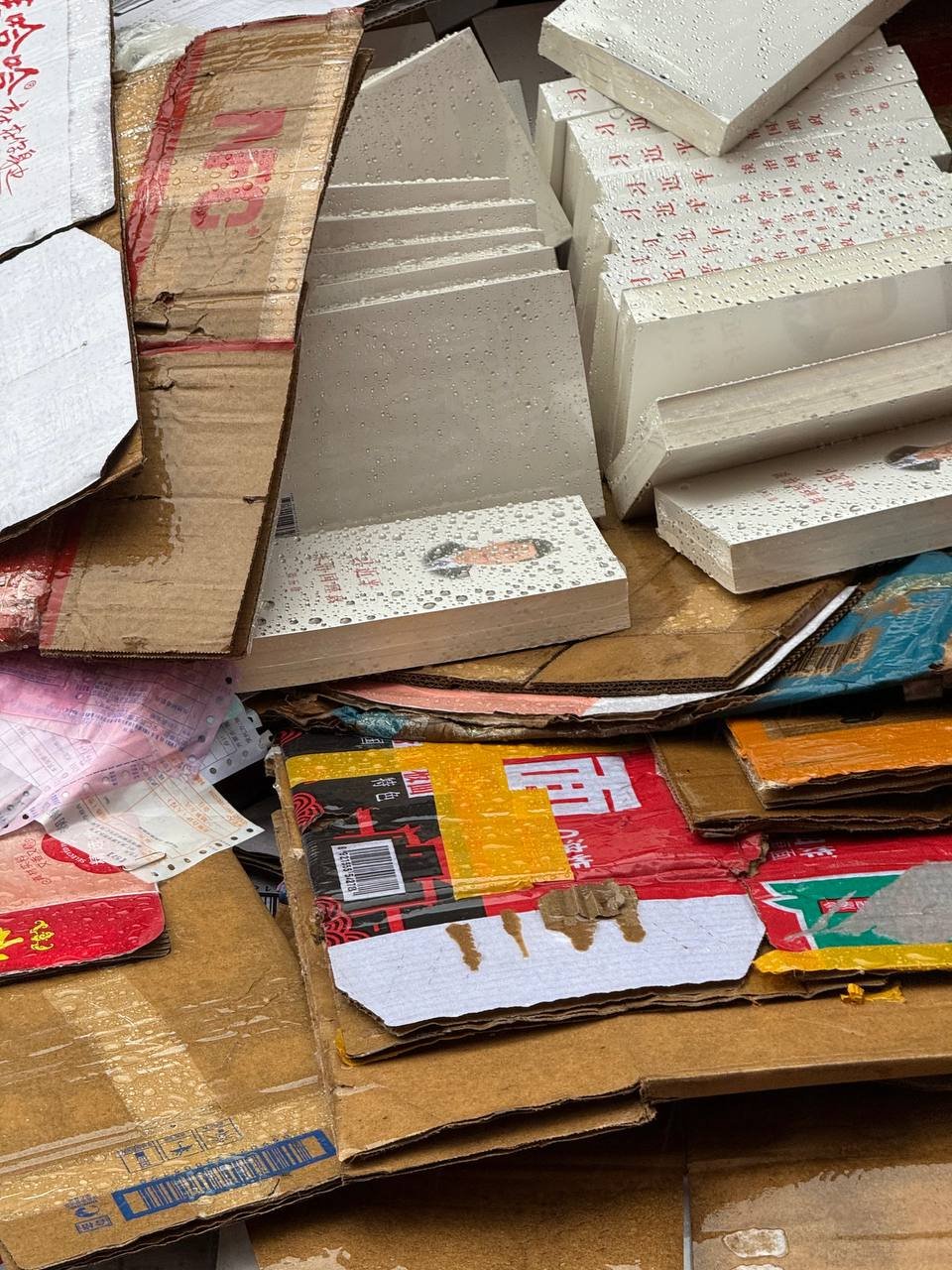
Photo from the scene: Car recycling into the waste recycling
Two recent live photos showed that on a recycling vehicle loaded with waste paperboard and packaging box in Hunan, a large number of white refined books were directly stacked in the waste paper pile.Some book covers can recognize the word "Xi Jinping talks about governance", many books look clean, the back of the book is flat, not even like the old book after long use.
According to the photo provider, the book comes from a high school in Hunan and is treated as waste by the school.But so far, Focus China has not obtained the name of the school, the disposal list and the school's description, so the specific school, the number and why it has been cancelled, need to be further verified.
But the irony of this set of photographs is not that a few books were thrown into garbage cars, but that it crashed into a long-suited political ritual by the officials of the Chinese Communist Party.
Official training continues.
In recent years, Hunan officials have continued to promote concentrated learning on Xi's related writings and speeches.In September 2025, Hunan Provincial Commission Theoretical Learning Center Group alsoSpecifically organized study of the Fifth Volume of Xi Jinping Talks on Governance of the StateIn 2026, the Hunan Provincial Department of EducationContinuing to promote the integration reform of large and medium-sized schoolsXi Jinping's relevant ideas are used as political guidance for educational work.
In other words, in the official discourse system, such books are not ordinary publications, but are given a high political significance: to study, to study, to enter institutions, to go to schools, to go to classrooms.
But the scenery on the garbage car gave another answer – when the political task was completed, books that had been asked to “learn seriously” and may not even have the chance to be really read, completed the transition from “political reading” to “waste paper”.
This is the most absurd part of the Communist Party’s political propaganda system.
Between Administrative Promotion and Real Reading
A book that is truly valuable should come from readers who are actively reading, discussing, questioning and choosing, and not by executive orders, collective procurement, conference communication and evaluation indicators to create a “learning boom”.
Officials can publish the issue of numbers, can organize thematic study, can take photographs of cadres dedicated to book research, can also ask schools to carry out "intellectual" thought education; but it can not create real reading interest with executive orders.
Even more striking, the official media in Hanoi earlier this year.The Fourth Volume of Xi Jinping Talking About State Governance in Local "Hot Sale"Xinhua bookstores set up a vigorous exhibition rack to create a scene for the public to actively buy and learn.
A few years later, if books of the same type really entered the waste recycling system in a near-new state, it raised a question the official propaganda never wanted to answer:
How much of the so-called "hot sales" actually come from real personal reading needs, and how much from the administrative procurement of party and government organs, institutions, schools and state enterprises?
If a political book needs layered deployment in order to be "best-selling", and it needs evaluation in order to be "learned", is it actually spreading ideas, or is it accomplishing a political task?
From “theoretical arms” to asset dismantling
More dramatically, Hunan Province this year also specifically required schools to regulate disposal of unused educational assets.Disposal of equipment for teaching and living facilities that loses value in accordance with the state-owned asset processand .
So a very symbolic picture appeared:
The “theoretical arms” in the official documents, which came into the real world, could eventually turn into recycled paper raw materials weighing a kilogram.
The real boundaries must be upheld.
Of course, it is still necessary to distinguish between facts and inferences as to why these books are disposed of: they may be for inventory cleaning, teaching materials updating, asset disbursement or other reasons. Until there is no formal response from the school, it is not possible to assert that students have never read them, nor can the source of funding be confirmed.
But photography itself has been an inevitable political metaphor.
A truly vital idea does not require the school to put books in the classroom by executive orders; a theory that is truly welcomed by young people does not rely mainly on the party committee study sessions, thinking courses and collective procurement to maintain the sense of existence.
When a set of books that are officially defined as “authoritarian writings” and “ideological weapons” lie on the recycling car along with beverage cartons, express packaging and exhausted cartons, the most ironic thing is not the waste station, but the illusion of “people’s learning” that has long relied on the power of the administration.
Waste paper recyclers may only be priced by weight, but the book pile has inadvertently completed the simplest and most cruel market vote: political power can decide a book must be bought to school, but it can’t decide it must be truly read.
Article discussion
Verified members can discuss this report publicly and manage their own content.
Checking member sign-in status…