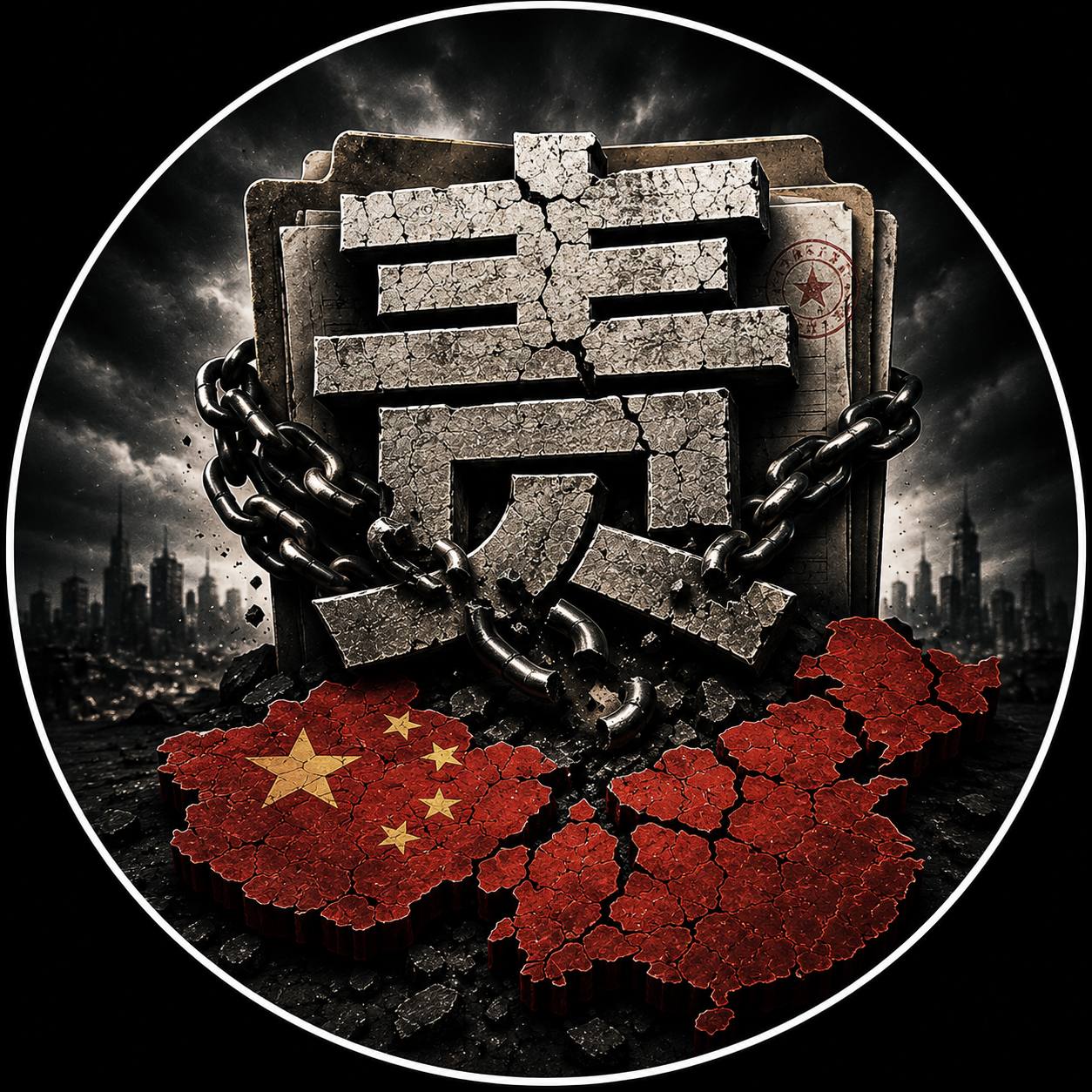

Since taking over the post of Secretary-General of the Central Committee of the Communist Party of China in 2012, and assuming full office, Xi has been carrying out a series of most radical and comprehensive totalitarian re-engineering initiatives in the last few decades. From the forcible abolition of the term of office to the systematic assimilation of peoples on the border and the extension of extreme control to the world, this path of governance goes far beyond the general violation of human rights. An increasing number of international law scholars, United Nations bodies and multinational judicial authorities have pointed out that, driven by the endogenous logic of “political and security panorama”, their dominant behaviour has been in line with the very serious legal character of the Rome Statute as “crimes against humanity”, and has had a devastating impact on global security in general and on the modern civil order.
I. Institutional deconstruction and totalitarian life-long: the instrumentalization of the State machinery
The total reversal of the political system began with the adoption of constitutional amendments by the National People ' s Congress in 2018, which abolished the re-election limit for the President of the State and destroyed the principle of the tenure of leadership and collective leadership established in Deng Xiaoping ' s era. Since the eighteenth century, the so-called “anti-corruption movement” has been used as a tool of full-scale politics, and, while investigating high-ranking party bureaucrats, including Zhou Yongkang, Xu Zhou Zhou, Guo Bhong and Sun Zhengxi, constitutes a deep-seated cleansing of the party's factions and potential opposition.
In the judicial and ideological sphere, the official document No. 9 of 2013 severely stifles universal values, freedom of the press and civil society, establishing the Judicial First name Party and the Political Police. The judiciary is completely detached from its independent judicial function, becoming an administrative security tool to uphold totalitarian rule and to suppress dissent, and the system of checks and balances and oversight is completely deconstructed.
. Xinjiang and Tibet: systematic crimes against humanity and cultural genocide
In the area of border governance, the policy of forced assimilation pursued by the Communist Party authorities has the very clear legal character of “crimes against humanity”. In Xinjiang, the authorities have established a large-scale network of “re-education camps” with hundreds of facilities, arbitrarily detaining millions of Uighurs and Muslim minorities. The authoritative assessment issued by the Office of the United Nations High Commissioner for Human Rights (OHCHR) in August 2022 clearly confirmed that the widespread use of arbitrary detention, systematic torture, forced labour, forced sterilization and religious cultural deprivation on the ground constitutes a “crime against humanity”; Many Governments, including the United States, the United Kingdom, Canada and the Netherlands, have further qualified it as “genocide”.
In Tibet and in Inner Mongolia, the strategy of cultural cleansing has been completely upgraded. The imposition of a residential school system in Tibet, covering hundreds of thousands of Tibetan children, which strips children of their connection to their native language and religious environment, has been identified by the United Nations Special Rapporteur as a systematic “cultural genocide”; The forced abolition of mother tongue instruction in Mongolia in 2020 triggered massive social protests and strong repression.
III. Global public health disaster: the epidemic's hidden and “dynamic zero” cost to lives
In the area of public health and social control, the behaviour of the regime has shown a great threat to the lives and security of human beings. In the early stages of the COVID-19 epidemic, official concealment tactics were used to silence “blowers” like Lee Wenqing and to block key human data, leading to the missed gold control period and the global pandemic. After the incident, the authorities fully obstructed independent and transparent international retroactive investigations and continued to face international accountability for the safety of their laboratories and the origin of the virus.
In the “Dynamic Zero” that followed, the official use of violence such as forced city closures, hard-to-separate closures and centralized isolations caused serious humanitarian disasters (such as the miscarriage of pregnant women in Siang, the Quixé bus crash, the Urumqi fire, etc.) and the alienation of health codes into political security tools (such as the forced red code for bank depositors in Henan Village and Town Bank). In the absence of medical preparation and a stock of medicines, the authorities abruptly abandoned the clean-up after the “white paper” campaign in late 2022, resulting in a very heavy and concealed excess death, which constitutes a serious denial of the right to life of citizens.
. iv. Stifling Hong Kong's autonomy and global “transnational repression”
The denial of Hong Kong ' s autonomy has radically changed the political landscape of the region. The enactment of the Hong Kong National Security Law and 23rd Legislature in Beijing in 2020 completely destroyed Hong Kong ' s judicial independence and freedom of the press. The arrest and sentencing of political and media figures such as the “47” case and the Le Chi-young and Wong-bong cases have forced independent media outlets such as Apple Daily and Position News to suspend their publication. Beijing has blatantly called the CEJ Joint Statement “a non-binding historical document” and is a serious violation of international law commitments.
The repression is more widespread across borders. By establishing unauthorized “Overseas Police”, carrying out “Fox Hunting” operations in dozens of countries, and carrying out transnational kidnappings (such as the Chonghuang Bookshop case), threatening the domestic families of dissidents abroad and searching for people on the Internet, the Beijing regime has been accused by the United States and Germany of massive “transnational repression” (Transnational Repression), which is a serious violation of the sovereignty of other countries and of the norms of international law.
v. Total elimination of civil society and digital power chains
(a) In the area of social control, the “Seventy-Four Arrests” that broke out in 2015 marked a devastating blow to the indigenous defence lawyers' community in China, where more than 300 lawyers and human rights advocates were subjected to enforced disappearance, torture to extract confessions and sentencing; Nobel Peace Prize laureate Liu Xiaobo was tortured to death in prison, which significantly squeezed the space for civil society to live.
At the same time, the digital surveillance system, with face recognition, DNA collection, big data analysis and pilot “cyber identification”, is reaching every corner of society. In conjunction with the comprehensive upgrading of the Great Firewall and the algorithm review, the authorities have created the world ' s most sophisticated information-blocking network, which has completely deprived citizens of their basic right to know and freedom of expression.
vi. Economic opposition, war wolf diplomacy and normal justice accountability
In the economic and social sphere, the push to “national retreat” and the strong fight against private technology giants and the education and training industry have led to the collapse of large numbers of enterprises, the flight of private capital and the soaring unemployment rate among youth; The poor demolition of the real estate crisis has led to a sharp decline in the wealth of ordinary people. The diplomatic pursuit of “war wolf diplomacy” and the blatant support for Russia's aggression against Ukraine have left China in unprecedented isolation from the international mainstream. In the religious sphere, “Chinaization” is being imposed, church crosses are being broken and mosques are being rehabilitated, and family churches and Falun Gong groups are being continuously attacked.
In the face of intensive questions from the international community, Chinese officials have consistently rejected “Western bias” and “interference in internal affairs”. However, as international law accountability mechanisms evolve, multiple jurisdictions are applying asset freezes and visa restrictions to responsible bureaucrats under the Magnitsky Act on Global Human Rights Accountability; Meanwhile, some national jurisdictions are exploring the application of the Universal Jurisdiction principle to build up a continuous chain of evidence. This marks the international community ' s systematic crime against humanity and the destruction of the international order that it has caused during its 12 years of power, moving from a complete moral condemnation to a normal legal and historical settlement.
Article discussion
Verified members can discuss this report publicly and manage their own content.
Checking member sign-in status…