

U.S. President Donald Trump openly stated on September 12 in Dublin that he “would like to see” the reunification of Ireland, and said that the process “would eventually happen”.This phrase quickly touched Britain’s most sensitive constitutional nerves: the reunification of Northern Ireland, Scottish independence and Welsh autonomy simultaneously re-entered the political center. For Beijing, the real danger is not only that the UK may become smaller, but that the Chinese Communist Party has faced a structural restructuring over the past two decades, relying on the financial city of London, the Hong Kong legacy network, the British university, the political business elite and the foreign league.
Trump is not hit by a piece of territory, but by the weakness of the British national structure.
Trump’s statement shook London because it was not a general diplomatic comment, but the US president’s direct touch on British territorial integrity. Whether Northern Ireland remains in the UK is the most sensitive political issue under the Belfast Agreement. The United States has long played an important external role in the Northern Irish peace process, and now Trump has openly expressed a unified tendency, which is equivalent to pushing the constitutional issues that could have been slowly dealt with in the UK to internationalization.
原始来源 · reuters.comTrump reiterates support for united Ireland路透社关于特朗普支持爱尔兰统一及英国政治反应的报道。reuters.com ↗More importantly, the Northern Ireland issue is not isolated. Scottish independence forces remain, and Wales nationalism is also expanding. Once Britain enters into a continuing national structural dispute, the London government will have to devote a large amount of political capital, financial resources and security attention toining the United Kingdom itself. A UK that needs to deal with internal centralized pressure, the stable diplomatic, financial and political platforms it can provide for Beijing will significantly shrink.
原始来源 · theguardian.comUK devolved leaders affirm right to seek independence英国地方政治领导人围绕苏格兰、威尔士和北爱宪制未来的最新动向。theguardian.com ↗London Financial City has long been an important leappoint for the Chinese Communist Party to enter the Western capital system.
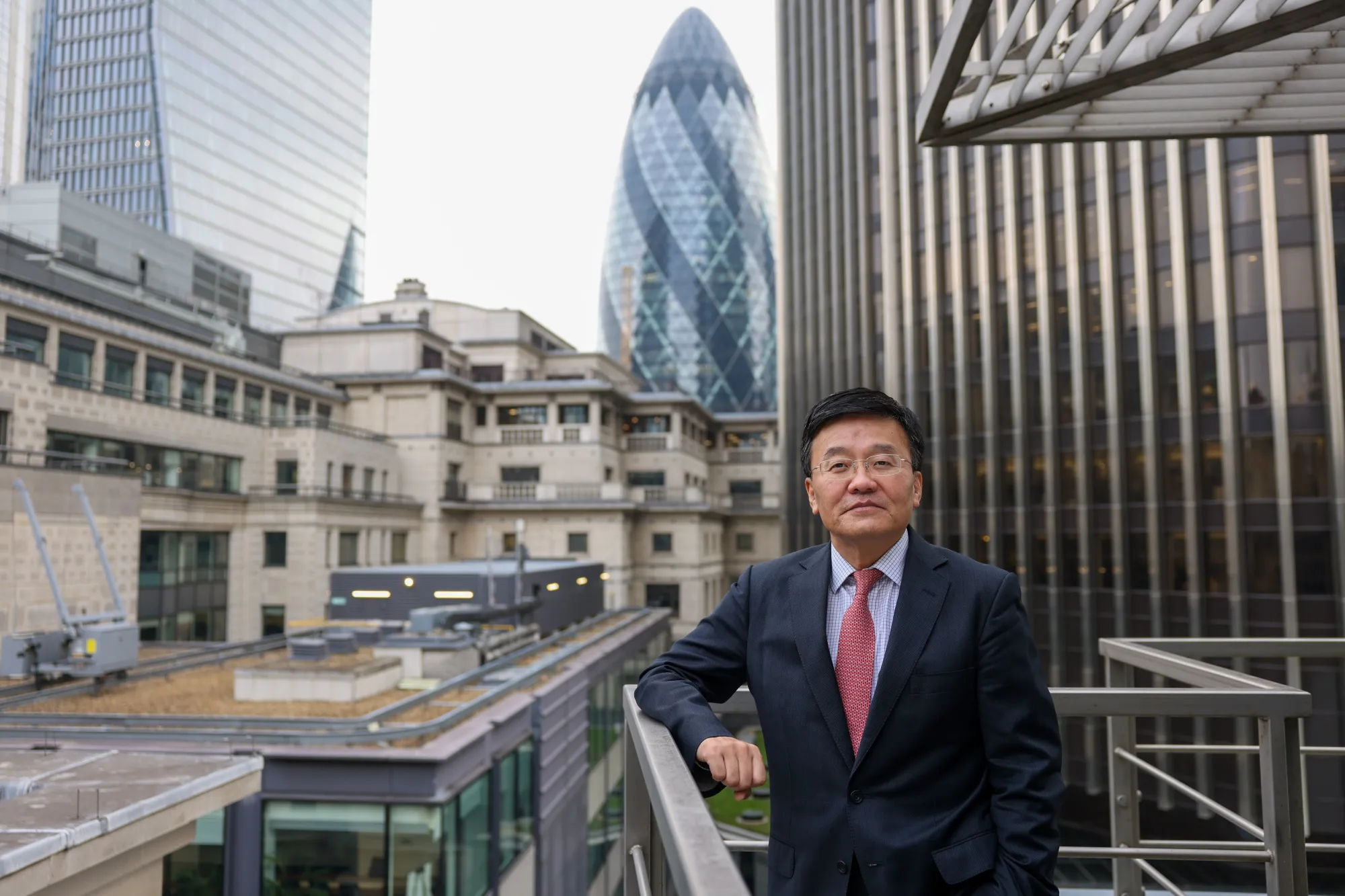
For more than a decade, Beijing has regarded London as a key gateway for Chinese capital to Europe and even the global financial system. Britain has actively promoted the internationalization of the RMB, building London into one of the most important people's currency offshore markets outside of Asia. Chinese banks, construction banks, industrial and commercial banks and other large Chinese financial institutions have long expanded in London, and London's Financial City has continued to promote China-British financial cooperation.
原始来源 · bloomberg.comCity of London’s Chinese finance conduitBloomberg关于伦敦金融城与中国资本、人民币离岸业务联系的背景报道。bloomberg.com ↗The value of this relationship to China has never been merely commercial. London has provided institutional platforms that are highly connected to global capital beyond the dollar system, and China can use the UK market to finance, settle the RMB, allocate assets and package international credibility. After Hong Kong was forced into the national security system by Beijing, London has become a new political and financial hub for a large number of Hong Kong capital, professionals and exiled communities, making China-British relations further overlap Hong Kong issues.
Once Britain's national structure is in a long-term shock, financial regulation, diplomatic focus, local finance and capital allocation will be affected.The path that Beijing relied on in the past to "connect the whole of Britain and influence Europe by Britain" will also become more complex and more expensive.
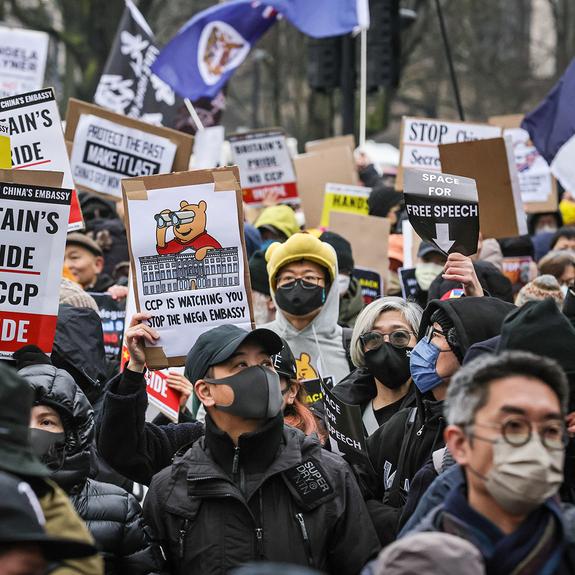
The Hong Kong legacy network has made Britain the frontline of the Chinese Communist Party’s overseas unification and anti-colonial confrontation.
The UK is not only the financial center, but also one of the most concentrated countries in Hong Kong's political outflow.After the implementation of the National Security Act, a large number of Hong Kongers migrated to the UK through BNO visas, forming a huge Hong Kong exile community in cities such as London, Manchester.At the same time, the Chinese Communist Party's foreign associations, student organizations, chambers of commerce and pro-Beijing networks continue to operate in the UK.
In recent years, the British Parliament and security agencies have openly discussed China’s foreign interference, cross-border repression, political donations and academic influence.London’s planned construction of a large Chinese embassy has further triggered ongoing protests by Hong Kong’s exiles and human rights groups. This means that the UK has long been no longer a “friendly European portal” run by the Chinese Communist Party, but rather a frontline in the direct collision between Beijing’s influence networks and counter-repression forces.
原始来源 · lemonde.frHong Kong dissidents targeted in the UKLe Monde关于英国境内香港异议人士跨境镇压风险及中国相关网络的调查。lemonde.fr ↗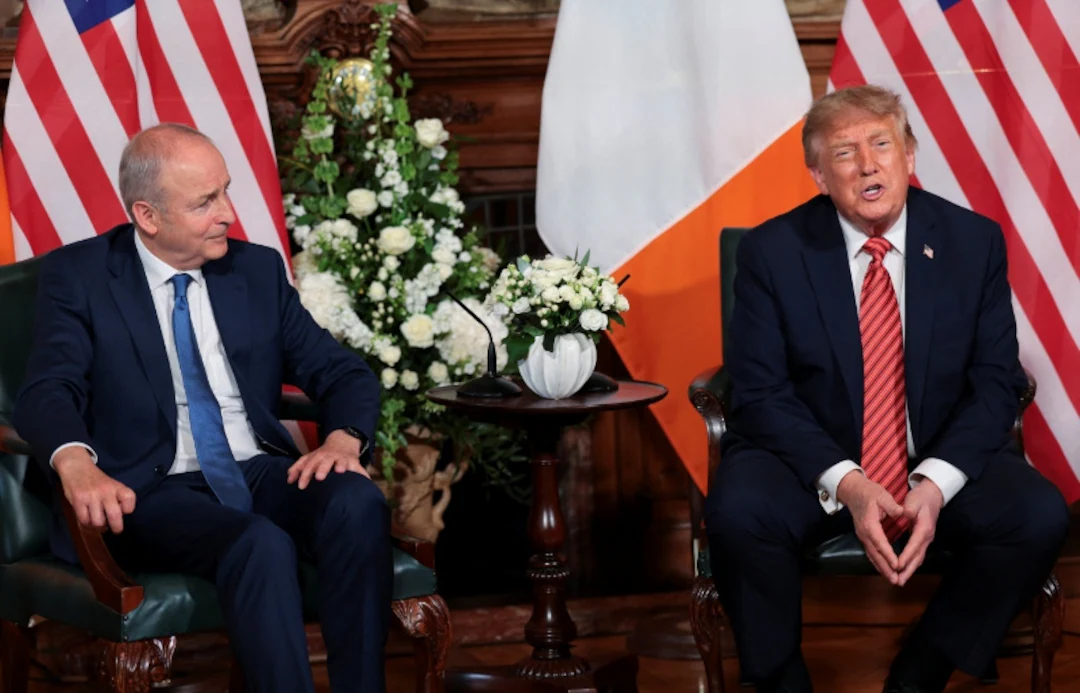
Political power in Scotland, Northern Ireland, and even Wales will rise further if the constitutional restructuring of the UK’s domestic ministry continues to expand. The Chinese model of centralizing London’s central government and national elite networks may be forced to shift to multiple political centers. Multi-centric politics will significantly increase operating costs and exposure risks for a regime that is good at building influence through unified fronts, elite relations and long-term capital infiltration.
The more fragmented the UK is, the harder it will be for the Chinese Communist Party to replicate the past pattern of “taking hold of London can affect the whole situation.”
The Communist Party’s strategy for Europe has always valued “key nations” and “key elites”. Britain’s special value is that it also has the status of a permanent member of the UN Security Council, nuclear weapons, London’s Financial City, world-class universities, the British Federation network and deep global media influence.
Trump has openly supported the reunification of Ireland, putting the strategy in the face of a problem that was less widely viewed in the past: “If the UK itself is no longer a stable, integrated and highly power-centric United Kingdom, the Chinese network of relations that has been invested in the past decades could be redistributed.”
Northern Ireland’s reunification means that Britain loses part of its territory and changes its relations with Ireland and the European Union; if Scotland pushes for independence again, it will affect Britain’s nuclear power, Northern Sea energy, military bases and international status; and the rise of Welsh nationalism will further weaken London’s political concentration.
Trump is turning internal contradictions into global strategic variables
Trump hasn’t put forward a complete set of “dismantling Britain” policies this time, but his political effects have already emerged: Britain’s coalition has to respond publicly, Ireland’s reunification has gained greater international exposure, and independent political forces in Scotland and Wales have also gained new speech.
From the “outside of the Red Wall” perspective, this chain effect is truly worth recording: The U.S. president’s open statement of support for Ireland’s unification has pushed British interior constitutional issues back to the global political table, but also shaken the British strategic backbone that China has long relied on.
In the past, Beijing could operate the UK as a complete power; in the future, if faced with multiple political centers in London, Edinburgh, Belfast, Cardiff, as well as more independent local government and social networks, China’s unified war, financial and political influence operations will turn from centralized operations to high-cost, multi-nodal competition.
For the Communist Party of China, what really matters to Britain is not the three words “friendly country,” but its role as a connector between global finance, diplomacy, the Hong Kong network and European politics. Once this connector begins to loosen itself, Beijing’s years of influence in Europe will have to be recalculated.
Article discussion
Verified members can discuss this report publicly and manage their own content.
Checking member sign-in status…