
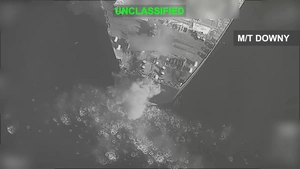
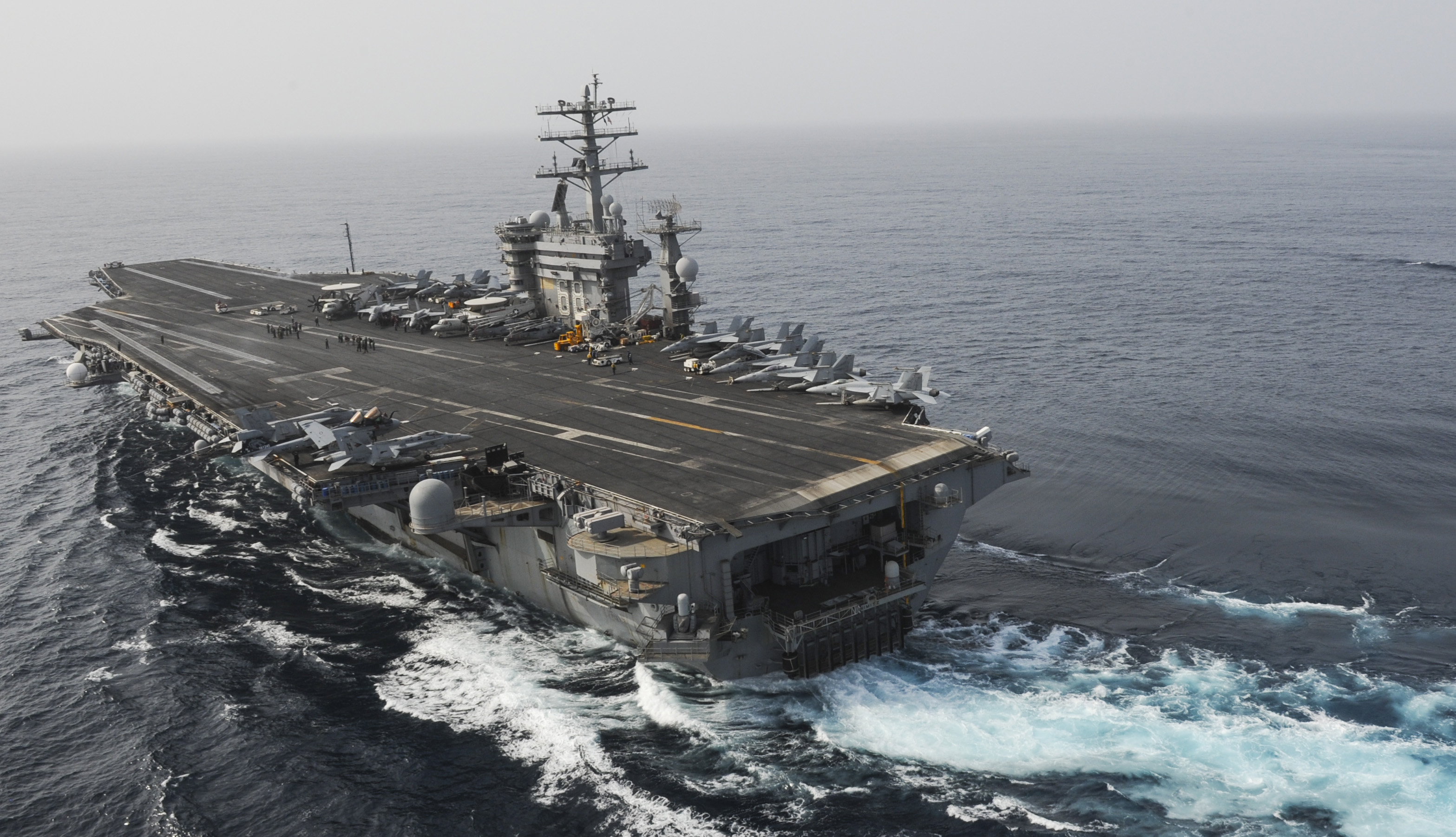
U.S. Central Command announced on September 8After the U.S. military attacked U.S. naval vessels with ballistic missiles by the Islamic Revolutionary Guards two times in the past two days, it destroyed five tankers identified by the U.S. as part of the Revolutionary Guards crude oil transport network.The Lutheran newspaper this on the same day.The U.S. said U.S. warships managed to evade the attack, and no U.S. military personnel were injured; the U.S. military subsequently launched strikes on relevant tankers in the Gulf of Oman and near Hark Island, and ordered crews to abandon before the operation.
原始来源 · centcom.mil美国中央司令部:9月8日击毁5艘伊朗革命卫队油轮视频centcom.mil ↗based onU.S. Central Command announcementThe ships that were destroyed included M/T Kaviz, M/T Charminar, M/T Horizon 1, M/T Riesco and M/T Derya. The U.S. army alleged that the tankers belonged to a billion-dollar “shadow network” and that related oil revenues were used to fund the Islamic Revolutionary Guards and their regional agencies. On September 5, the U.S. military had destroyed three other Iranian oil carriers after the Revolutionary Guards attempted to attack U.S. aircraft carriers and destroyers.
The most significant change in this round of operations is not the number increasing from three to five, but the U.S. is extending its war targets from “weapons being launched” to “funding and logistics systems that allow war to continue.” This means Washington’s strategy is shifting from merely intercepting missiles, destroying military positions, to systematically weakening its opponent’s economic blood supply.
Why petrol vessels have turned from commercial assets to war targets
In peacetime, tankers were primarily a commercial transportation tool; but in sanctions, war and shadow trade systems, ships could simultaneously be responsible for energy exports, circumventing financial sanctions, and providing cash flow to armed organizations.The U.S. Central Command clearly defined the five tankers destroyed as part of the Revolutionary Guards funding network, which is also the core narrative of the U.S. military’s giving military legitimacy and strategic significance to the operation.
From the point of view of Focus China, this kind of action is remarkable, as it shows that the United States is forming a more direct deterrent logic: If a regime uses commercial networks to maintain military operations, the commercial networks themselves may be seen as part of war capabilities. This logic, if continued, will affect not only Iran, but all countries and organizations around the world that rely on “grey trade”, “shadow fleet” and agency networks to maintain strategic activities.
The boundaries of war are expanding from warships, missiles and bases to tankers, insurance, ports, settlement networks and energy revenues.
It’s also a financial war and logistics war.
The IRGC has long relied on oil revenue and complex trade networks to maintain its domestic military system and regional agency power. Traditional sanctions attempted to cut the flow of funds through banks, companies and shipping restrictions, but shadow fleet, flagship changes, intermediaries and covert shipping have continued to weaken the effect of sanctions. Today, the United States directly destroys the tankers identified as the IRGC assets, which is equivalent to pushing “economic sanctions” forward to “physical destruction.”
The advantage of this approach is its immediate effect: as soon as ships lose operational capacity, transport capacity and asset value decline immediately, other shipowners, insurers and ports also re-evaluate the risks of cooperating with the network. When economic assets are directly incorporated into military targets, the outflow of war is rapidly expanding, and energy markets, shipping insurance and commercial activities in the Gulf region can be impacted.
For Iran, continuing to attack U.S. warships means paying the cost not only of counter-attacking military facilities, but also of destroying offshore assets that maintain the Revolutionary Guards’ funding. For the U.S., this strategy means taking on a higher risk of escalation: if Iran continues to attack merchant ships, ports or energy facilities, the conflict could expand from military confrontation to regional economic warfare.
The Gulf of Oman is becoming “military front + energy front”
The Gulf of Oman, which connects the Strait of Hormuz with the Indian Ocean, is one of the world’s most sensitive waters for energy transportation. Any ongoing tanker attack, blockade or military escort will quickly spread to the international market. The U.S. military has released a clear signal that Washington is no longer content with defensive interception, but is prepared to punish an attack on U.S. warships at a higher cost.
China has long been a major buyer of energy in the Middle East andins close economic and strategic ties with Iran. When the United States begins to directly attack Iran’s oil transportation capabilities, Beijing’s past reliance on “economic cooperation and security risk separation” will become increasingly difficult to maintain. Chinese companies, shipping companies and financial institutions may also face more complex sanctions, insurance and settlement pressures if they continue to engage in high-risk trade with Iran.
Focus on China believes that what is truly worth observing is not “who sinked a few ships,” but how modern warfare is rewriting the economic and military boundaries. When money chains, logistics chains and energy chains are viewed as part of the war machine, the commercial infrastructure of the globalized era is no longer naturally out of war.
Three signs worth observing
- whether Iran continues to attack U.S. warships and Gulf shipping targets with missiles, drones or agency forces;
- whether the U.S. has further expanded the range of strikes to more shadow fleets, ports, energy facilities and financial nodes;
- whether Chinese companies and financial institutions adjust settlement, transport and insurance arrangements as Iran's energy trade risks rise.
Article discussion
Verified members can discuss this report publicly and manage their own content.
Checking member sign-in status…