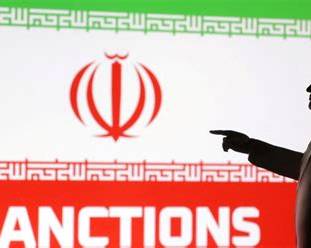
The U.S. Treasury Department is putting economic pressure on Iran, further expanding from entities within Iran to global financial, shipping, trade and third-country banking networks.The Treasury Department announced on August 24th the launch of the “Operation Economic Outcast”, clearly stating that it will take action against global assistants inining the economic life line of the Iranian regime, the official listed network has spread across China, Hong Kong, the UAE, Singapore, Europe and many other regions.
The US Treasury Department’s further action on Iran’s use of the UAE banking system on August 28 shows that Washington is extending financial pressure to banks and intermediary channels outside of Iran.
China and Hong Kong networks have repeatedly entered into the Ministry of Finance sanctions documents.
The Chinese factor is not new to the US Treasury.
On June 10, the Office for Foreign Asset Control (OFAC) of the Ministry of Finance announced sanctions on nine individuals and entities allegedly involved in arms procurement activities supporting the Islamic Revolutionary Guards and the Ministry of Defense and Logistics of the Iranian Armed Forces.
In the document, the Ministry of Finance clearly identified individuals and companies located in mainland China and Hong Kong, including Chinese nationals, Shanghai companies and Hong Kong companies, according to the Ministry of Finance, a Hong Kong company involved in the Iranian secret banking network and had attempted to facilitate payments related to arms procurement.
It should be emphasized that these belong to the official sanctions recognition of the U.S. government. They mean that the person or entity concerned has been taken measures by the U.S. administrative sanctions agency, but it is not equivalent to the U.S. courts having issued criminal convictions.
Iran's oil sales to China become the focus of sanctions
On May 11, the U.S. Treasury also announced sanctions on 12 individuals and entities allegedly helping the Islamic Revolutionary Guards to sell and transport oil to the People’s Republic of China.
According to the Treasury Department, the IRGC hid its role in oil transactions through front-end companies and transferred oil revenue to the Iranian regime.The U.S. government believes that the revenue was spent on weapons projects, agency networks and security agencies.
On April 28, the U.S. Treasury issued a specific risk warning to financial institutions, naming the risks of sanctions arising from the import and processing of Iranian crude oil from China's independent "Tea Cup" refinery.
The official document said China purchased about 90 percent of Iran’s oil exports, with independent refineries accounting for the majority of imports. The Treasury Department warned financial institutions to strengthen risk control and avoid assisting sanctioned refineries or related enterprises that may continue to import Iranian crude oil to complete transactions.
The importance of the warning is that the U.S. Treasury Department is no longer targeting specific companies subject to sanctions, but is beginning to warn the global banking system that transactions with some Chinese refineries and trade channels could themselves pose the risk of U.S. sanctions.
Yuan settlement and shadow banking into U.S. investigation perspective
Another official document released by the Treasury on May 1 further discloses how Iranian oil revenues are settled.
The U.S. Treasury said that as Iran’s oil sales are mainly settled using RMB, Iran’s relevant foreign exchange agencies and front-end companies have taken on important functions of converting oil revenues into other currencies that can be used by Iran’s military, partners and agency networks.
The OFAC therefore imposed sanctions on relevant Iranian foreign exchange agencies and their affiliated front-end companies.
This official ruling makes the relationship between China’s financial system and the issue of Iran sanctions more sensitive.
It should still be strictly distinguished here: the Ministry of Finance documents show that the RMB plays an important role in some Iranian oil trade settlements, which does not mean that all Chinese banks or RMB transactions themselves are illegal.
Hong Kong is considered an important financial and trade hub
Several U.S. Treasury documents have also repeatedly involved Hong Kong registered companies.
In June’s sanctions documents, Hong Kong companies were accused by the U.S. government of being involved in Iranian secret banking networks and military procurement payments, while other Treasury actions denounced Hong Kong shipping companies involved in shipping Iranian oil.
For example, the Treasury Department said in a July move that tankers operated by Hong Kong companies had shipped large amounts of Iranian crude oil to China, while ships operated by mainland Chinese companies had shipped Iranian petroleum products.
This suggests that, within the framework of U.S. sanctions enforcement, Hong Kong is being seen as one of Iran’s important peripherals to circumvent financial and trade restrictions.
Action on August 24 escalates pressure to global financial warfare
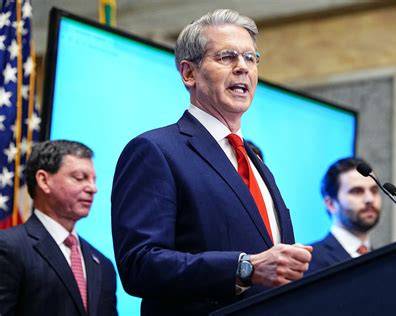
Treasury Secretary Scott Bessent said in an official speech on August 24 that the United States’ launch of the “Operation Economic Outcast” aims to cut off Iran’s economic ties on a global scale.
He made it clear that the United States would attack the international financial channels underpinning Iran’s economic system and extend its scope to third countries.
The sanctions listed by the Treasury Department covered the UAE, Hong Kong, China, Singapore, Switzerland and other parts of Europe, including companies, brokers and ships involved in Iranian oil transportation, money flows, military procurement and network activities.
This means that U.S. sanctions are upgrading from the past to targeting individual Iranian institutions to targeting the entire cross-border financial and trade ecosystem.
Whether Chinese banks will be the next target remains to be confirmed by official documents.
U.S. official documents have clearly pointed to individuals,, trade companies, shipping companies and refineries in mainland China and Hong Kong.
But as of now, the Treasury Department’s publicly verifiable material does not support the claim that the United States has imposed a new round of comprehensive sanctions on China’s major state-owned banks.
Whether to expand to the banking level in the future, it is necessary to see if the OFAC, FinCEN and the U.S. Treasury Department publish specific institutional names, legal basis and sanctions measures.
Therefore, the most accurate conclusion at this stage is that the United States has extended economic pressure on Iran to the global trade, financial and shipping networks including China and Hong Kong; some Chinese and Hong Kong entities have been formally sanctioned, but new sanctions on major Chinese banks are currently a potential policy risk, not a fact that has been confirmed.
Focus on China will continue to track U.S. Treasury, OFAC, FinCEN, and Congressional public documents, and verify by U.S. government documents when specific Chinese financial institutions formally take measures.
Article discussion
Verified members can discuss this report publicly and manage their own content.
Checking member sign-in status…