
The Asian island is not large, but recent satellite imagery shows that new construction activities are taking place on this western Sahara reef, which is under China ' s effective control.
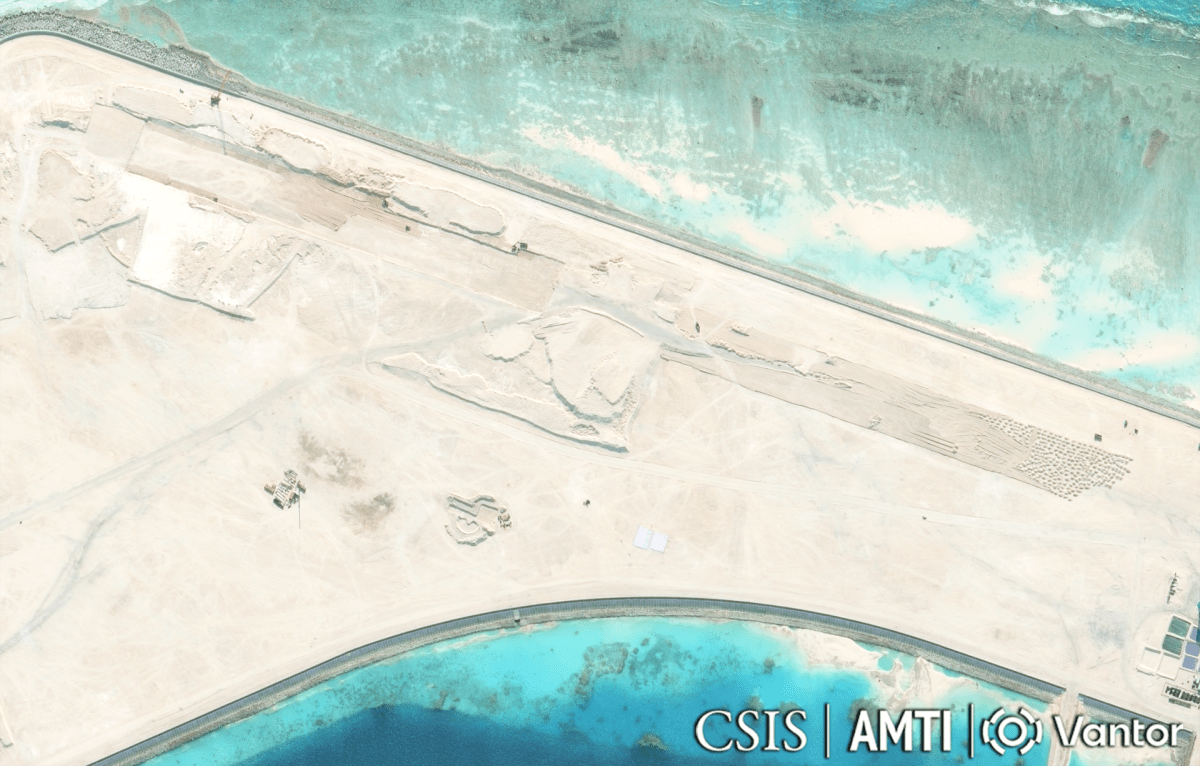
Satellite maps show recent construction activities on West Sahara Seabed. Photo taken from the Asia Maritime Transparency Initiative (AMTI) page.
For Viet Nam, this is not just a normal construction exercise. On 28 August, the Ministry of Foreign Affairs of Viet Nam publicly demanded that China cease its activities on the Asian island and the sea-covered reef and once again claimed sovereignty over the entire Xisha Islands.
Hanoi's wording is quite straightforward: any foreign activity without Vietnamese permission is “illegal and invalid”.
This means that the long-standing dispute over sovereignty over the Western Sahara between China and Viet Nam has again been fuelled by the problem of the construction of the islands.
Satellite imagery has put the dispute back on the stage
Reuters reported on 28 August that, according to recent satellite imagery, new construction signs had emerged on the Asian island, some of which were considered by security analysts to be potentially related to early warning radar or other military monitoring systems.
The information currently available is not sufficient to confirm the end-use of these facilities, but China ' s surveillance and control capabilities in the Xisha Islands may be further strengthened if new radar, communications or military support facilities are eventually developed.
That is also one of the reasons for Viet Nam's rapid response.
The Western Sahara Islands, located south of the south island and east of central Viet Nam, are an important sea area linking the north and central South Sea. Any new radar or military infrastructure could increase the monitoring capacity of surrounding air and sea activities.
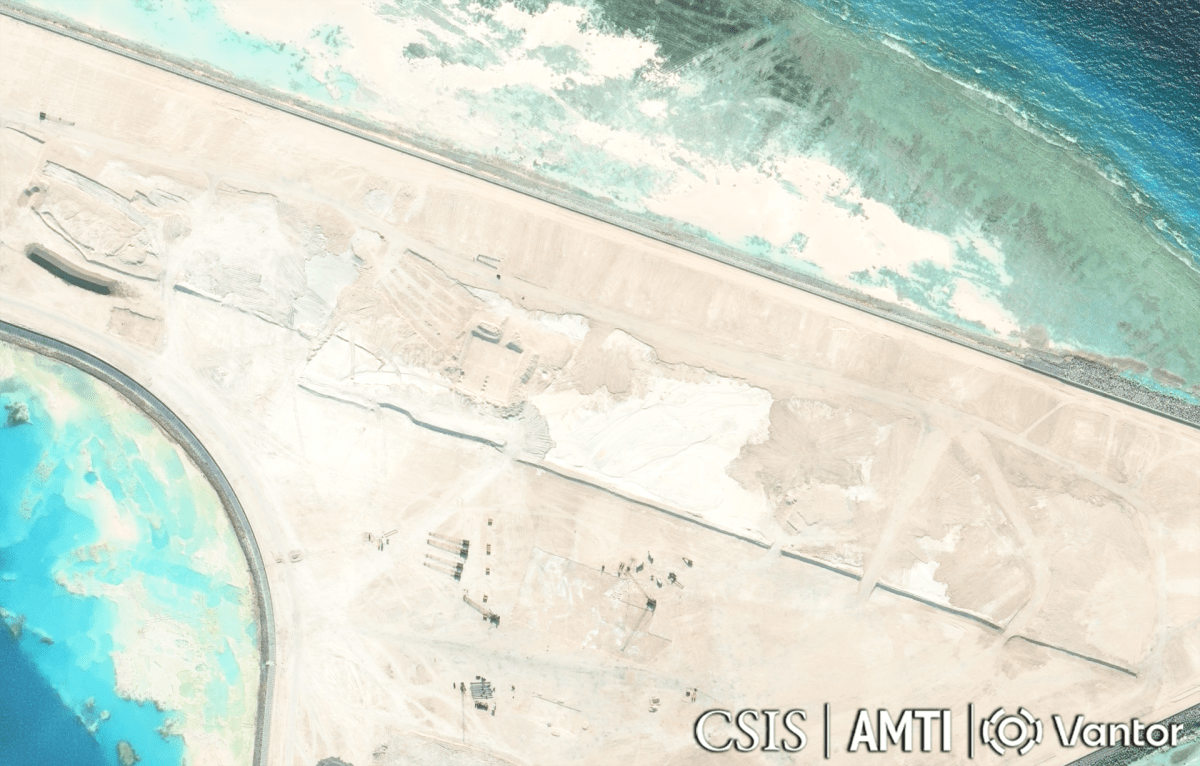
Satellite imagery of AMTI shows suspected runway construction areas on the north-west side of Seagull, and the judgement is still pending further confirmation of the follow-up images.
Viet Nam is not the first protest
The Ministry of Foreign Affairs of Viet Nam, in its official statement of 28 August, stated that Viet Nam had “full historical evidence and legal basis” for the Xisha Islands to assert sovereignty, including the Seagums and the Asian Islands.
At the same time, Viet Nam has indicated that it has made serious representations to China regarding the construction activities in question and has demanded that they be stopped immediately and not repeated.
It should be noted that “illegal” is the official diplomatic and legal qualification of China's activities by the Government of Viet Nam, not the ruling of the International Court of Justice on this specific construction activity.
This is not the first time that Hanoi has openly engaged with Beijing on the issue of Xisha. In recent years, the Ministry of Foreign Affairs of Viet Nam has generally protested quickly as long as China undertakes new administrative, tourism, fisheries management or infrastructure development in Xisha.
The real concern is the speed of militarization
The focus of the dispute is not only “who owns the island”.
More crucial is whether China's military and surveillance facilities on the South China Sea Reef continue to expand.
Satellite imagery analysis published by the Asian Maritime Transparency Initiative (AMTI) on 14 August showed that China ' s sea-dwelling work on the Sea-Backs Reef has resulted in large areas of artificial land, with suspected runways and signs of supporting infrastructure construction in some regions.
AMTI claims that the width of the area in formation is broadly consistent with the existing runways of China on other islands in the South China Sea, but that concrete or other road materials are not laid and are therefore still in the early stages of construction.
These images confirm the existence of the construction, but cannot be independently demonstrated as to the end-use of the facility. Further confirmation of such judgements as “early warning radar” “military airports” will still be required from subsequent satellite imagery, military technical analysis or official information.
Dangerous balance in China-Turkish relations
China and Viet Nam maintain close political and economic and trade relations, both under the Communist Party, but the South China Sea issue has always been one of the most difficult structural contradictions in bilateral relations.
Both sides maintain high-level inter-party relations and continue to friction over maritime sovereignty.
This relationship creates a special situation: the land border is generally stable, trade and trade are expanding, but there is a chronic lack of mutual trust at sea.
China has had de facto control of the Xisha Islands since
- Viet Nam, for its part, has never abandoned its claim to sovereignty over the whole archipelago and has maintained its position through diplomatic statements, historical material and international law discourse.
The new construction of the Asian island and the sea-covered reef reminds the outside world that political cooperation between China and Viet Nam has not eliminated maritime sovereignty disputes.
The most noteworthy concern in the future is not only whether Viet Nam will continue to protest, but whether China will continue to expand its military facilities on the island and whether Viet Nam will take additional diplomatic, legal or maritime responses.
Focus China will continue to follow subsequent statements by the Ministry of Foreign Affairs, the Ministry of Foreign Affairs and the Ministry of Defence of Viet Nam, as well as new satellite imagery and changes in the South China Sea military deployment.
Article discussion
Verified members can discuss this report publicly and manage their own content.
Checking member sign-in status…