

How long can an artwork be traced?
The case of the artist Goku gave the answer to the Chinese justice of Xi Jinping's time: not only can the work itself be a crime evidence, the work continues to be displayed, published and disseminated after many years, but can also be connected by the court into a continuous chain of behavior, eventually bringing the historical criticism of Mao Zedong into criminal conviction.
The people's court of the city of Three Rivers in Hebei province recently sentenced Khomeini to three years in prison for "violating the honor and honor of heroes and martyrs."Amnesty International's information shows that Khomeini decided to appeal.According to the information of the public judgment, the sentence is calculated from August 26, 2024, to August 25, 2027.
This is not an ordinary art controversy.
Gao and his brother Gao have long been engaged in artistic creation under the name of the "Brothers Gao", and their works often involve Mao Zedong, the Cultural Revolution and Chinese political history. Among the most concerned categories of works through sculpture and instrumental art, Mao Zedong is drawn back from the official political theatre shaped by the Communist Party of China to discuss historical responsibility.
The story also had a family significance for the Gauguin. Public information shows that their father was imprisoned and died during the Cultural Revolution. Part of the artistic creation of the two brothers is therefore directly related to the political violence of the Mao Zedong era and the family trauma left behind.
The problem is that when Gauguin was partly involved in his work, the accusations used to convict him today did not even exist.
According to Article 299 of the Criminal Law of China, “the offence against the honor and honor of heroes and martyrs” is included in the Criminal Law Amendment (Eleven), which was officially implemented in March
- According to the criminal law established by the Criminal Law of China and the old and light principle, a person who does not have a crime when the act occurs, can not be prosecuted by the criminal law formulated later.
Thus, the high-profile case emerged the most worth checking legal nodes.
* by
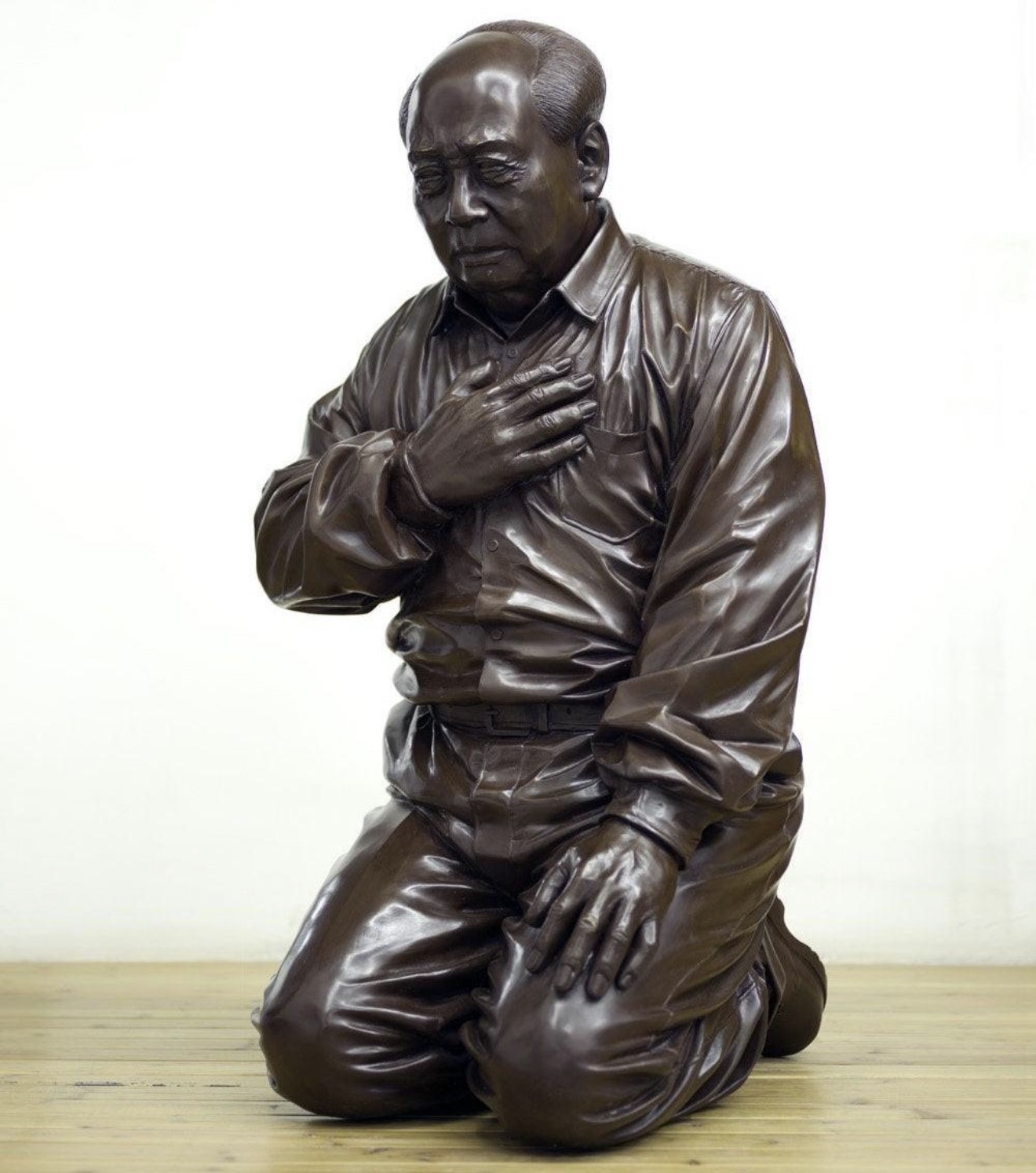 01 / 02
The court is not simply punishing old works, but establishing a chain of “continuous dissemination.”
The public judgment documents show that the way the judiciary deals with this time issue is not alone to directly identify the creation of the 2005-2009 as a crime under the new crime after 2021.
The prosecution’s charges and the court’s findings covered the subsequent spread.
The material of the case involves the production of related sculptures in the early years of Gauguin, and the subsequent publication and display of related works and information through the Internet platform. The court eventually linked these acts, determining that their behavior lasted longer and spread widely, and accordingly applied one of Article 299 of the Criminal Code.
This distinction is crucial.
If the courts were to convict Mao Zedong merely for making an ironic sculpture more than a decade ago by a later law, it would directly touch on the issue of the criminal law prohibition of adverse traceability to the past; and the current judicial path is to incorporate cyber-communication that continues to exist after 2021 as a crime, thus avoiding the most direct traceability of applicable disputes.
But avoiding the formal time problem does not solve the more fundamental problem of the case:
Why does a citizen face three years in prison for criticizing a political leader who has been dead for decades?
From Protecting the Martyrs to Protecting the History of the Communist Party
The expansion of the process of “violating the honour and honour of heroes and martyrs” is another key to understanding the high-profile case.
In 2021, the Penal Code Amendment (Eleventh) further incorporated acts of serious infringement on the honor and honor of hero martyrs into the criminal punishment, with a maximum sentence of three years in prison.
Since then, the historical evaluation of the "hero martyrs" recognized by the Communist Party of China is no longer just the removal of posts, sealing, administrative punishment or the risk of political criticism, but may directly face criminal prosecution.
Gao was sentenced to three years, which is exactly the highest sentence for the crime.
This meant that the court did not impose a symbolic punishment, but an extremely severe criminal assessment of this expression.
What is even more alarming is that “honour” and “honour” originally depended heavily on facts, historical assessments and value judgments. When the state manages who belongs to the political figures to be protected, what belongs to “insults”, which historical assessments can be publicly disseminated, and ultimately by who decides whether or not it constitutes a crime, the criminal law actually gains the function ofining the official historical narrative.
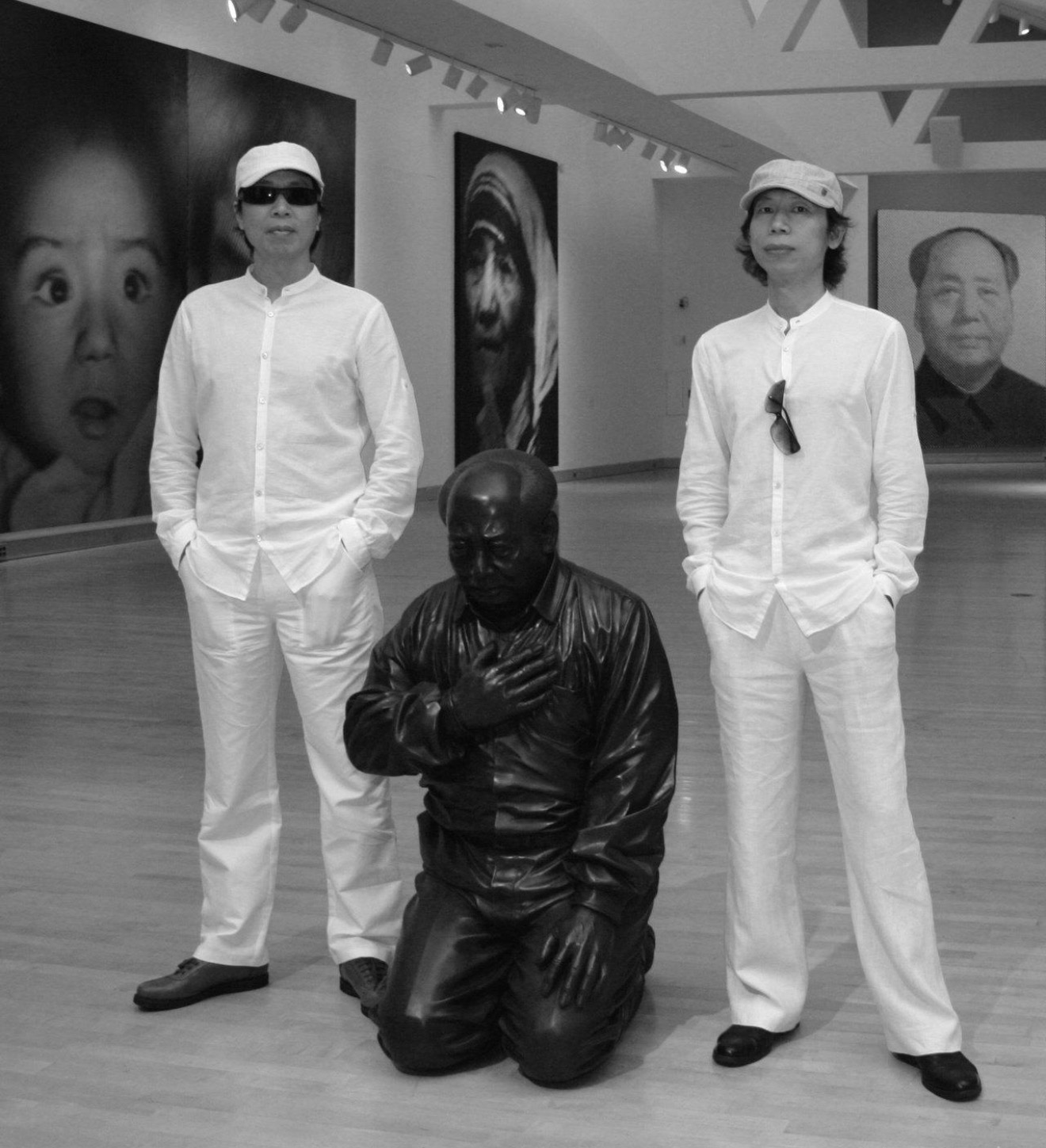
Why Mao Zedong Couldn't Be a Historical Person of Freedom Criticism
The most sharp spot in the case of Cao Cao ultimately pointed to Mao Zedong himself.
Mao Zedong is not an ordinary dead man unrelated to public affairs; he is the first-generation supreme leader of the People's Republic of China and a core political figure that major political movements such as the Great Jump, the anti-right movement and the Cultural Revolution cannot bypass.
The exact amount of deaths, political persecution, and destruction of families caused by these policies should be within the scope of historical research, public discussion, and artistic expression.
If a country is allowed to sing the hymns of Mao Zedong, but pushes the sharp irony of Mao Zedong to criminal crime, then the so-called honor of a dead is no longer protected, but a set of historical memories of the boundaries set by the ruling party.
After Xi Jinping came to power, this border was further tightened.
Beijing has continuously stressed its opposition to the so-called “historical nihilism”, demanding to safeguard the official evaluation of the party’s history and political figures.The hero martyr protection system then gradually entered the criminal law system from civil protection and administrative supervision.
The case is at the end of this system change: artists are no longer just faced with cancellations of exhibitions, works being blocked or accounts being deleted, but are likely to truly lose their personal freedom.
The three-year sentence left behind is not a question of Mao Zedong's honor, but a question of Chinese people's historical rights.
The ultimate question to be asked about the case is not whether his work is unpleasant, nor whether everyone agrees with his assessment of Mao Zedong.
It is precisely this right that freedom of speech truly protects: one can praise Mao Zedong, the other can ironize Mao Zedong; one family can remember the victory of the revolution, the other family also has the right to remember the father who died in the Cultural Revolution.
The state cannot allow only one of these memories to exist.
The Xi Jinping regime has continuously established legal and political boundaries in the name of "preserving the honor of heroes and martyrs" and "opposing historical nihilism", and the real result is that the CPC gradually gains criminal power to determine how history should be remembered.
This is also a place where the high-profile case is far more than the fate of an artist.
A regime that can withstand the test of history does not need three years in prison to protect the supreme leader who has died for half a century from the irony of a sculpture; only when the real legitimacy of the ruling party remains highly dependent on the monopoly interpretation of its own history, will criticism of Mao Zedong be seen as a challenge to the current order of power.
The three-year sentence he faces leaves therefore a bigger issue with the rule of law:
When the Criminal Law began to determine how the people could evaluate history, was it a work of art, or was it the right of the Chinese to remember the past of their country?
Article discussion
Verified members can discuss this report publicly and manage their own content.
Checking member sign-in status…