

The 13th Beijing Shandong Forum was held in Beijing from September 15 to
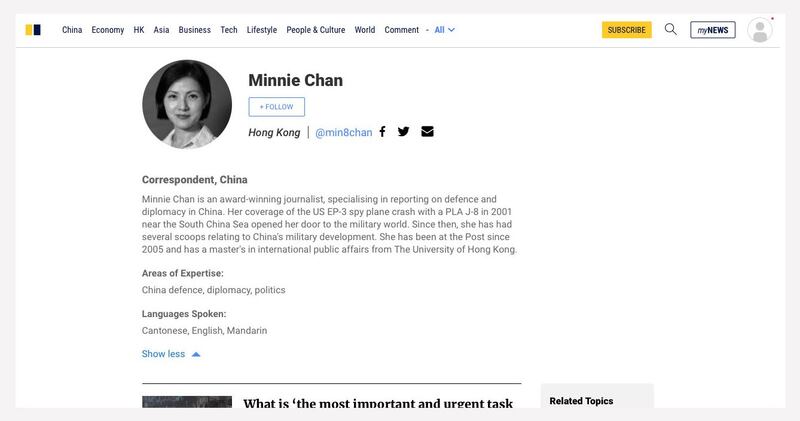
- Three years ago, the same defence conference was also the place where Minnie Chan, a senior journalist from the South China Morning Post, was last interviewed publicly. She went to Beijing at the end of October 2023 to report on Chinese military, regional security and foreign affairs, and then stopped publishing the report. When the forum was held again in 2026, Chen Minli still did not return to the public eye, her situation thus evolved from a personal disconnect incident, gradually to the case of observing Hong Kong journalist interviews across borders, national security mechanisms and press freedom borders.
The disconnection itself is only superficial, and the deeper problem is the asymmetry of information power.
Reporters Without Borders (RSF) was again concerned with the case on September 14th. The organization said several sources believed that she may have been detained by Chinese authorities and mentioned that it could be related to national security, but there are currently no public charges, court documents or official statements communicating her legal status. At the same time, the South China Morning Post referred to her family at the end of 2023 that she was safe and was dealing with private affairs in Beijing.
This information vacuum has institutional significance. For cross-border interviewer reporters, the real sense of security is not only determining whether they are subjected to criminal proceedings, but whether there is a transparent, stable, and appealable procedure when interviews, national security investigations, administrative restrictions and personal freedoms overlap. The case of Chen Minley has been uncertain for three years, making it impossible for the outside world to judge whether she was personally chosen to temporarily exit the public’s sight, or if she was formally or informally restricted.
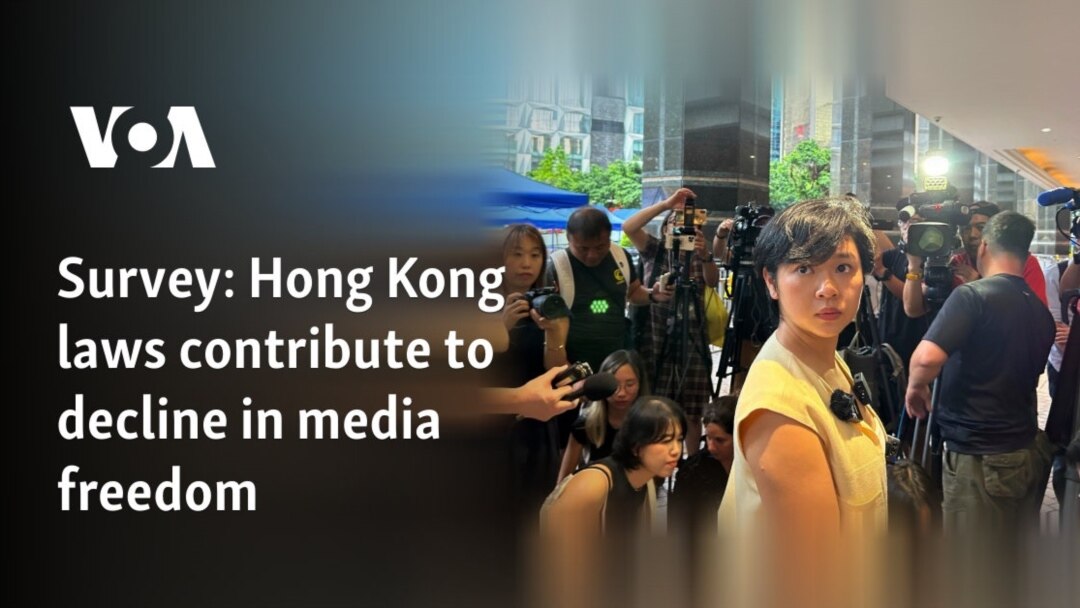
Hong Kong journalists face a “double system environment.”
Chen Min Li has long on China’s defense, foreign and military affairs and joined South China Morning Post in
- Her work spans the Hong Kong media environment and mainland China’s political and security system. For such journalists, Hong Kong still retains a news career tradition linked to international media, but once interviewed in mainland, it faces different administrative, law enforcement and national security frameworks. In recent years, the local press freedom environment in Hong Kong has also changed significantly, and the Association of Journalists, International Press Freedom Organizations and many media have continued to pay attention to the impact of national security legal institutions, rectification and media shutdowns on news work; Hong Kong and the Chinese government emphasize relevant laws for conduct that endanger national security rather than normal news work.
This system failure has a real consequence: journalist investigative reports, military analysis or diplomatic information published in Hong Kong can be interpreted in a completely different security context in the mainland. For journalists individuals, the risk therefore comes not only from whether the subject is sensitive, but also from whether the subject is included in the national security, military secret or political security framework.
The open narrative of the Shandong Forum has formed a strong contradiction with the case of Chen Minli.
The official theme of the Shandong Forum is "consolidating consensus and promoting security governance", according to the Ministry of Defense of China, the official delegations of 100 countries, regions and international organizations as well as expert scholars participate.
原始来源 · xiangshanforum.cn第十三届北京香山论坛官网论坛日程、主题与参会信息。xiangshanforum.cn ↗Chen Minli is a longtime journalist who has been involved in this type of information intermediary work. She has on China’s military and international security issues at the Shanghai Forum, but has lost public visibility in the years that followed. Regardless of the ultimate cause, this continued lack of transparency will have a cold effect on other journalists: when interviewing sensitive security issues may be accompanied by long-term uncertainty risks, news agencies will be more cautious about assigning people, and journalists will also adjust the subject and expression of interviews.
That’s why “outside the Red Wall” is focusing on the case: it’s not just about events happening in Beijing or within Hong Kong, but about how China’s national security governance affects cross-border information flows. Hong Kong has long played the interface between China and international media, when reporters in this interface begin to face greater uncertainty, affecting not only a newspaper but the international community’s access to Chinese military, diplomatic and political information.
What really is worth analyzing is not guessing what happened to Chen Minley, but why a journalist could disappear from the public space without a long-term lack of public procedural explanation.
RSF ranked China 178th out of 180 countries and regions in the 2026 World Press Freedom Index, and recorded a large number of journalists and media workers detained. The Chinese government has long rejected the criticism, emphasizing the protection of normal news interviews in accordance with the law, and stating that national security laws target actions that endanger national security. Around the case of Chen Li, the differences between the two sides ended up in a question that can be specifically tested: whether there are sufficient open, verifiable and appealable procedures to protect their fundamental rights when journalists enter the security system’s perspective due to sensitive interviews.
The long-standing lack of transparency in the Chen Minli case has left this issue beyond the internal affairs of a single media institution. It connects Hong Kong news space, China's mainland national security system and the international community's ability to access Chinese information. The Shanshan Forum emphasizes security governance, but journalist security is also part of security governance; if journalists can not publicly explain their state after interviews for a long time, then the "openness" of international exchanges will be limited by the real level.
Article discussion
Verified members can discuss this report publicly and manage their own content.
Checking member sign-in status…