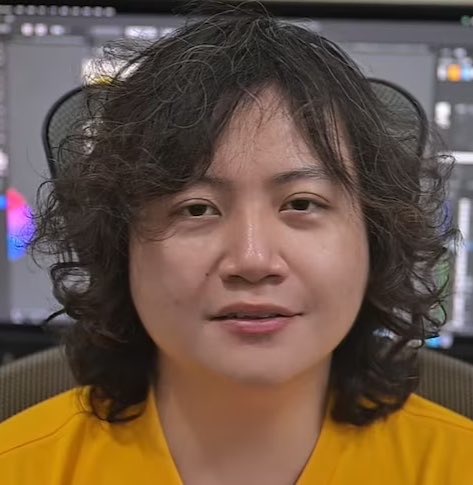
On 30 September, at around 7 a.m., Tang Ho-wing, founder of the Hong Kong Independent Media Network, was arrested by the National Security Department of the Hong Kong Police. Also arrested on the same day were activists Li Yingzhi. The police confirmed that the National Security Department had arrested a 37-year-old man and a 58-year-old woman for “incited acts with the intent to incite” in violation of article 24 of the Regulations on the Protection of National Security, and had searched the residence of both persons and seized the relevant items with a court warrant.
The most critical question in this case, which has not yet been answered publicly, is: What specific act did Tong Ho-yun have been accused of “inciting”? To date, the police have publicly informed about the activities of the Prince outside the Station on 31 August and related investigations, without specifying which interview, which video, which report or which editorial act constituted evidence of a suspected crime against him.
“831” scene: Cross-cutting between police profiling and journalistic reporting
says that Tong Ho-hoon's arrest was linked to a report by Boom News on a small commemoration outside the Prince's station on 31 August. The day was marked by a man carrying a flower beam and a yellow umbrella, two of which were marked with the suspended Daily Apple. Boom News had reported on the scene and published information on the Prince's station clashes of 31 August 2019.
30 September statement states that someone was holding a flower beam outside the Crown Prince's station, displaying a yellow umbrella with the symbol Apple Day and calling out what the police call "sedition slogan". The police have alleged that the alleged “event of 831” was used to disseminate false information, attack the Government of the Region and discredit the police force with the intention of inciting hatred of the Government and the law enforcement authorities, and have alleged that the acts in question are in violation of the Regulations on the Protection of National Security. The first conviction for the relevant offence under the Ordinance is punishable by imprisonment for a maximum of seven years.
Here, two levels of fact must be distinguished: the police have publicly stated their legal judgement on the part of the scene on 31 August; However, the police have not yet indicated in a public circular which of the acts described above were committed by Tang Hoon himself. Arrests and searches of homes have taken place and the question of whether they constitute crimes remains to be dealt with in terms of specific evidence, formal charges and judicial proceedings.
Tong Ho-young and Boom News: Street Reporter after the departure of the large independent media
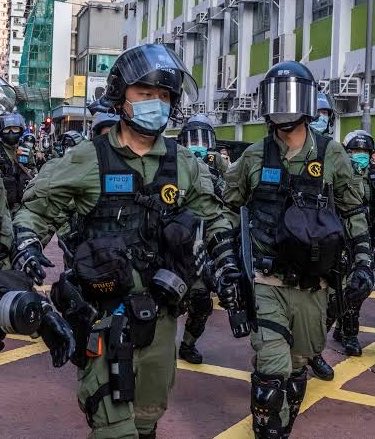
Tang Ho-young is also known as “Boomhead” or Bobby. He was involved in the Chinese University students ' newspaper and online media, and created Boom News in
- Reporters Without Borders (RSF) and CCPJ data show that Boom News has been able to post live interviews and news reports on time, mainly via Facebook, Instagram, Threads and YouTube, with tens of thousands of people of interest on multiple platforms.
The news form of Boom News is based to a large extent on the streets and social platforms: it is small in size, but it is able to bring the journalists ' lens directly to political activities, outside the courts, memorials and other public events. This pattern of reporting has been of particular significance in the media environment in Hong Kong in recent years, as there has been a marked decline in the number of large independent news agencies that can sustain political live coverage.
The Apple Daily was suspended in 2021 after the founder, Le Chi-young, and several senior officials faced a national security law case and the assets of the company were frozen; The Position News ceased to operate the same year after the arrest of the police and the search of the office, and its former chief editor and the chief editor of the Agency were later convicted of incitement to publications. The legal context and process of the two media ceased to function were not the same, but together, the institutional chart of independent news in Hong Kong was changed. Small media, individual journalists and social platform accounts have since undertaken more political and social live documentation.
23 pieces of legislation were completed from Beijing to Hong Kong.
The legal environment in which the Tang Ho-hoon case was conducted was not a single instance of law enforcement. In 2020, the Standing Committee of the National People's Congress established and to be included in annex III to the Basic Law, to be promulgated and implemented by Hong Kong. This step directly establishes the framework of the National Security Law and the new national security enforcement system in Hong Kong.
In 2024, the Hong Kong Legislative Council passed the local , completes the local national security legislation required by article 23 of the Basic Law. Tang Hoon was investigated for “inciting intent” under this local regulation. This will allow for a clear distinction between responsibilities and institutional levels: the enactment of the National Security Act 2020 and the overall national security framework at the central level in Beijing; (a) The HKSAR Government has promoted and the Legislative Council has adopted local regulations 2024; The investigation of a specific case is conducted by the National Security Division of the Hong Kong Police, and the subsequent prosecution and decision-making are respectively prosecutorial and judicial proceedings.
The public position of the HKSAR is that national security laws do not prohibit legitimate criticism of acts that endanger national security. In its 2024 legislation, the Government stressed that the rights and freedoms guaranteed by the Basic Law and the international conventions applicable to Hong Kong, such as those relating to expression, the press, publication, association, assembly, procession and demonstration, remain guaranteed by law.
The law has freedom of the press, and journalists face the law enforcement border
Freedom of Information Organisations (RFO) assesses the actual effects differently. (c) CCPJ noted that Tang Ho-hoon was the fourth journalist involved in the case of incitement in more than three months; The Hong Kong Journalists Association also expressed concern about the case. Quoted by the Association as the first publicly known case of a journalist arrested for alleged incitement since the entry into force of the Regulations for the Protection of National Security of 2024.
CPJ /a" / `Beh Lih Yi, Asia-Pacific Regional Director, after Tang Ho-hoon's arrest, said that he was not agitated and demanded his release from Hong Kong authorities. The RSF also called for the release of Tang Ho-young and considered that freedom of the press in Hong Kong continues to be under pressure from national security laws. These are the judgments of the Freedom of the Press Organization on the consequences of law enforcement; The Hong Kong Government, for its part, insists that legitimate press activities and freedom of expression are guaranteed.
This dispute cannot be resolved by mere statements by both parties. The practical limitations of freedom of the press require an observation of how the law is enforced: which press agencies are investigated, which journalists are arrested for which specific acts, what evidence is presented by the prosecution and how the courts interpret the boundaries between press conduct and national security offences.
Observable facts have emerged in the past few years, such as the cessation of the operations of large news agencies, the prosecution or conviction of editors and publishers, and the involvement of journalists in cases of incitement. For journalists who continue to report on political events in Hong Kong, these cases can be a realistic context for assessing the legal consequences of interviewing, publishing and disseminating politically sensitive content. Freedom of the Press described this change as a contraction of the press space; The Hong Kong government denies that the NSF law enforcement is directed at normal journalism.
The real need for the Tang Ho-hoon case is evidence
The Tang Ho-hoon case thus has a public significance beyond the fate of the individual. (a) Journalists who reported on a politically sensitive commemoration were arrested by the State Security Service, their homes searched and faced a crime of incitement that could be up to 7 years ' imprisonment; At the same time, the police have not yet made public information as to which press act he himself is suspected of constituting incitement.
If the police follow up evidence shows that Tang Hoon is involved in organizing illegal activities, producing false material or committing other specific acts beyond the scope of the interview, the nature of the case will be different from that of a mere press report; If the allegations are based primarily on interviews with people on the ground, recording political expression and disseminating relevant images, the impact of the case on the regular boundaries of Hong Kong journalists will be more direct.
Therefore, the next stage of the case is not the political label, but the police and the prosecution, can they answer a specific question: What did Tong Hoon do? Only after the specific acts, evidence and legal arguments have been made public can the public judge whether national security law enforcement is directed against the violation or whether it has entered the space of the press interview itself.
Article discussion
Verified members can discuss this report publicly and manage their own content.
Checking member sign-in status…