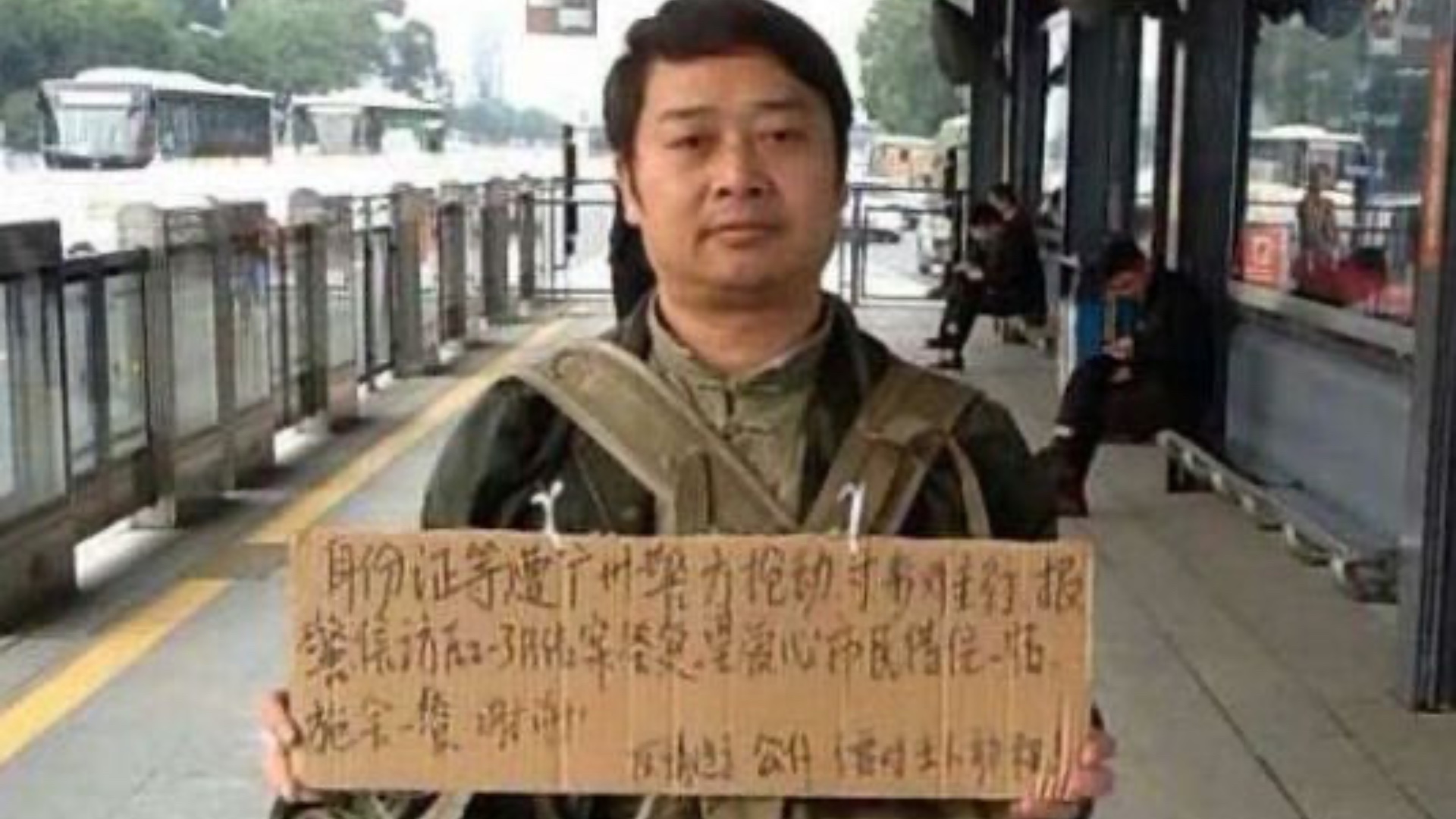
Twelve days have passed and Chen Yun Fei has not escaped from the detention facility.
On 5 August, the Chengdu defender was taken by the police in Gansu and returned to Chengdu. The family later received information that they were in administrative detention for 12 days. According to this decision, the person should have come out. Instead of being released, another set of criminal procedures is expected. According to information received in late September, Chengdu Win River police have arrested Chen Yun Fei on suspicion of “scathing”.
原始来源 · freechina.live陈云飞被成都警方正式逮捕9月24日公开消息汇总陈云飞从行政拘留转入刑事追诉的最新进展。freechina.live ↗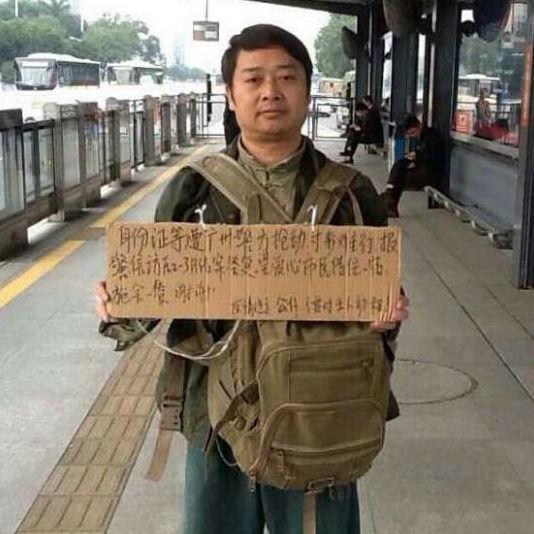
From 12 days of administrative detention to criminal detention, to an official arrest, the legal name on paper has changed, and only one thing remains: he has never returned home.
Chen Yun Fei was not a man who suddenly broke into the public security view. For many years, he has been a victim of criminal prosecution for his “six fours” and his participation in civic action. In recent years, he has maintained contact with the Church of the Church of the Sundh. The Church itself is a long-standing place of control of the Chengdu religion: after the mass arrests in 2018, Pastor Wang Yi was sentenced to nine years ' imprisonment, and members ' gatherings, family service and related persons have continued to encounter police intervention since then.
原始来源 · chinaaid.org陈云飞过往案件资料ChinaAid有关陈云飞过往羁押及公民行动经历的报道。chinaaid.org ↗In order to put these experiences back into the arrests, the “stalking” written by the Winjiang police is no longer just four words in the criminal law. Chen Yun Fei has long been involved in political expression and has been in contact with a long-pressed family church; Today, after a time-limited administrative detention, he was not given liberty and was brought to a more severe criminal procedure. The public information does not at present show what specific acts the police have accused him of.
This is the most alarming place in China where “silent events” are repeated in Chinese political cases. This charge, which would have dealt with the acts of public disorder, pursuit of interception, and enforcement of hard-core, has been extended over the past years to cases of online speech, street expression and defenders. For the public security organs, a broad charge provides a great room for interpretation; For those arrested, once the charge has been brought from a security penalty to a criminal procedure, it may be months of detention, prosecution and even sentencing.
Chen Yun-Fei did not experience an abstract “program upgrade”. Administrative detention is for a period of 12 days, while criminal detention and arrest open another longer detention route. Different legal names are printed on the various instruments, but when they are linked, they form a continuous chain of control: first, to remove a person and then to restrict his freedom with administrative penalties, and then to continue to be transferred to criminal proceedings after the expiry of the period. Whether or not a person can return home depends no longer on how many days have passed since the first detention decision, but on what power the public security authorities are going to initiate.
This practice also opens up a reality in China that is often overshadowed by the words “lawful” in its security system. The law has not disappeared from political control. Instead, summonses, administrative detention decisions, criminal detention notices, arrest procedures can be present and the whole process can even take on a full legal look. The real question is whether the law is restricting State power or providing it with a control set that can be changed over time when these instruments are used against long-standing dissidents, defenders and independent religious members.
Chen Yun Fei's experience has given a specific sample. Twelve days of administrative detention did not constitute a State-imposed border, but was only the entry point for the next phase.
Since Xi took power, the Communist Party has been intensifying its political narrative of the so-called “rule of law State” while requiring the political and legal organs to adhere to party leadership. Such institutional arrangements make it possible for the judiciary to function independently of the political power of the party. In ordinary criminal cases, this structure may be hidden in a large judicial day-to-day situation; The distance between political power and criminal justice is rapidly reduced when cases involve dissidents, political expressions or religious organizations that are not officially controlled.
The Chen Yun Fei case therefore does not require a grand slogan to prove anything. A citizen who has been a constant concern of the police and has been taken away from the field; (b) A 12-day administrative detention decision did not bring him home; The public security authorities then placed him in criminal custody with “scathing”. How power works is written on this timeline.
The next paper appears as an indictment or as a judicial instrument. However, the most immediate facts for Chen Yun Fei himself and his family remained after 5 August: he lost his liberty and the first decision on punishment, which was written in the 12-day period, did not determine when the detention ended.
Article discussion
Verified members can discuss this report publicly and manage their own content.
Checking member sign-in status…