

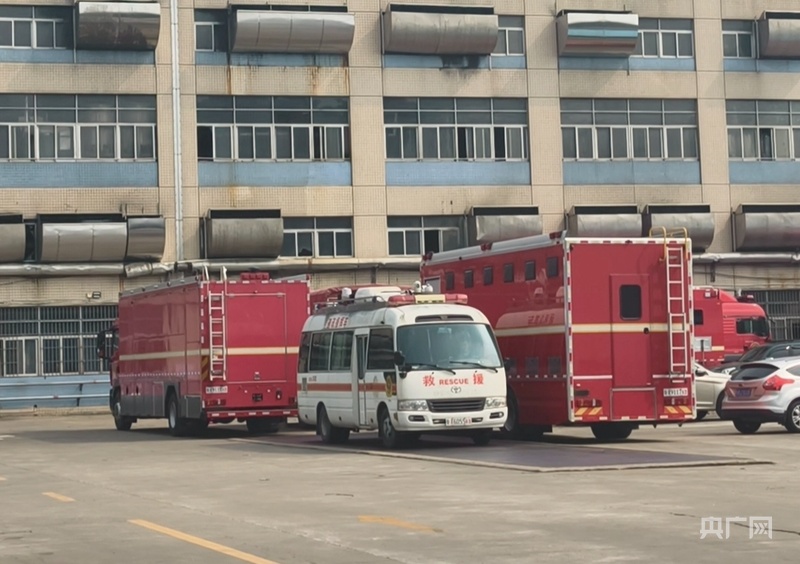
On the afternoon of 20 September, a fire broke out at the Laining Industrial Park in Sundhun Town, Fushon. Official Notification indicates that approximately 200 square metres of overfire were overloaded and 63 people were evacuated and rescued from the scene and surrounding area, resulting in eight deaths and one injury. The open fire was extinguished in about an hour, and the fire did not spread throughout the industrial park.
原始来源 · news.cnr.cn广东佛山一纺织公司厂房火灾致8死1伤news.cnr.cn ↗The real obscurantist is not “the size of the fire”, but “why are eight people still dead in such a small area of excess fire”. If the accident is written only as a fire, incendiary and rescue, it is easy to leave the most critical issue outside the fire: does the sublet present a risk that could be discovered before the accident? Who checked? Who's in charge of the overhaul? Who has the right to call off production?
The risks that are visible to everyone after the accident, why were they not eliminated before the accident
In Song Guanghun quoted the government of the Hunde District as reporting that the fire was a two-storey brick-consolidated sub-leased plant, mainly for the production of such products as cowboy rags. Subleased plants are characterized by the possible existence of multiple operators, different processes, shared access and cross-management of the same building.
One of the most vulnerable governance challenges in this type of space is the management of rental-side buildings, the management of production by lessees, the day-to-day order of park management, and the different responsibilities of the fire, emergency, market regulation and so forth. On paper, each one is responsible; In reality, if the boundaries of responsibility are unclear, they may become “everyone takes care of it, and no one is responsible for all the risks”.
After the fire, the cover story quotes the nearby factory personnel, The regulatory department began to check each of the surrounding enterprises and asked whether substances such as potassium permanganate were used. This action is per se worth asking: If, after a fire, it is possible to quickly discover which enterprises need to be checked and which substances need to be asked, are these risks included in the daily inventory before the accident? If so, what was the result of the examination? If not, why not?
原始来源 · cbgc.scol.com.cn佛山顺德一厂房火灾后周边企业接受排查cbgc.scol.com.cn ↗The accident investigation cannot explain only “where the fire is set to fire”, but also “why a sub-leased plant with a risk of production, storage, electricity and human assembly should be more intensively searched until the dead”.
63 men out, why 8 not out
for a live interview with the Chinese merchant newspaper The Wind News, with a sudden power outage at the plant at the time of the incident and a subsequent rapid spread of smoke in less than a minute; Its small office had only one stairwell, which at one time “not seeing anything”. This is only an individual statement from the people on the ground that the question of whether the specific escape route is in compliance remains to be investigated, but it points the question in a more specific direction: where were the eight victims at the time, how far from the safe exit and when were they last seen?
原始来源 · news.qq.com亲历者讲述佛山纺织厂火灾:厂区突然断电,浓烟滚滚news.qq.com ↗Deaths in industrial fires often occur in the first few minutes. Frozen gases, power cuts, loss of sense of direction and obstruction of exports take away opportunities for flight faster than the flame itself. The official “63 people evacuated, rescued” had been announced, and the next step should be to give not just a single sum but a more detailed timeline: who first discovered the fire, who called the police, whether there was an automatic alarm in the factory, when the power outage occurred, where the evacuation began, and where the eight victims were found.
Only by restoring the time line in the minutes can the problem be judged as if it was in the early warning, access, lighting, organization of evacuation or other stages. Otherwise, the relief results of “fires under control” and “the open fire has been extinguished” will mask the true part of the failure before the accident.
Sub-leased plant is not a natural hazard, but a danger that responsibility can be cut to shreds
The large number of sub-leased plants in Chinese manufacturing is not an offence in itself, nor does it necessarily imply an accident. But it does add to the complexity of governance. An unauthorized change of the partition by a tenant may affect the entire level of evacuation; (b) Power expansion in one enterprise, which may affect shared lines; A tenant holds a chemical, and the risk may be passed on to the adjacent space.
Thus, the most important thing to be made public is not a “unfulfilled principal responsibility of the enterprise”, but a complete liability statement: who is the owner of the plant, who is the actual rent manager, who is the company involved, who is maintaining the fire-fighting facility, who is running the public access road, when the last check was, what problems were discovered, whether a request for a change was made and whether the change was reviewed.
If this information is ultimately not made public, it is easy to compress the liability for accidents into the personal responsibility of the head of an enterprise or a post at the grass-roots level, while the institutional gaps that have long existed in the management of parks, sector coordination and daily inspections continue to be left behind.
“Causes to be found” cannot be the language of the temporary disappearance of responsibility
Before the investigation is completed, the cause of the fire should not be arbitrarily determined, nor should the breach of duty by a specific individual or department be alleged in advance. But “causes to be examined” does not mean “responsibility to be determined until no one can ask”. The fire was caused by one line, and the responsibility for supervision was another.
Even if it is ultimately proven that the fire originated from a certain electrical failure, the answer is whether the fire department is effective, whether the passageway is open, whether the alarm and emergency lighting are normal, whether personnel have received evacuation training and whether the fire conditions after the sublet of the plant have been reassessed. Technical reasons explain why the fire began, but not why eight people died.
This is also the most vulnerable place to lose the edge of the story. Writing the accident as “fires at the enterprise—fire-surge-surge-situation-causes are being investigated” is tantamount to putting power and responsibility back into a blurry future. True accountability reporting should have put the problem ahead of schedule: who would have had the opportunity to stop the accident before 20 September?
Post-fire inspection, if no pre-incident supervision is available, it's only an emergency operation
Of course, a back-to-back check is necessary, but more important is to look back. It is important to know how many inspections have been conducted on the campus, which departments have been visited, whether there are any risk records, whether there are corrective notices and whether the re-engineering is closed.
Without these public records, society can only see a sudden and intense regulatory intensity after an accident, without seeing whether it actually existed before the accident. This information gap makes each incident “unfortunate”, rather than a traceable chain of risk, ultimately out of control.
What was needed most for the families of the eight victims was not a “learning from the lessons”, but a verifiable answer: who should have found what at what point, who did not, why did not and who subsequently took responsibility.
200 square meters is only the area of fire, and the real need is to measure the liability radius
Three figures have been left behind: 200 square metres of fire, 63 evacuations and 8 deaths. The first two figures describe the scene and the last one requires accountability.
A truly complete survey should draw the liability radius from the source of the fire to the outside: internal management of the enterprise, management of the lessor and the park, maintenance of fire protection facilities, management of hazardous substances, daily inspections, re-engineering of the ring and synergy between local regulators. Only when the chain is made public can the public judge whether it is an unforeseen accident or a disaster that would have had the opportunity to be prevented earlier.
The fire has been extinguished, and it is the responsibility that can really not be extinguished.
Article discussion
Verified members can discuss this report publicly and manage their own content.
Checking member sign-in status…