

Eleven kilometres, which is the distance from which 67 Chinese workers were taken in Algeria in a pay-raiser operation.
updated by Human Rights Resources Centre in September shows that on 5 August this year, 67 Chinese workers involved in the third pillar of a 121-kilometre railway project in Algeria walked about 11 kilometres from the site to the Algerian branch of the Chinese Road Bridge to demand payment of salary arrears and to guarantee their safe departure from the area. BHRRC states that the workers were employed by the China-Second Road Engineering Department in the project; The Agency then sought responses from China's Second Office and China Roadbridge, respectively, and as at 16 September neither company had responded to BHRRC.
原始来源 · business-humanrights.orgAlgeria: Chinese workers protest against wage arrearsBHRRC关于阿尔及利亚铁路项目67名中国工人欠薪抗议及企业回应情况的记录。business-humanrights.org ↗This is not a typical “Overseas Project Progress” news. It exposes the first layer of large infrastructure projects that is most susceptible to grand narratives: who is responsible for workers ' wages, contracts, visas, return journeys and on-site management.
Algeria has continued to promote the construction of railway and mining infrastructure in recent years, with the participation of Chinese enterprises. Public reporting often describes such projects as part of the construction of China-Arab cooperation, capacity exports or “one-way” but, for those workers who are actually on the site, the most direct measure is not the size of the project, but the timeliness of the payment of wages, the availability of contracts, and the existence of accessible avenues of appeal in the event of disputes.
The incident, as recorded by BHRRC, is particularly noteworthy, as the workers' claims include both “repayment of wages” and “safe departure”. This means that the dispute may have exceeded mere late payment of wages and touched on the concerns of expatriate workers about return arrangements and personal circumstances. The information publicly available does not indicate whether the 67 workers were subsequently paid their salary arrears or whether their claims for departure were resolved.
The overseas labour chain tends to be longer than domestic employment. Workers may face multiple subjects such as lump sum units, sub-contracting units, labour intermediaries, project companies and local partners, and, once wages are in arrears, responsibility can easily shift between different levels. At the same time, the presence of expatriate workers in a strange legal environment, language, visa and residence status increases the cost of defending rights. Even if Chinese labour law protects in principle the right to remuneration for work, the real disputes that arise in projects outside the country often also involve local labour laws, the place of application of contracts and the internal management mechanisms of enterprises.
From the perspective of corporate responsibility, such incidents also test the overseas governance capacity of large State-owned or State-owned-backed contractors in China. A project could be trajectorized and advance nodes on schedule, but if the issue of first-line workers ' wages were to be dragged to the point of group walk-in, it would suggest that there was at least a severe break in project management at the point of labour relations. BHRRC recast the incident as a case of corporate responsibility </a" on 14 September, and publicly noted that two related companies had not responded to his queries, thus extending the field dispute that had originally occurred in early August to a continuing accountability issue.
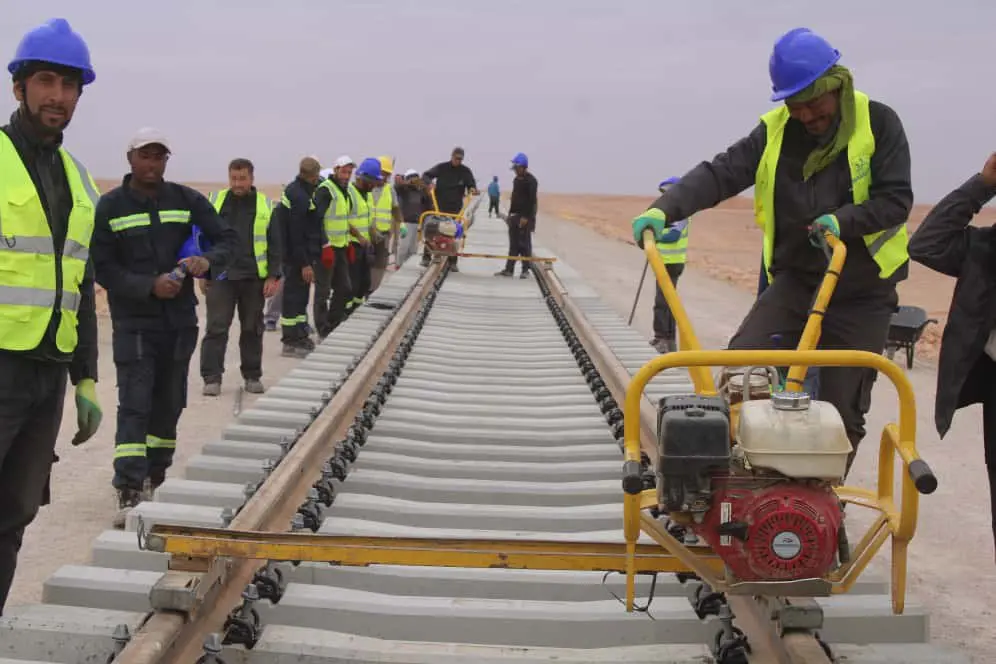
The construction of the Algerian railway itself is still under way. Public photographs of the construction work in the local official and media indicate that the laying of tracks, mechanization and engineering nodes are ongoing. Contrary to the progress of these projects, 67 Chinese workers in BHRRC records are still in the international corporate responsibility database as “unpaid protesters”.
Overseas works are often used as a showcase of national strength and the ability of enterprises to internationalize, but it is not just the scale of financing, the speed of construction or diplomatic representation that really determines whether the model is sustainable. The most basic indicators of governance are the timely payment of workers ' wages, the timely resolution of disputes and the willingness of enterprises to respond publicly.
Sixty-seven persons, 11 kilometres, constituted the clearest factual coordinates of the incident. It turns an abstract “oversea project labour risk” into a specific distance: when the internal grievance mechanism fails, the worker can only go to the responsible subject with his own feet.
Article discussion
Verified members can discuss this report publicly and manage their own content.
Checking member sign-in status…