

On 14 September, the People ' s Bank of China published financial data for August: the new RMB loan was only 6 billion yuan, and the market had originally expected about 400 billion yuan; Resident loans continued to decline, and for the sixth consecutive month, they contracted. At the same time, the banking system has shifted its large share of money to long-term national debt, with the return on the 10- and 30-year national debt being pushed to historical lows, and the central bank has begun to study the constraints on bank long-term bond holding.
Taken together, these three sets of data are more indicative of the current state of China’s economy than any single indicator: Liquidity remains within the financial system, but private sector demand for long-term debt is declining rapidly.
原始来源 · reuters.comChina August bank lending disappoints as credit demand stays weak路透社根据中国人民银行数据整理8月新增贷款、居民贷款及信用增速变化。reuters.com ↗The credit failure occurred at a time when funds were not scarce
From January to August, China ' s new RMB loans totalled 1044 trillion yuan, down from 13.46 trillion yuan in the same period last year; The increase in the balance of the renminbi loans has been reduced to 4.9 per cent over the same period, the lowest since the year was recorded. The negative growth of $34 billion in loans in July and only $6 billion in the positive turn in August meant that credit expansion had not resumed.
In the past, when China ' s economy was down, policies were usually scaled up rapidly through the banking system: lower tariffs, lower interest rates, local finance, real estate mortgages, capital loans, and joint credit expansion. The anomaly now is that policy instruments still exist and banks are rich, but borrowers are decreasing.

The changes in the residential sector are particularly significant. (a) During periods of increase in the price of the house, mortgage loans mean expectations of an asset ' s appreciation; Today, lower housing prices, precarious employment and weaker income expectations make long-term indebtedness a source of risk. Families no longer see debt as entry to asset markets, but instead begin to see debt reduction as self-protection.
The population shrink is cutting off credit transfer in the real estate age
The Chinese real estate model has long been supported by four links: land finance, local revenue, increased indebtedness of developers, bank mortgages, and future income mortgages to property. As soon as the house price rises, the chain can be extended.
The first to quit is the population. Declining new mortgages and weaker consumer lending mean that real estate, even if it continues to ease the restrictions on purchase, lower down payment or subsidized interest rates, will hardly replicate the past credit expansion. Household balance sheets are moving from “leveraging for appreciation” to “reduced cash pledges”.
原始来源 · reuters.comRising energy costs lift China's producer, consumer inflation in August路透社报道中国内需仍然疲弱,消费刺激尚未形成广泛复苏。reuters.com ↗The frequent industrial restructuring, regulatory shifts, real estate risks and local financial pressures in Xi ' s era have led to an increased focus on policy unpredictability in the private sector. Business investment and household indebtedness are long-term in nature, and when policy decisions are highly centralized and there are no stable external checks and balances, the private sector naturally increases the risk discount.
Such a change in behaviour does not require political expression. The efficiency of the channel of macro-policy has been changed by the fact that residents have less access to housing, less access to consumer credit and more savings.
Banks began to replace private credit with national debt
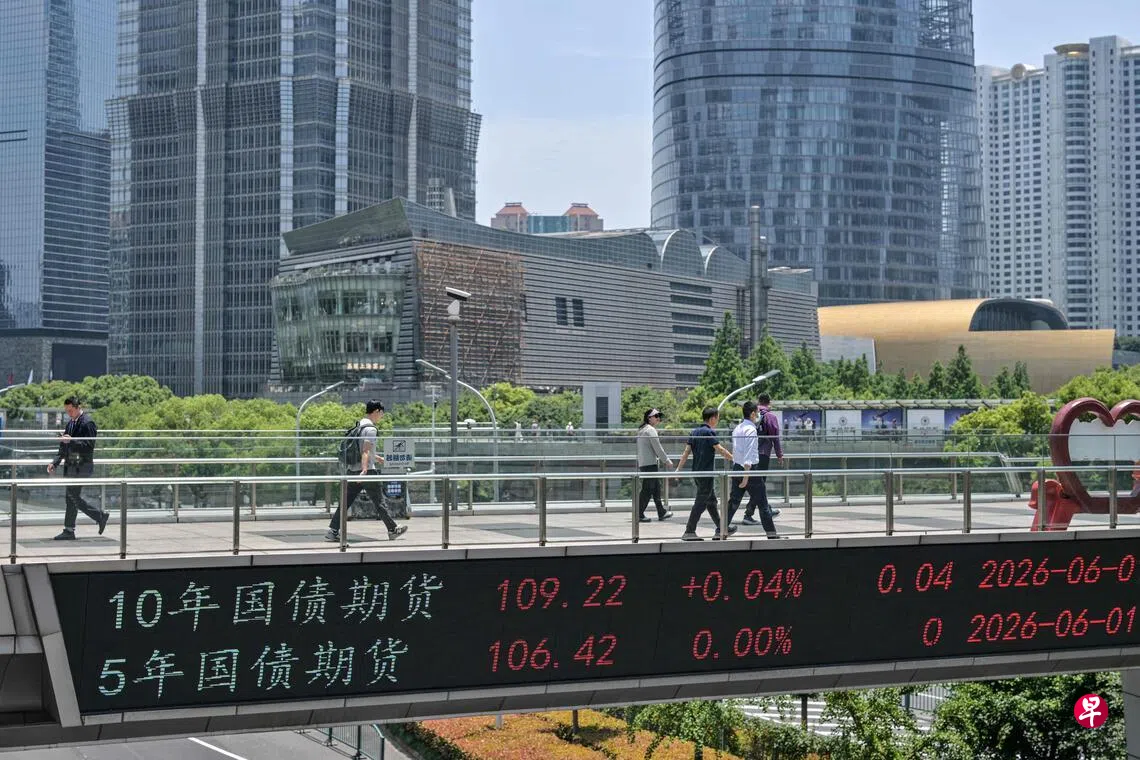
Another set of data reveals where the funds went. Reuters reported on 14 September that the People ' s Bank of China was studying the incorporation of long-term bank bonds and fund holdings into macroprudential examinations to constrain the centralization of long-term national debt by financial institutions. The 10-year sovereign debt return of about 1.68 per cent and the 30-year period of about 2.17 per cent were near historical lows.
原始来源 · reuters.comChina central bank plans new metrics to rein in banks' long-dated bonds holdings路透社报道央行拟把银行长期债券和基金持仓纳入宏观审慎考核。reuters.com ↗The logic of the asset allocation is clear for banks in choosing long-term debt: when there is a weak demand for loans, fewer quality projects and higher credit risk, government bonds are safer than new lending to the private sector. As a result, the funds released by the policy have not been kept in a smooth flow of consumption, housing and private investment, but have been revolving between banks and bond markets.
The central bank then expressed concern about the long-term low return and the long-term risk for banks. This creates a policy paradox: the liquidity released to keep the economy alive, rather than creating enough private credit, pushes up the bond allocation; Financial regulation has to contain this “sheltering”.
The problem of the Chinese economy has shifted from “financing costs” to “risk willingness”
The interest rate reduction can change the borrowing price, but it cannot be a decision for the residents as to whether the income will be safe for the next 30 years; Policy lending can increase supply, but it cannot create real orders for businesses. Beijing is good at controlling the availability of funds, but it is difficult to control the private sector ' s judgement about the future.
This is the inherent limit of highly centralized economic governance. Centralization of power can mobilize banks, State enterprises and local governments quickly in the short term, but it can also magnify the impact of policy changes on the private sector. The dramatic policy shifts in the real estate, Internet, training, platform economy and so on over the past few years are reminding residents and businesses that major rules may be rapidly changed by political decision, while costs are ultimately borne by asset holders and operators.
Thus, today ' s financial data present an extremely clear structure: banks have money and residents have less to borrow; (b) Careful business and financial purchases; The central bank has also restricted the purchase of debt by banks.
Six billion dollars is not an isolated monthly figure. It records a turn of China's growth model from “under-credit expansion” to “private sector proactive risk avoidance”. This is more difficult for Xi to deal with than simply increasing the money invested, because confidence is not an administrative resource and cannot be configured by order.
Article discussion
Verified members can discuss this report publicly and manage their own content.
Checking member sign-in status…