On August 25, 2026, a U.S. Air Force C-17A "Universal King III" strategic transport aircraft landed at Moscow's Vnukovo airport, after which a number of U.S. media outlets revealed the truly important figure behind the aircraft: John Ratcliffe, Director of the U.S. Central Intelligence Agency.
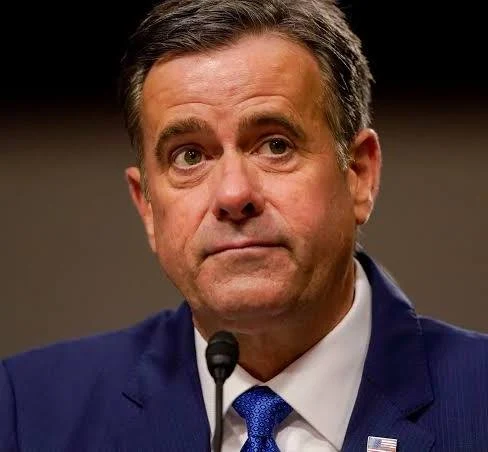
CBS News, ABC News, the Washington Post and Reuters that Ratcliffe was in Moscow on the same day. This was the first publicly known Russian visit since he served as CIA director, and a very rare visit to Russia since former CIA director William Burns visited Moscow in 2021.
原始来源 · cbsnews.comCIA Director John Ratcliffe on secret trip in RussiaA U.S. Air Force Boeing C-17A Globemaster III transport plane was spotted at a Moscow airport, along with a U.S. diplomatic motorcade, according to public reports.cbsnews.com ↗What really deserves Beijing’s attention is not the C-17, but the political signal behind the plane.
The top figures of the U.S. intelligence system did not visit Russia through ordinary diplomatic ceremonies, but entered Moscow in a context where the Russian-Ukrainian war has not yet ended and US-Russian relations are still highly complex.This shows that no matter how much open conflict between Washington and Moscow, there is still a direct channel between the two countries that can discuss top-level security issues.
Even more remarkable is the fact that such contacts are taking place at a time when Russia is still publiclyining its “strategic partnership” with China.
In February 2022, Xi Jinping and Putin announced that China-Russia friendship was “no-stop” and cooperation was “no-stop zone”. Since then, Beijing has packed China-Russia relations into an important sign of the so-called world pattern change. By May 2026, Xi and Putin still openly emphasized strategic cooperation between the two countries.
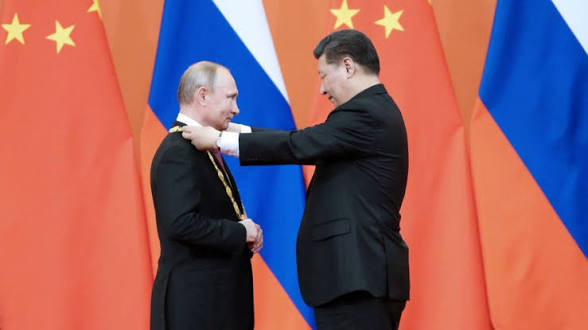
At the meeting of Xi Jinping and Putin in Beijing in May this year, although the two sides once again showed political intimacy, they still did not determine the large-scale natural gas project of great concern.
This is precisely the question that the Chinese propaganda machine is most reluctant to discuss: the so-called "no upper limit", who is for whom no upper limit?
Russia needs Chinese markets, trade, industrial products, and diplomatic support, while China wants to use Russia’s vast nuclear arsenal, energy resources and its status as a permanent member of the UN Security Council against the U.S.-led international order.
When the United States is able to offer Russia a more valuable strategic choice than Beijing, why does Moscow have to sacrifice its own national interests for Xi’s regime?
International politics has never talked about the “comradeship” in the propaganda of the CPC.
US Russia is really close, Beijing is the most tense side.
If the Trump administration is able to re-establish a stable US-Russian high-level communication mechanism, its strategic significance could be far more than the Russian-Ukrainian war itself.
One of the biggest geopolitical challenges the United States has long faced is how to deal with strategic interactions between Russia, China, Iran and other forces.This month’s U.S.-China Economic and Security Review Committee data on China-Russia relations also describes China-Russia partnership as an important authoritarian cooperation axis that seeks to undermine the U.S. alliance system and influence.
原始来源 · aa.com.trPutin, Trump could meet at APEC summit in China: KremlinKremlin aide says no signals yet on presidents meeting, but APEC presence in November would make it likely Anadoluaa.com.tr ↗Therefore, for Beijing, the most dangerous situation is not the U.S. conflict with Russia and China at the same time, but Washington begins to rearrange the order of enemy friends.
If the U.S. and Russia are able to make a phased deal on Ukraine, energy, the Middle East, nuclear security and even some economic interests, Russia’s strategic need to continue to rely fully on China will decrease.
This does not mean that Russia will suddenly become an ally of the United States, let alone the assertion that the United States and Russia have formed a “anti-China alliance”.
Because one of Xi’s most important international strategies in recent years has been to try to use Russia to capture the United States and Europe, so that the United States faces strategic pressure in both Europe and the Indo-Pacific.
Once this condition is relaxed, the pressure may turn to Beijing.
The most ironic scene of “No Upper Limit” is coming
At a time when Beijing continuously tells the Chinese people that “the rise to the west is falling” and that U.S. hegemony is declining, the U.S. strategic transport aircraft landed directly in Moscow, and the U.S. CIA director entered the Russian capital and held high-level contacts with the Russian side without public content.
Meanwhile, Kremlin Foreign Policy Assistant Usakhov recently even publicly said that if Trump and Putin both attended the APEC summit in China in November this year, they would most likely meet and talk.
This creates a very ironic picture:
Xi Jinping hopes to shape Russia as a strategic partner against the United States, but the United States can always knock directly on Moscow’s door.
This is the true meaning of the so-called “Russia-China no ceiling” – China-Russia cooperation can be very deep, but Russia has never handed over its strategic choice to Beijing.
Putin is, first of all, the president of Russia, not Xi Jinping’s political ally. Russia is pursuing Russia’s own status as a great power. If improving US-Russian relations can be achieved in exchange for easing sanctions, economic interests, favorable arrangements on international space or Ukrainian issues, the Kremlin is fully motivated to re-adjust the weight of relations with China.
In the face of national interests, there is no “no upper limit”.
From sitting at the table to becoming the keyboard on the table
It is not Putin who should really be worried about the CPC, but its own international strategy that is simultaneously cracking up.
Over the past few years, Beijing has been trying to build a narrative: Russia, Iran and a group of anti-American nations are forming new international power centers, and the US-led world order has irreversibly declined.
But international relations are not propaganda slogans.
Russia can embrace Beijing, it can negotiate with Washington; the United States can sanction Russia, it can send a CIA director to Moscow; Moscow can sell energy to China, and it can re-trade with the West when it needs it in its own interests.
What really lacks strategic rotating space may be the Xi Jinping regime itself.
This is where the C-17 is most feared by Beijing today.
It does not prove that the US-Russian Union has been established, but it does not prove that Russia has not been locked to the side of China; it does not prove that Putin has abandoned Xi, but it proves that Xi has never really had Putin.
And once Washington finally manages to remove Russia from its high-dependence on China, the strategic space that the United States has gained in the face of Beijing will be significantly expanded.
At that time, the Taiwan Strait, the South China Sea, advanced chips, international finance, supply chains, key minerals, overseas military expansion and China’s high-ranking overseas interests could all face more concentrated external pressure.
Several decades ago, the United States used the Soviet-Chinese division to change the balance of the Cold War forces, and what Beijing is most afraid to see today is a big country’s strategic adjustment in the opposite direction.
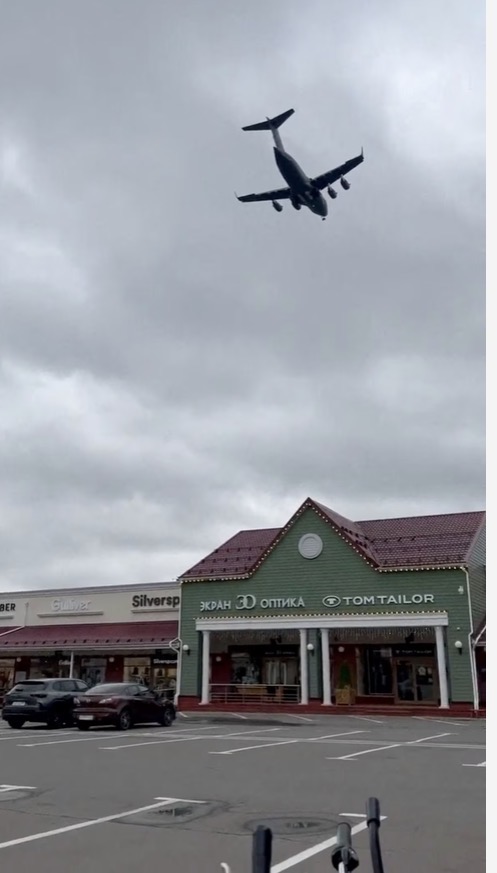
So what really is worth observing about the C-17, which landed in Moscow on August 25, is not how many people and equipment it was carrying, but whether it meant that a door that had been closed for years was being reopened.
If a new framework for the exchange of interests between the US and Russia eventually forms, then Xi’s hard-working operation of the “Chinese-Russian no-top-limits” will not only become a joke in international politics, but also likely become a graveyard for the misjudgment of the Chinese Communist Party’s strategy.
In the past, Beijing has always wanted to sit down at the table to redistribute the world order.
But there is a cruel rule in international politics: if you can’t decide the menu, be careful if you’re part of it.
Today, the CIA director has arrived in Moscow.
Russia is still sitting at the table, and the United States is also sitting at the table.
And the Communist Party may be a step closer to turning from the so-called "Great Power Players" into a dish in the dealings of the great powers.
Article discussion
Verified members can discuss this report publicly and manage their own content.
Checking member sign-in status…