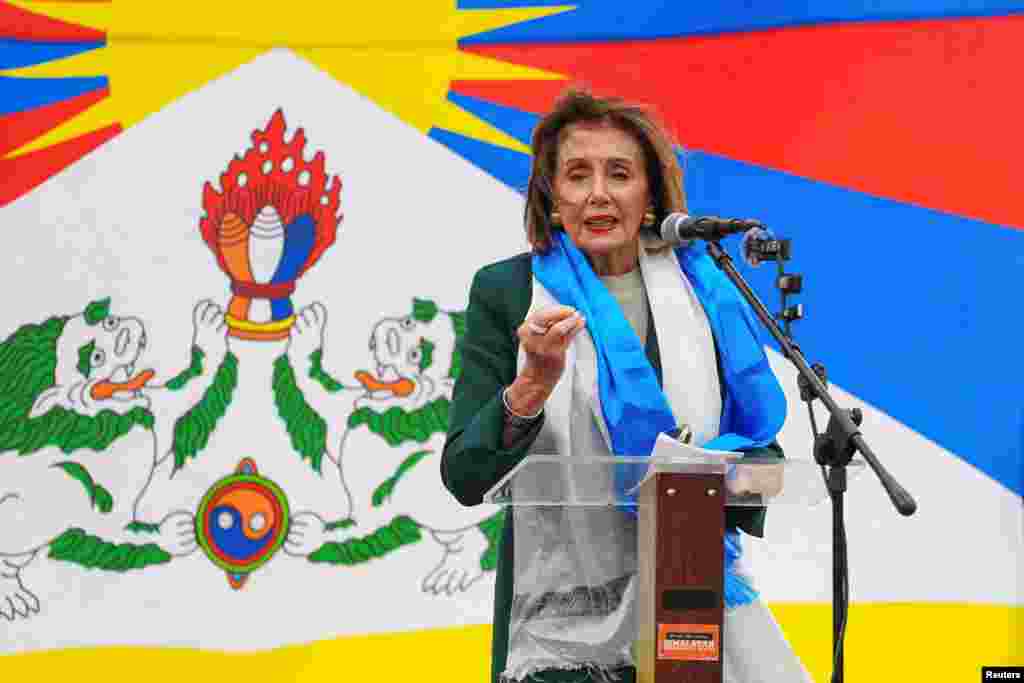
During the visit of Chinese President Xi Jinping to Washington from 23 to 25 September and the talks with President Trump, protests from various communities, including Tibet, Uighur, Hong Kong, the Chinese Democratic Movement and Falun Gong, continued to take place in the US Embassy, around the White House and in downtown Washington. Voice of America, Radio Free Asia, Associated Press and various initiatives have documented the situation on the ground.
Multi-ethnic claims are appearing simultaneously from the Chinese Embassy to the White House
Radio Free Asia reported that on 24 September, Tibetans, Uighurs, Hong Kongers, Chinese Democrats and Taiwan supporters protested near the White House and around the Chinese Embassy in the United States. Some Tibetan groups marched from the vicinity of the Embassy to the White House, where large snow mountain lion flags and slogans calling attention to religious, cultural and human rights issues in Tibet were seen.
The same day, Associated Press reported that protests continued almost throughout Xi ' s visit, and participants raised issues such as Tibetan religious and cultural rights, political freedom in Hong Kong, Xinjiang human rights, Taiwan security and Chinese political prisoners. Meanwhile, there were crowds in Washington who welcomed Xi, and some supporters waved Chinese and United States flags near the convoy route.
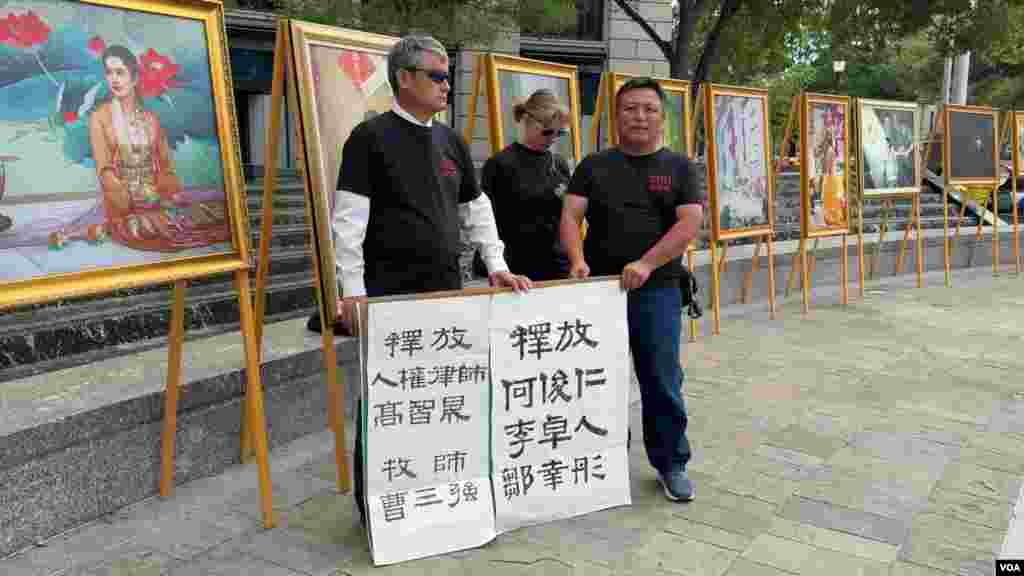
Chinese Democrats and US MPs present on the scene
The live pictures of Voice of America show blind defenders Chen Guangcheng, rights advocate Chen Jianggang, participating in the protest on 24 September. China Democratic Movement activist Wang Dan also participated in a rally near the White House and posted live videos via social platforms.
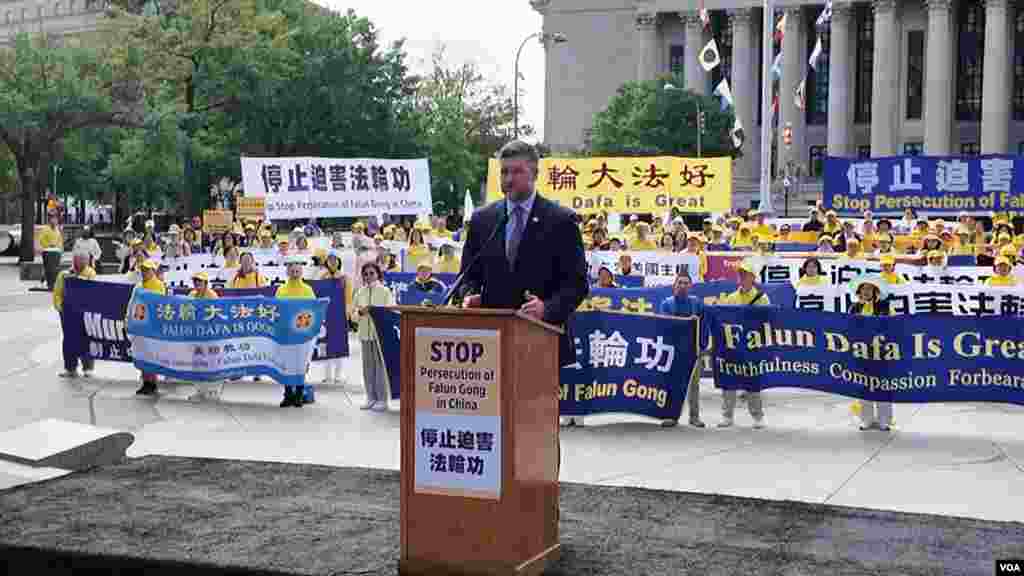
On the same day, some members of the United States Congress appeared at different protests. (a) Nancy Pellosi, former Speaker of the House of Representatives, addressed the National Day of “Free Tibet” on the national lawn; New York State Federal Representative Pat Ryan spoke at a Falun Gong group gathering. These activities were initiated by different organizations, not the same unified demonstration.
Protesters brought long-standing human rights issues outside the Führer's meeting.
(b) Uighur groups continue to raise the issue of mass detention, forced labour and religious freedom on the ground; The Tibetan community has focused on the recent Chinese national policy, Tibetan language culture and religious inheritance; The Hong Kong Group called attention to the cases of political prisoners and the Hong Kong National Security. The United States Government was also called upon to raise the issue of human rights in the context of the talks with Xi.
The Chinese Government has long denied the existence of “genocide” or systematic forced labour against Xinjiang and has stated that its policies are aimed at combating terrorism, development and national unity; Beijing also insisted that Tibet, Xinjiang and Hong Kong affairs were internal Chinese affairs and opposed foreign government intervention in the name of human rights. Protesters argue that street action is necessary to maintain international attention because these issues are often dominated by trade, security and diplomatic issues in official talks between China and the United States.
Protocol to visit the United States of America and street protests have become a strong parallel
Xi was received with high standards during this visit to the United States. Trump personally arrived at the airport to welcome him, followed by an official White House event and a national dinner. Meanwhile, protest slogans outside the White House were able to continue to reach the surrounding area. Both the Central and the Associated Press have documented this parallel: official meetings have highlighted the subject of US-China relations and trade, while on the streets criticism of China ' s human rights policy has been concentrated.
原始来源 · abcnews.com美联社:习近平访美期间白宫外持续出现抗议美联社记录不同社群围绕西藏、香港、新疆、台湾和政治自由的抗议活动。abcnews.com ↗The protest did not change the official agenda of the US-China Führer talks, but it focused on long-standing issues that were promoted by the Chinese, Tibetan, Uighur and Hong Kong communities abroad. For these groups, Xi ' s State visit was both a diplomatic event and a window for re-emergence of political prisoners, religious freedom, ethnic policy and cross-border repression to United States political and international media.
Article discussion
Verified members can discuss this report publicly and manage their own content.
Checking member sign-in status…