
The United States Federal Court for the Eastern District of New York is currently hearing criminal cases against China Technical Ltd. and related entities. On 17 September, the jury at the trial saw video evidence relating to the T-Mobile laboratory, an American telecommunication company; On the same day, a video of about 62 seconds, transmitted by account X, Ausmini, was also being distributed online. According to the United States federal prosecution, the footage and supporting evidence show that Chinese employees had filmed, measured and removed parts of the mobile phone to test the robot “Tappy” at the T-Mobile laboratory and passed the relevant technical information back to China. In order to deny that its success was based on systematic theft of technology, China pleaded not guilty to current criminal charges.
Video to bring back to the centre of the Tribunal the “Tappy” dispute that lasted for more than a decade
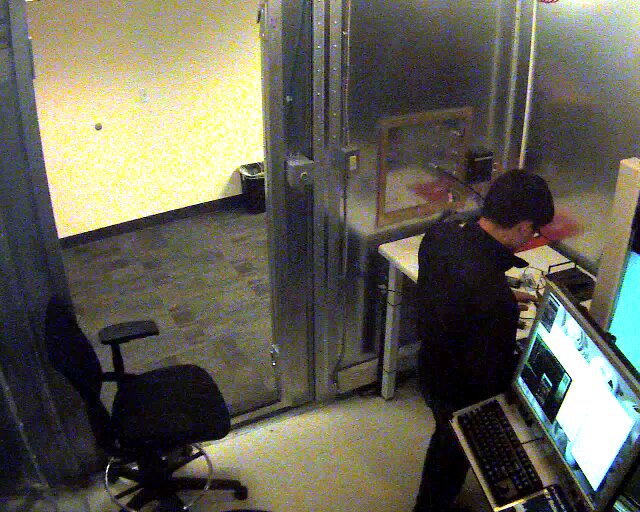
The video, transmitted by account X, Ausmini, echoes the public information about the Federal Court hearings in New York this week. > Inner City Press trial transcript of 17 September,, was viewed by the jury in relation to T-Mobile Laboratory and “Tappy; The South China Morning News, same day, and the United States prosecution is trying to prove that China has continuously acquired “Tappy” technical specifications through mail, witness statements and laboratory information.
Tappy is a mobile phone test robot used by T-Mobile at the Belvue Laboratory in Washington, D.C., which simulates finger clicks, slides and input for automated testing of smartphone touch screens.
The prosecution's allegation is that photographs, measurements and removal of the robotic end parts
US Department of Justice 2019 indictment submission, and Chinese began to attempt to obtain “tappy” technical information from around
- The indictment alleges that the persons concerned, in violation of the confidentiality and non-disclosure agreement with T-Mobile, secretly filmed robots, measured components in the laboratory and, in one incident, removed the operative parts of the robot ' s end from the laboratory, and allowed Chinese engineers to try to analyse and replicate them. These elements are currently present in the United States Department of Justice ' s criminal prosecution materials and intersect with the records of civil proceedings previously filed by T-Mobile.
The Civil Court has ruled in 2017 that “the misappropriation of business secrets”
This dispute was not the first to be brought before a jury.
原始来源 · reuters.com路透社:华为美国刑事审判开庭reuters.com ↗2017, when the United States Federal jury found that China had misappropriated T-Mobile's business secrets in relation to "Tappy" and found it to be in breach of both parties' contracts. However, the jury did not find that the diversion of business secrets amounted to “intentional and malicious” and did not award T-Mobile damages or punitive damages for the claim of commercial secrets; The compensation of approximately $4.8 million was derived from the default portion. ** The precise legal statement is therefore that, while the civil jury had found China to be misappropriation of T-Mobile ' s commercial secrets, the relevant charges in the current New York criminal case still required an independent jury judgement in the case under consideration. ** ** New York's criminal case in 2026 is far more than one robot.** <a href="https://www.reuters.com/legal/litigation/us-trial-against-chinas-huawei-opens-with-prosecutor-calling-the-company-2026-09-09/"target" rel = "nopener noreferrer" data-linked-reference = "tru" data-reference-label = "Reuter" 9 September, Reuters </a", which was summarized in the statement of the United States Attorney General at the Department of Justice as a criminal conspiracy lasting about 20 years and accused of theft from United States enterprises, including Cisco and T-Mobile Industry secrets, including Internet router source codes and "Tappy" robotics-related technologies. The prosecution further stated that evidence such as a video of staff taking robotic parts would be presented to the jury. <a href="https://apnews.com/article/0597e888ed45d692330ebb967d82b0c0"target" rel = "nopener noreferrer" data-linked-reference = "true" data-reference-label = "Associated Associated Press", the criminal case also includes charges of organized criminal conspiracy, bank and telecommunications fraud, obstruction of justice and related to Iranian operations. These allegations do not amount to a conviction; He has pleaded not guilty to the charges.
China defends: individual employee incidents cannot be labelled as “business crime patterns”
In his opening statement, the defence team of China denied the overall narratives that the prosecution had built. , which the defence claims is a "selection" of individual employees and isolated incidents, and then a long-term, non-existent conspiracy; The defence emphasized that the growth of the Chinese government was due to competition and innovation, not to crime.
In the “Tappy” dispute, China also argued in the past that some of the robotic information could be obtained from public material, and stressed that the Civil Jury in 2017 had not found that its conduct was a “intentional and malicious” diversion of commercial secrets. The findings of the civil jury that commercial secrets have been diverted are, however, still part of the established court records.
The video is not "web-based" but it is part of the court's evidence chain
The biggest difference between this video and the general social media story is that the core events it concerns have been in United States judicial proceedings for many years: civil action by T-Mobile in 2014, civil decisions by jury in 2017, criminal charges by the United States Department of Justice for the acts in question in 2019, and the wider Chinese criminal case being heard by the Federal Court in New York in 2026.
The key issue now is not whether there are charges on the Internet that Hua is “stolen technology”, but whether the United States prosecution can link video, mail, witness statements and past events to a chain of evidence sufficient to meet the criminalization criteria. The Chinese attempt to prove that the material only describes the conduct of individual employees or commercial disputes that have been dealt with, and does not prove the existence of a long-term criminal plan as charged by the prosecution. Final criminal responsibility will remain for the court and jury to rule on the basis of complete evidence.
Focus China comment: from the fact that the party organized to the RECO allegation, China is not a mere commercial dispute.
There is a direct verifiable organizational and political link between China and the Communist Party. , which was interviewed in 2019 and recognized as internal by the Chinese Communist Party and stated that the organization was not involved in business decision-making; He also said in another international media round table in China, "a href="https://www.huawei.com/mm/news/2019/ren-zhengfei-international-media-roundtable"target" rel="nopener noreferrer" data-linked-reference="tru" data-reference-label="Wahfung is the official international media round table" >/ / / /as a member of the Chinese Communist Party in 1978 and publicly expressing support for the CPC. Thus, the reference to China as a “CCP” is a political summary, not an official ownership register, but not a vacuum, based on the fact that there is a CCP organization within the company, that the founders have a clear membership.
On the other hand, >, which explicitly includes the offences of `complicity in violation of the Anti-Fraud Corruption Organization Act (RICO)' and `Complicity in stealing business secrets' (a) Name; "in 2026, for the current trial, The prosecution also referred to as `criminal enterprise'. This means that “organized crime” is not understood only as a matter of public opinion, but as a response to the specific RICO criminal charges in this case; But before the final judgement of the court, the legal charge remains the prosecution ' s charge, not the established conviction conclusion.
From the point of view of public accountability, what is really needed is not to substitute a slogan for evidence, but to place party organizations, the political identity of their founders, established civil decisions on transnational access to technology, and the current RICO criminal charges in the same chain of responsibility. Critics have thus viewed China as a typical case of the Chinese party system’s relationship with large enterprises, and have questioned whether there is an overlap between political organization, business interests and national strategies that cannot be monitored from outside. In contrast, Hua insisted that its party organizations would not be involved in the management of the business and denied the prosecution ' s alleged pattern of systematic sexual offences. It is precisely these serious allegations that the trial is finally about to answer, and whether they can be proved by evidence rather than by political slogans.
Article discussion
Verified members can discuss this report publicly and manage their own content.
Checking member sign-in status…