
A "incentive speech", why does it become a web irony?
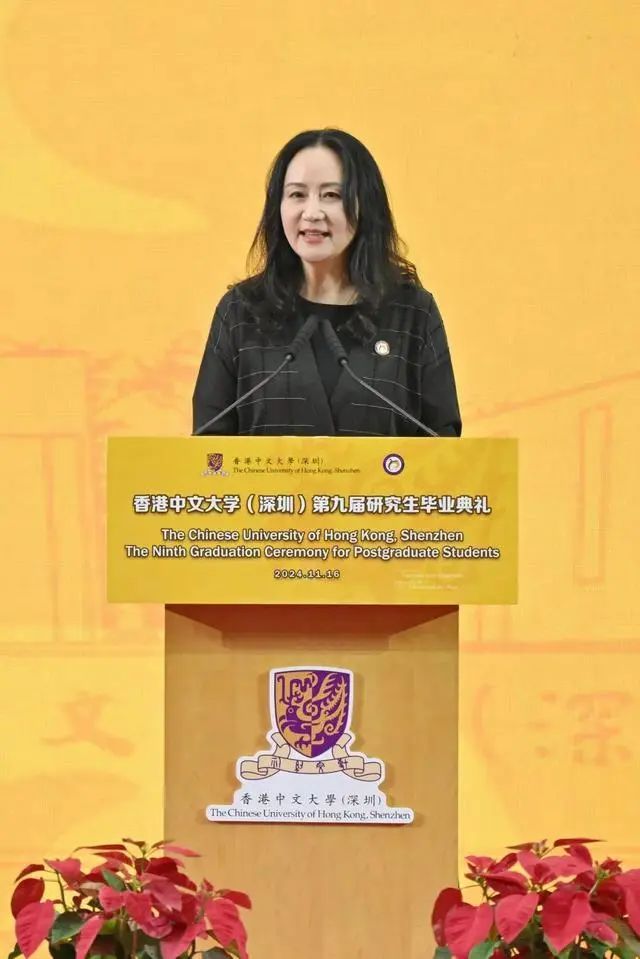
In November 2024, Meng appeared at the graduation ceremony at Hong Kong Chinese University (Shenzhen).Public school reports showShe encouraged graduates to "look at the stars, while the hands are ashes, and the feet are ashes".This is a typical set of successful narratives: asking young people to practice, to struggle, to persist, to struggle.
But when a family of corporations with huge wealth, international resources and political symbolism stands on the stage to educate ordinary young people how to “melt their feet,” the public of course has the right to ask: “Who will tell these young people what the successful people on the stage have actually experienced?
A webcast linked this speech to a sharp one:
“My father married three wives, had three sons, had three different surnames, had four husbands, had four sons, had four sons, had three sons, had three sons, had three sons, had three sons, had four sons, had four sons, had four sons, had four sons, had three sons, had three sons, had three sons, had three sons, had three sons, had three sons, had four sons, had four sons, had four sons, had four sons, had four sons, had three sons, had three sons, had three sons, had three sons, had three sons, had three sons, had three children, had three children, had three children, had three children, had three children, had three children, had three children, had three children, had three children, and had three children.”
The role of this association is not to act as a court judgment, but as a political irony. It brings Jinn, Meng and his family stories into a positive collision with the "national enterprise" "patriotic technology" lighting that has long been given to Huawei. Why does a family be taken by netizens to ironize about "China is for"? the answer is not only in the private life, but also in the long-term propaganda of the party state to bind a company, a family and the "Rise of China."
Back to U.S. Judicial Documents from the University Talk Board
Ms. Meng’s public history can’t be left with just airport flowers, red carpet welcome and university speeches. In 2021, she reached a deferred prosecution agreement with the U.S. Department of Justice. U.S. Department of Justice documents showed Ms. Meng did not make a criminal claim, but she confirmed that the factual statements attached to the agreement were true and accurate. The factual statements involved Huawei, Skycom, Iranian business and her statements to a global financial institution.
Later, the charges against Ms. Meng were withdrawn, but this did not leave the criminal case for Huawei to wash the company, nor did the U.S. prosecutor's charges against Huawei disappear automatically.
Here is what Chinese readers really need to remember:
- The end of Meng’s personal case does not equate to Huawei’s innocence.
- She confirmed that the factual statements are true and accurate, that they are judicial records that have already taken place and should not be erased from the propaganda narrative of the “Return of the National Heroes.”
- The allegations of the U.S. government, of course, still have to be ruled by the courts, but the Chinese public also has the right to see these documents, not just be allowed to accept a single version of “America’s suppression of Huawei.”
Meng has returned home, Huawei’s criminal case has not disappeared
In September 2026, Huawei entered a criminal trial in New York City.U.S. prosecutors continued to file criminal charges around Iranian business, banking fraud and business secrets; Huawei denied the allegations and defended.
The trial itself hit an illusion repeatedly created by Chinese official propaganda: “Meng’s return home does not mean the truth of the case has ended; the welcome ceremony does not equate to judicial conclusions; and the nationalist slogans do not replace evidence.”
Over the years, Beijing’s propaganda system has shaped Meng Zhao as a symbol of “return to the country after the persecution of the United States”, packaging Huawei as a “national backbone”. but if the propaganda machine dares to speak of “national enterprise”, it must allow the public to simultaneously see the company’s full judicial record in overseas.
“China has for” Why does it hurt?
The most powerful part of the network is that it pulls the huge slogans back to real life.
An entrepreneurial family, such as Meng Meng, can possess wealth, marriage freedom, international education, and global life choices; these are not sin in themselves.But when the same family is packed with official narratives as a symbol of "China's spirit of struggle" and in turn educates ordinary young people to suffer, devotion, and footsteps, the public of course has a strong ironic impulse.
This is exactly where the four words "China has for" are reinterpreted:
- When enterprises are successfully promoted as national honors, enterprise executives should accept a stricter public review.
- When ordinary young people are asked to suffer and "both feet muddy", the public has the right to ask what resources, wealth and global flow space the successful people enjoy.
- When Huawei is shaped as a national science and technology symbol, the adverse judicial documents related to it should not be excluded from the public eye in China.
- When the Party State propaganda binds the corporate destiny to "patriotism", the question of enterprises can not be easily defamed as "non-patriotism".
“This is not a rumor, it is a matter of power and propaganda.”
If Mr. Meng is just an ordinary private entrepreneur, their family life is not worthy to be repeatedly enlarged by the national propaganda machine.But the reality is the opposite: Huawei has long been placed in the center of nationalist narratives, Mr. Meng is shaped as a national symbol, and the personal image of Mr. Meng is continuously given the political meaning of "Chinese entrepreneurial spirit".
Once a family is actively pushed to the public theatre, the society questioning the family’s wealth, choice, judicial records and political symbols is public supervision, not an “offensive” to power narratives.
The most frightening partisan myth is not irony, but complete facts.
Focus on China believes that what really needs to be dismantled is a long-standing party enterprise synthesis: enterprises get a nationalist ring, enterprise executives get the status of heroes, commercial and judicial disputes are packed into national confrontation; to the ordinary Chinese here, but there is only struggle, patience, dedication and "both feet clogged."
When the power is precious, the public has the right to question his wealth; when the enterprise speaks of patriotism, the public has the right to ask for its interests; when the propaganda of machines make heroes, the news media has the responsibility to put the ignored legal records, business relations and political background behind the hero narrative back to the reader.
Ms. Meng could stand on the university table and talk about “looking into the stars,” but the young Chinese should also know why she was accused in a U.S. criminal case, what judicial documents she signed, what facts she confirmed, and why the Huawei she represented still stands in the criminal court in New York years later.
The real "looking into the stars" should not require young people to close their eyes; the real "both feet in mud" also includes stepping into the facts that were deliberately bypassed by nationalist propaganda.
If a society allows only successful people to educate young people on how to struggle, but does not allow them to look at the power, wealth, legal records, and political relationships of successful people, so-called incentives are ultimately only one-way precepts.
The responsibility of the press is not to uphold the myth for the party country, the government or the enterprise, but to rewrite the whole picture of the facts being cut apart from the propaganda.
Article discussion
Verified members can discuss this report publicly and manage their own content.
Checking member sign-in status…