

Time: Night of 12 August 2026
Location: City of the capital of the North-West Province
Interviewee: Oh Gyung-se
Interviewee: Ho Chi-Yu
Wu Old Sze: Counselor, thank you for the interview. About a month ago, you were the lawyer who was placed in the cage of the prison in Jeenan, a country that was in the court's hands. I had an interview with you at the time, " Who's breaking the court's bottom when the defense is locked in a cage ", which may have been a good impression for many. But today you wrote an article in the community saying that it is more alarming than the "physical cage" in Gitsinand, the "intangible cage" built by a court in a north-westerly town. Why would you judge this?
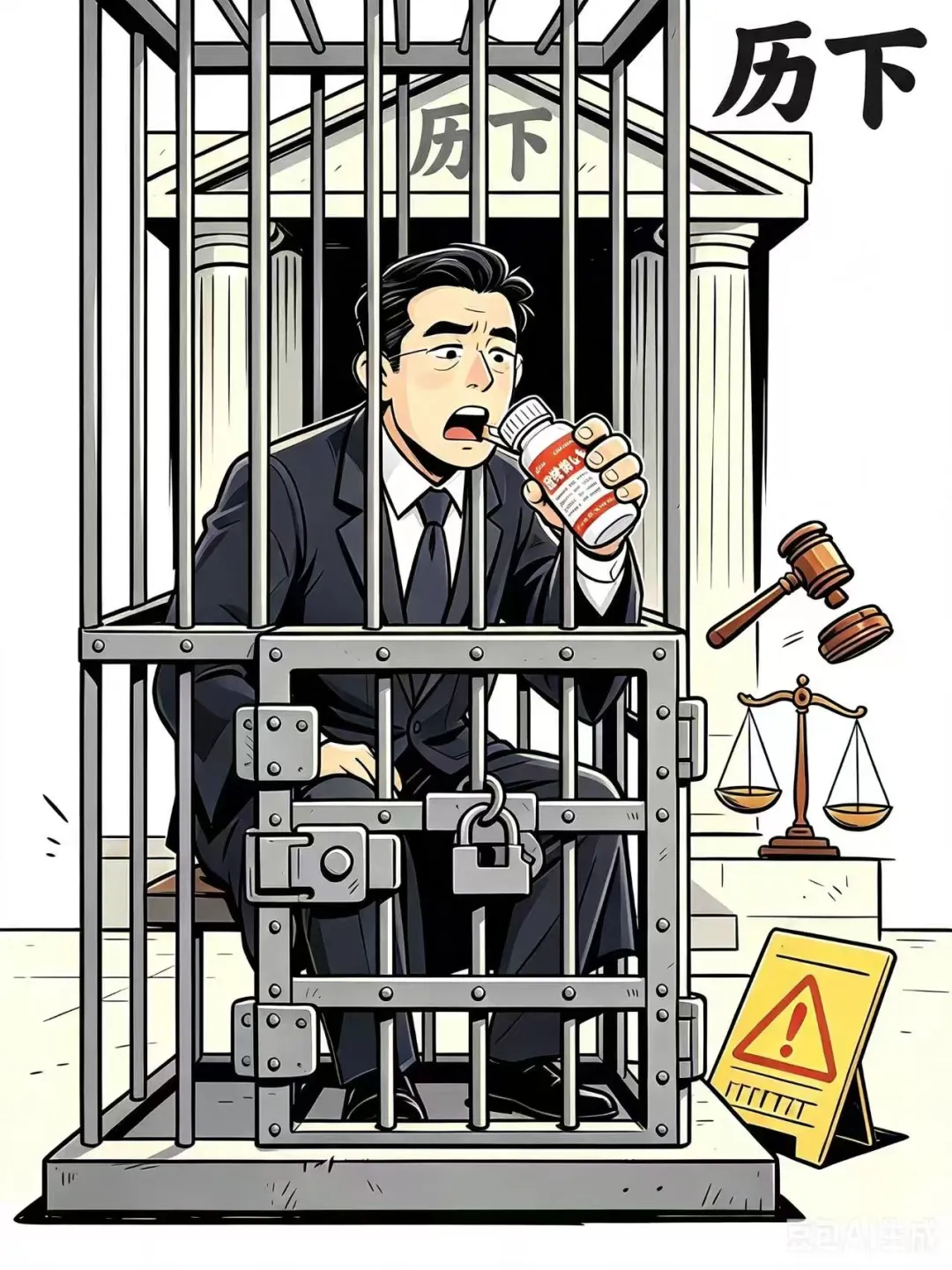
Far from home: The cage in Jinan is tangible, visible and touching. I pointed out in court that the gallery was so messy that the bailiffs took me in and locked me in for 20 minutes. I can feel the coldness of the metal when the iron door closes, and the crowd on the gallery can see it, and the next day we can discuss it all over the web. Its violence is intuitive and everyone can say “it is wrong”. But this case is different somewhere in the Northwest. I stayed here for a few days, and no bailiff ever took a hard look at me (but the PSP took a hard look at Zhu Hyo top and Zhang Junbin) nor did anyone put me in a cage. But I felt I was covered in an invisible net. The gallery was filled by unidentified persons and the family was unable to enter; Any procedural application you have made, the judge has “the court has recorded” and then the following is missing; You want to let the outside world know what's going on here, send a message to social media like Weibo, Public, and so on, and it's not gonna be a few minutes. There was no violence, but you couldn't move one step. I feel helpless, lost, depressed, painful and even suffocated.
The concept of “invisible cage” is very precise. In that article you said that the tangible cages trapped one man, that at one moment the invisible cages were hanging and killing the whole of the way. Can you spread the difference?
Far away: I'm alone in the cage of Jinan, and I've been trapped for 20 minutes. I am, of course, angry, but its scope is limited. After the news was fertilized, the superiors could intervene in the investigation, the representative of the court came to Beijing to apologize to me. The judge, although not cleared out of the bench as I requested, I believe that this was sooner or later. So I say that the physical cage of the Jenan court is a visible cross-border violence that can be monitored, verified and corrected. But the “invisible cage” of a court in a north-westerly country is systematic. It is not directed at a lawyer, but at all those who want to participate in the case — family members who cannot enter, the crowd who cannot listen, and law professors who cannot. It was not about a certain point, and it ran through the entire trial. From the allocation of the seats to the rejection of the application for the procedure; From undue delay in the trial to the seizure of the service of the document. It's a full-process blockade. So I say that the tangible cage is trapped in one person at a time, and the invisible cage is hanging all the way. The latter are 100 times more destructive than the former.
Old Sage: You mentioned a detail in your article, 66 people sitting in the gallery, many unidentified public officials, and a civilian police officer even beat up a defender after the recess. The relatives of the accused were stopped outside the security gate. Is this "sitting the pit" planned?
Far away: I can only say that this is a coincidence. The 66 seats are fully occupied, and no information on the identity of the accused, except for the immediate relatives of the limited number of accused, is known. We went in through the security checkpoint and we saw someone flashing the police officer's evidence. The defence subsequently found that the man in the first row wearing the headphone was the civilian police officer in the local police station, the one who beat him at noon that day. Even the defence later recognized the Court ' s staff as sitting in the gallery.
Our defenses, who had announced in advance a list of their own listeners, including Professor Han Xu of Sichuan University and other interested social figures, were all blocked. Judge Lee, presiding, explained that the observers had signed up in advance and that there was no space. But we asked “what channels to sign up”, and he never answered. There were so many vacancies on the gallery that Professor Han Xu was not allowed to attend, and even he could not enter the court door with his lawyer ' s certificate for the next two days.
Olds: The law does make it clear that cases that are heard in public should be given priority over the next of kin of the person concerned. Is that rule ignored?
Far from home: completely ignored. Article 9 of the Rules of the People's Court Courts is clear: when the need is not met, a hearing may be granted in the order in which the application is made or by drawing lots, but “the next of kin of the parties or other persons with an interest in the case shall be given priority”. Many of the seven accused ' s families are outside our doors, while 66 seats are filled with public officials and unidentified persons who have no connection to the case. This is not just a disregard for the rules, but a deliberate act.
As for the natural nature of the right to be heard, it was as simple as “1 + 1 = 2”, but the presiding judge remained in vain. I sent a circle of friends that day: a group of defenders who spent one day arguing that 1+1=2 had lost.
Old Sage: The incident of Professor Han Xu is also typical. I went through it myself, and later I invited Professor Han Xu to attend the Northwest case. A law-maker, who had been almost six months old, had travelled thousands of miles from Sichuan to the north-west and had been standing before the court for three days with a legal certificate, thus failing to enter. At the same time, two medical staff were placed in the gallery and even slept in the morning. What do you think of this?
Faraway: This is ridiculous. In the afternoon of that day, a defender was beaten by plainclothes policemen and ill, and Judge Lee took the opportunity to arrange for two medical staff to sit in the gallery, in order to “guarantee the health of the defender”. However, it is clear that there is a row of chairs in front of the court, which is closer to the battered defender and easier to observe injuries. He prefers to place medical staff in the gallery. And? The two medical personnel sat down and snored so little that they could not even watch the bailiffs, and woke them up and invited them out. Professor Han Xu — a scholar who has worked for decades for the advancement of the rule of law in China — stood outside the court door, looking for a way out, and failed to step into court for three days.
“The medical staff enters the court, the law professor stands outside”, I say, “the medical staff snoring and the justice is in the air”. This is not a joke, it is a picture: it tells you that in some courts “form” can replace “substantive”, “others” can replace “right-holders” and “arrangement” can replace “rules”.
Old Sage: You say this is the presiding judge, Li, who is afraid of being followed by other judges. Isn't that a dimly negative judgment?
Longitude: I am not pessimism, I am based on experience. Such things are not the only ones. When a practice — the presence of a pit, the rejection of a family, the blocking of a scholar, the disregard of an application, is carried out in a court of law in a complete and systematic manner, and without any effective constraints — it becomes a “replicable template”. Judges elsewhere would have seen and thought: Oh, it could have been done, and nobody would have. I can do the same thing next time I get a similar case. You last went to Jiangxi to study water, and you summarized a “water repair experience” of a pit-covered water repair. I now call it "Li Hoi's experience". It's not a compliment. It's a warning. If this experience is replicated, the system of open trials will be lost.
Olds: I am shocked by another problem: it has been a year and a half since 14 March 2025, when the case was brought before the courts. The Code of Criminal Procedure, however, provides for a two-month limit for ordinary cases, up to a maximum of three months, and exceptional circumstances may be extended to six months. You are said to have received no notice of adjournment of the hearing, how did they not sit for a year or five months?
Faraway: That is why I question the length of detention. All our defence counsel repeatedly requested the presiding judge to present a legal authorization to extend the trial, whether by an extension granted by a higher court or by the Supreme People ' s Court, he never took it out and never responded positively. It is just that “the court has already recorded” and then there is no more. If he has a valid extension, why don't you take it out? It's just a piece of paper. It can block the mouth. If he does not, our counsel can only reasonably suspect that he has no legal extension at all. The seven accused have been restricted in their personal freedom for far longer than the maximum period provided for by law since the imposition of the measures of constraint. If this suspicion is established, it is not a procedural flaw, it is a suspicion of prolonged detention and it is a suspicion of unlawful detention.
Olds You also mentioned a reversal of the procedure: the defence has not filed an application for recusal, and the judge has read a review decision in advance to uphold the decision. It doesn't make any sense in procedure.
Far from the future: Yes, this is the most typical procedural disorder. The normal process is for the defence to apply for leave to recuse the President of the Court to reject the defence against the defence against the Court ' s decision to review the case to be served on the defence. But in this case, when we were still discussing whether to apply for review, Judge Lee, presiding judge, drew out a Review Decision and read it in court as a trick, which was to uphold the decision without showing us.
What does that mean? That means that he has “prejudged our judgment” before we have exercised our right to apply for review — that we are to review and that a decision to “maintenance” has been taken. This is not just a matter of a reversal of time, but of telling you that your right to reconsider is an overstep, and the conclusion is long settled.
Old Sage: This reminds me of a recent statement by Chen Jianxi: the verdict, sentence, amount, sentence, amount of recovery for serious service offences, the decision has been taken at the investigation stage of the Commission, and the court has followed the verdict and dare not go further than possible. Do you think it's a common phenomenon?
Far from it: Chen Xianxi is speaking of the area of job crimes, but I observe that this “advance-fixing” model is spreading to a wider category of cases. It is not necessarily the specific sentence that is set at the investigation stage, but the basic course of the case is that the person who is convicted, the person who is innocent and the person who is important has often had an “expected outcome” before entering the court.
You do not need anyone to tell you what to do with it, and you can sense that “expected” from the composition of the gallery, from the judge's attitude to the application for proceedings, and from the atmosphere of the entire trial. This is more terrible than a physical order, because it leaves you without a specific “orderer”.

Wu Old S: You mentioned that the defence was beaten by plainclothes policemen in the court yard, and that the presiding judge did not investigate and deal with it. It's beyond procedural controversy. It's a matter of personal security, isn't it?
Far from being a problem: indeed, it is a matter of personal security. At the noon recess, two defence lawyers were beaten in the court yard, the police officer in the police station sitting in the front row with the headphone, and the civilian police officer was beating and saying, “You can't cure your lawyers. “The court was opened in the afternoon, the beaten defender briefed Judge Lee, who did not indicate that he wanted to call surveillance, did not verify the facts, did not prosecute the batterer, but only arranged for the two medical staff who had later been crying and sleeping to sit in the gallery in the name of “assuring the health of the lawyer”.
The physical integrity of the defence was violated in the court yard, and the presiding judge, who was responsible for maintaining order and ensuring the safety of the participants in the proceedings, chose to ignore it. At that moment you felt that you were not only defending in an unfair court, you were defending in an environment without basic guarantees of physical security.
Oh Old Sage: You are in this article under the name of the judge, Li Ho Ho Ho Hoi, and you say you want to charge him. Does this have any effect in practice?
Longitude: I don't know the outcome. However, article 41 of the Constitution grants citizens the right to criticize, complain and complain against State organs and agents, a right which I am exercising. The question of whether there is a result is a systemic one, not to mention a question of whether I wish to exercise my rights.
And I believe that lawyers cannot be silent in the face of this situation. If, every time such procedures are violated and rights violated, lawyers choose “to endure, and the case is finished”, then the “invisible cages” will become more robust and dense.

Oh, my God. You wrote in the end of that article: “The visible, tangible iron cages in Jenan are easily broken, and the invisible iron cages in the northwest are unbreakable. Why say "hard"?
Far from it: The physical cage is broken because its violence is intuitive. You filmed the cage on the Internet, and everyone was angry at it: "What kind of age is this, how can we put lawyers in cages? “The pressure on public opinion is immediately created, the superiors intervene immediately and the responsible persons are immediately dealt with. The process is linear and transparent.
But how does the invisible cage break? What are you filming? You're sitting on the stand full of people? You're standing at the courthouse? These images are less powerful than the cages and require an explanatory framework to be understood. And when you try to build this framework of interpretation, try to write, send a circle of friends, and interview you, it's a red tape, a stop, a seal. How can you be seen when you can't even tell the story of this "invisible cage"?
So I said, "Standing a solid iron cage is enough for a hammer of opinion." Dismantling the non-physical cage requires sound institutional redress. The premise of institutional redress is that someone is willing to face criticism, to acknowledge the problem, to initiate a correction of the error. I have not seen this will in this case, and I have seen the arrogance of power.
Wu Olds: last question. You have been a criminal defense lawyer for so many years, and you have experienced various types of cases, and all kinds of judges. What do you want to say to the young lawyer? In particular, how can they insist in this increasingly common “invisible cage” environment?
Far from home: First, to know a reality. The Tribunal has never been a place for total confrontation on an equal footing. Natural imbalances in resources, information and power between the defence and the defence are systemic. The first lesson of young lawyers entering the profession is to accept this reality, but it cannot be tamed by it.
Second, learn the procedural law. The program is your only weapon. When the space for physical judgement is reduced to the minimum, the program is the sound you can still make. Why is Judge Lee afraid of us talking about procedure? Because he knows there's a loophole in the program. Every procedural objection we make is a record mark for his operation. Even if the court is not admitted, the record is available and if the case is later reversed, it is evidence that he is at risk of being prosecuted, even after retirement.
Third, be positive. The court could have a violent confrontation, but it would not do anything beyond the legal framework. Your legitimacy is your armor.
Finally, keep writing, keep saying, keep keeping the record. Many times the lawyer's sense of accomplishment does not come from winning a case, from what you can do in this case. You left a dissenting opinion, you filed an application, you recorded the procedural irregularities, and you let the client know you did the best you could. These things, which do not appear to have a direct effect, are, over time, micro-driven for change.
The Zenan physical cage has been dismantled. The invisible cage of a court in the north-west will not be there forever. Let's see.
Extension reading: Who is destroying the court when the defender is locked in a cage? — The article was deleted after the dialogue was initiated the day before before, when a judicial department warned me of a violation of article 38 (4) of the Law Practice Practice Act. It needs to be stated that I did not disclose and disseminate information about closed trials in violation of the rules, but only interviewed lawyers from an academic perspective and did not address the specific circumstances of a particular case. It was deleted yesterday and reissued)
Cannot initialise Evolution's mail component.
Original title: From a physical cage to an intangible cage, what is going on in Chinese courts?
- Visiting Zhiqi-won again.
Source: We believe in the public "Assistances of the Earth"
Article discussion
Verified members can discuss this report publicly and manage their own content.
Checking member sign-in status…