

Jiang Zemin State rights activist Yang Li suffered from urinary toxicity and long-term blood dialysis, and serious heart problems occurred at the end of August
- People's Health Watch on September 3, that Yang Li on August 26 to the relevant departments of Jiang Zemin submitted a request for further examination of treatment at Beijing Anjin Hospital, but the response received by September 2 was still not in agreement with his trip to Beijing.
This is not an ordinary foreign medical dispute. People's Health Watch has previously recorded that Yangli needs regular dialysis since March 2025, after she was diagnosed with diuretics; in May 2026, the hospital where she was initially dialysed once again appears to be unable to continue its treatment. When a person needs to rely on dialysis to maintain their lives and at the same time have serious heart problems, even to go to a higher level hospital to seek treatment must beined system permission, the control is not only freedom of movement, but a person's basic right to decide how to save their body.
原始来源 · msguancha.com杨丽尿毒症末期请求赴北京治病被拒民生观察2026年9月3日报道杨丽患尿毒症并出现严重心脏问题后,请求赴北京安贞医院进一步检查治疗仍被拒绝。msguancha.com ↗From dialysis to heart problems: medical needs are on the rise, but limitations are not lifted.
Continuous records from People's Surveillance showed that Yangli's medical difficulties did not appear suddenly. In March 2025, she was diagnosed with urine toxicity and subsequently needed to undergo blood dialysis. By May 2026, reports also that her dialysis treatment was interfered externally, and the original treatment arrangements were interrupted.

On August 26th, Yang Li submitted to Beijing for medical treatment for heart problems to the relevant parties of Zhongzhou. Beijing Anjin Hospital received a long-term treatment for cardiovascular disease, and it was not unusual for a patient who had both urinary and severe heart problems to seek more professional examination itself.
This raises an inevitable question in the case: Why do local governments decide that a person who has not been convicted by a court can go to Beijing for treatment? If the restriction comes from so-called “stable control” arrangements, the administrative system is actually outweighing the judgment of patients and medical professionals in terms of political management goals.
"Can't go to Beijing" is behind the system's cross-border control of private life.
It is not because the ordinary medical administrative procedures are restricted that Yang Li has recorded her experiences in the context of her long-term advocacy and local stable control. As a result, going to Beijing for medical care is no longer just the choice of "which hospital to go", but the movement of people to be controlled by the local authorities.
In grassroots stability practices in China, control of key people is often reflected not only as calling, tracking or blocking visits, but may also extend to transportation, accommodation, communications and cross-regional operations.

- medical time is consumed by administrative control : the clinical window for serious illnesses may be delayed by waiting for so-called approval;
- the patient's independent choice is deprived : whether to be hospitalized and where to be checked should first be decided by the condition and medical judgment;
- political identity is overwhelmed by the patient's identity : a long-term advocate is first seen as a "stable-controlled object" and then as a patient in need of treatment;
- the chain of responsibility becomes blurred: Once the disease is worsened, the decision-making authority to limit whether or not it bears the consequences, often lacks an open mechanism.
If it is possible to determine whether a person with urotoxicity can go to another city for heart disease, it has long been beyond the boundaries of public security administration, becoming the power to intervene in physical, medical and life opportunities.
Families take the protests abroad: the prosecutors behind a card photo
The public protest of the family has pushed the question from “Can Yang Li go to Beijing” further to the level of responsibility. There can not be only a vague “disagreement” about this restriction involving life and health. The real answer is: the decision by which agency is made, what is based on, whether written documents are formed, who signs the approval, and whether a doctor’s opinion is obtained when making the decision.
Without a judicial judgment, without a clear legal basis, and simply because a person has defended, visited, or been placed on a local stable-control list, it can restrict his or her cross-regional search for medical care, then this power actually gets an extremely dangerous discretion: it neither needs to publicly demonstrate what real danger a patient poses nor needs to explain why political control can take precedence over urgent medical needs.
The prosecution cannot wait until the condition worsenes.
The most cruel part of the Yangtze case is that the consequences of liability can be irreversible. ordinary administrative disputes can be reconsidered, lawsuits, property loss can also be compensated; but the treatment of urethritis and severe heart disease once the time is missed due to limitation and delay, no explanation can restore the damage to health.
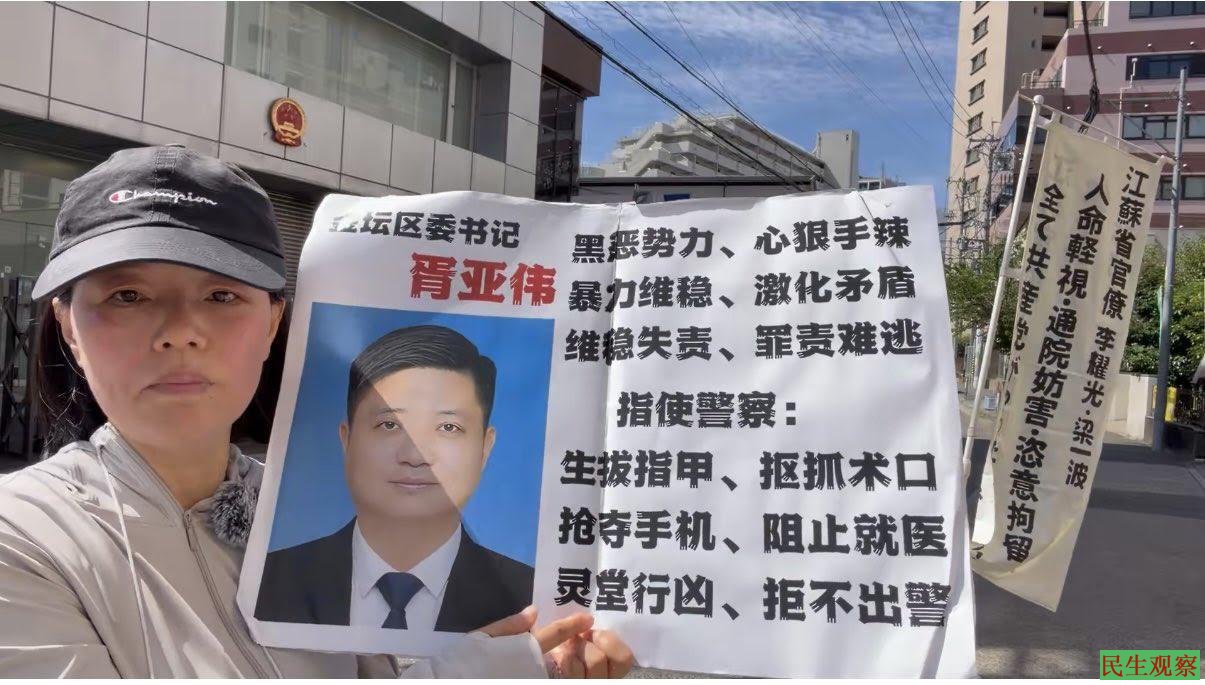
Therefore, the recording of the incident must begin now rather than wait until the more serious consequences arise. At least the following responsibilities should beined and verified: the specific time when Yang Li submitted the application for treatment to Beijing; the departments and personnel receiving the application; who denied the response on September 2; the legal basis for restricting cross-regional action; whether medical professionals are involved in risk assessments; and the role of Jiangsu, Zhongzhou and Qingdao related political laws, public security and grassroots stability control agencies.
The extent to which a regime controls dissenters and advocates is ultimately reflected not only in whether it can bring people to the department, but also in whether it can decide where a patient is to be treated. Yang Li has entered the stage of serious illnesses that require long-term dialysis and face heart problems. In this case, before continuing to put political stability in control of medical autonomy, what is exposed is not the “simple roughness” of the grassroots work, but the institutional intrusion of the CCP’s maintenance system in the private sphere.
Article discussion
Verified members can discuss this report publicly and manage their own content.
Checking member sign-in status…