
A missile debris in the Laguan region of northern Malib province in Yemen is raising a bigger question than “who launched it.” On September 14, live footage showed that the gray column-shaped debris was marked with the “DF-15A” mark. Multiple open source intelligence analysts have also identified it as a short-range ballistic missile developed by China.
The boundaries of the most crucial facts at this stage are also clear: the model judgment of the remains is mainly based on public imaging analysis, and the launchers have not yet been independently confirmed. The Saudi Defense Department, the Houthi Armed Forces of Yemen and Chinese officials have not given any public explanation of the remains that could close the evidence chain. Some analysts believe it may have been launched by Saudi Arabia, while other information points to the Houthi armed forces and even the weapons networks that have entered Yemen through Iran.
In the 1980s, Riyadh secretly purchased the DF-3A medium-range ballistic missile from China, a transaction that once shook Washington. Since then, the outside world has long been tracking whether Saudi Arabia has acquired more advanced Chinese missiles, whether it has developed domestic ballistic missile production capabilities with the help of China. Compared to these projects that have entered public research records, Saudi ownership of the DF-15 series has never been publicly confirmed.
原始来源 · twz.comThe War Zone:也门DF-15A残骸或暴露沙特未公开导弹库存现场影像与开源分析显示残骸疑似中国制DF-15A,但型号与归属仍待确认。twz.com ↗The DF-15 series is a road-mounted, solid-fuel short-range ballistic missile, and is not the same strategic tool as the massive DF-3A purchased by Saudi Arabia in the early years. The former is more maneuverable, shorter in preparation time and more suitable for combat zone-level rapid strikes. If the remains of Malib can eventually be confirmed to be in Saudi stock, it means that Riyadh's Chinese ballistic missile system may include not only long-known medium-range deterrence, but also tactical strike capabilities that have not been publicly confirmed in the past.
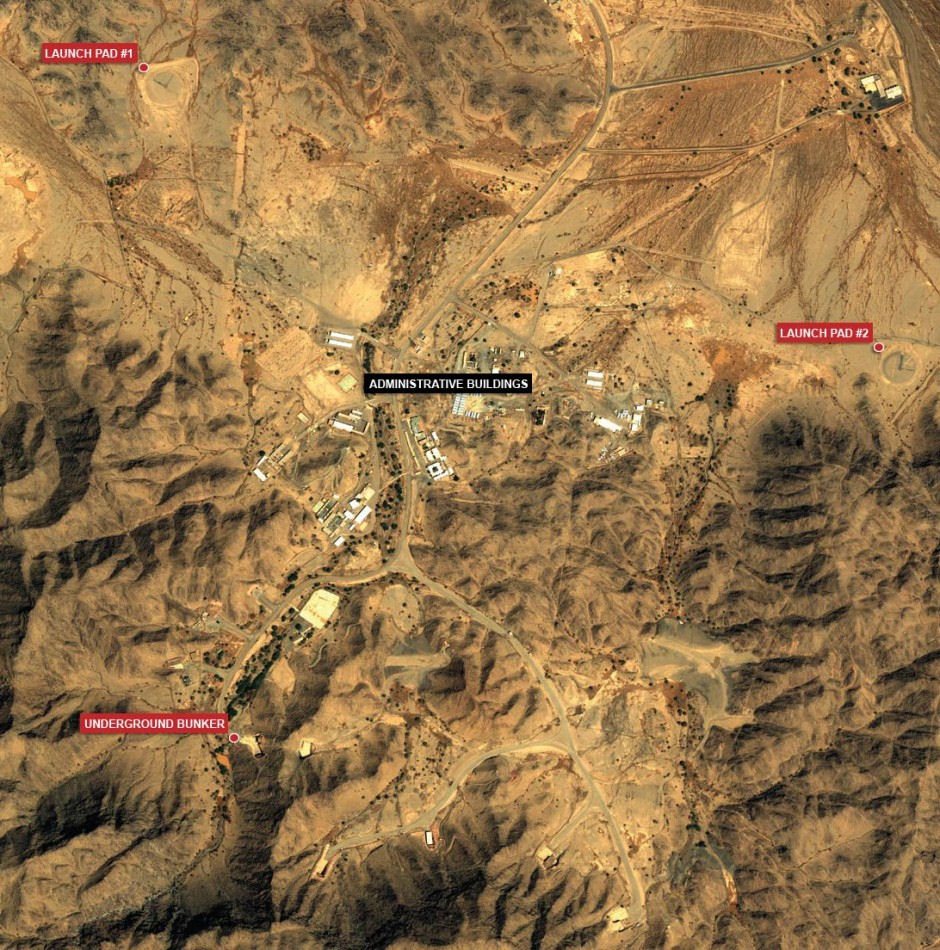
This also explains why a debris of a propulsion section is enough to attract the attention of military observers. The political value of secret arms sales is based on “disclosure” and the debris of war will destroy this ambiguity. Model marks, structures, materials and sequence information once in a war zone may expose to the public for years unrecognized procurement, deployment and even training relationships.
Beijing’s missile cooperation with Riyadh has a special history. China needs strategic missiles most in Saudi Arabia, while the United States entered the market during periods when it was reluctant to provide similar equipment due to proliferation and regional security concerns. For Saudi Arabia, China offers a strategic choice that is not entirely dependent on Washington; for Beijing, such cooperation helps China expand its presence in the Middle East security system and advance bilateral relations from energy trade to highly sensitive military spheres.
原始来源 · defence-blog.comDefence Blog:也门发现疑似中国制DF-15A导弹残骸报道梳理马里卜残骸与沙特中国制弹道导弹历史。defence-blog.com ↗Saudi Arabia has long been a U.S. security partner in the Gulf, but continues to expand its energy, investment, technology and defense ties with China.Riyadh is reluctant to put its security entirely on a big country, while Beijing is trying to prove that China can not only buy Gulf oil, but also sell high-end military equipment, provide industrial cooperation, and enter the U.S.-dominated security space in the past.
Therefore, no matter who the remains of Malib ultimately belong to, it raises an unavoidable question of weapons spread: why a ballistic missile component with clearly Chinese model characteristics appeared on the battlefield in Yemen? if it came from Saudi Arabia, it is necessary to explain when and through what arrangements Saudi Arabia obtained such previously undisclosed missiles; if it came from the Houthi side, the question is how this technology or entity entered its weapons chain.
For the Chinese government, military exports have never been just a business issue. Ballistic missiles are highly sensitive strategic equipment, and their exports, technology transfers and end-user relationships have direct diplomatic and security consequences. In recent years, Beijing has struggled to shape itself as a mediator in the conflict in the Middle East, emphasizing the principle of non-interference; but once Chinese weapons appear in the regional war scene, this diplomatic narrative collides with the real footprint of military trade.
More than a decade of war has caused a serious humanitarian catastrophe, with Saudi-led military intervention, Houthi-armed missile and drone attacks, Iran’s regional support networks, and U.S. and other national security interventions overlapping each other. Any new ballistic missile capability entering the battlefield is not only an upgrade of equipment, but also means civilian zones, energy facilities, airports and cross-border targets face more complex attack risks.
From the perspective of responsibility tracking, what is most needed to preserve now is not the unconfirmed conclusions, but the evidence chain itself: the location of the debris, the original video release time, the complete model and sequence markings, the ammunition structure, the possible flight direction, the target area, and the military operations records of both Saudi and Hussein that night. Only these information can be mutually validated to determine whether it was a previously unclassified Chinese missile or a fragment left by another weapons circulation chain.
The debris, therefore, is like a page of archives torn apart by the war. It temporarily did not give a final answer, but resumed the history of a long-standing secret and strategically ambiguous Chinese missile cooperation into the public eye. If subsequent evidence confirms that Saudi Arabia used the DF-15A for the first time in a real war, the event will not only mean a new weapon to be deployed in Yemen, but also mean China's impact on Saudi ballistic missile capabilities is deeper than previously publicly acknowledged. If this belonging is denied, the true source of the debris also needs to be tracked, as a Chinese-type ballistic missile appears in Yemen, which itself is worth pursuing.
Article discussion
Verified members can discuss this report publicly and manage their own content.
Checking member sign-in status…