
The world's most advanced chip manufacturing is entering the age of High-NA EUV. Reuters reported on 14 September that the next generation of ASML High-NA ' s ultraviolet light-cracking equipment was being continuously used by major chip manufacturers, such as Intel, Samsung, SK Hercules and Stations Builder, at a cost of about $400 million per station. Meanwhile, while China has begun to promote the production of national impregnated DUV-calcators, there are still significant technical faults in the areas of EUV and High-NA, where the actual upper limit of advanced production is determined.
This is not a simple question of whether there is a domestic light machine, but the global technological front has moved forward again, and when China started filling the DUV shortboard, the leading manufacturers have entered the next generation of the EUV system. The “auto-controlled” long-publicized “involvement” of the Chinese Communist Party only depends on the creation of a certain equipment, which conceals the huge gap between good rates, accuracy, throughput, light sources, lenses and overall reliability.
原始来源 · reuters.comASML extends chipmaking dominance as customers embrace High NA路透社9月14日关于ASML High-NA EUV设备、客户采用与全球光刻市场领先地位的分析。reuters.com ↗High-NA lifts the advanced process threshold again
ASML remains the only enterprise in the world that can commercialize the supply of EUV optical carving systems. High-NA is the next-generation version of EUV, which further reduces the printable feature sizes by a higher numerical aperture. Reuters reports that such equipment can reduce the chip feature by about 40 per cent and reduce some of the complex multiple exposure steps.
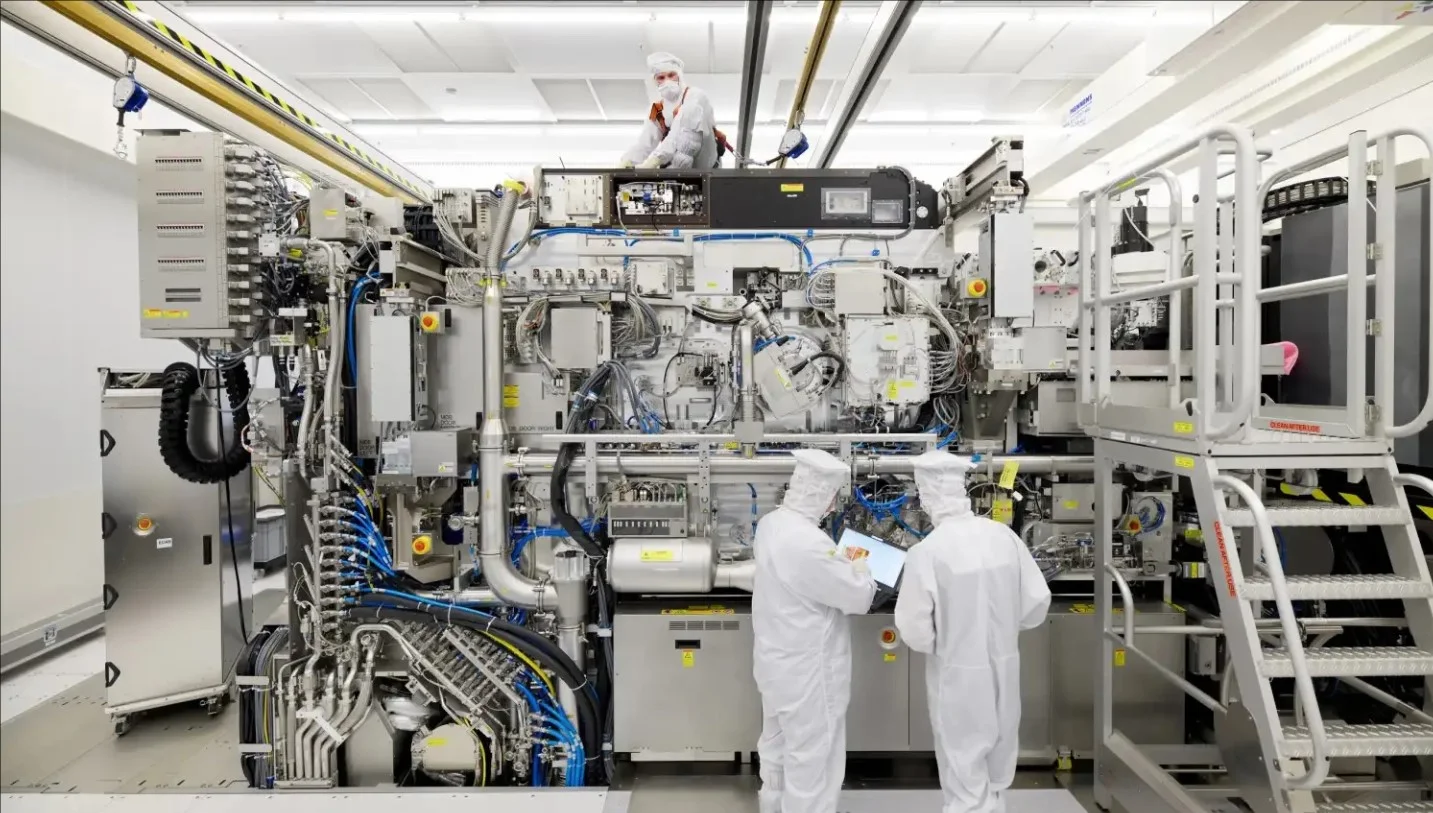
More importantly, the major global advanced chip plants have begun to reroute the process around this generation of equipment. Intel has already processed a large number of crystal circles on the High-NA device, Samsung and SK Hercules are scheduled to import in the coming years, and the power build is also advancing the assessment. The technological lead is not a machine's lead, but a set of customers, materials, optical, software, process and volume experience rolling forward at the same time.
When this ecology began to take shape, the gap that later faced was not just “replicating one device”, but rather following the intergenerational experience that had accumulated throughout the industrial chain.
The Chinese national DUV breakthrough is a real advance, but it cannot be packaged as a catch-up ASML
In July this year, Reuters revealed that the Shanghai Electronics Technology Group (AESG) began promoting the production of national impregnated DUV carciers and plans to supply to such enterprises as Chinachip International, Huai-Wao and Chang-Chang storage. This is an important advance in the domesticization of China’s semiconductor equipment, and it is an indication that Western export restrictions are pushing China to accelerate its replacement.
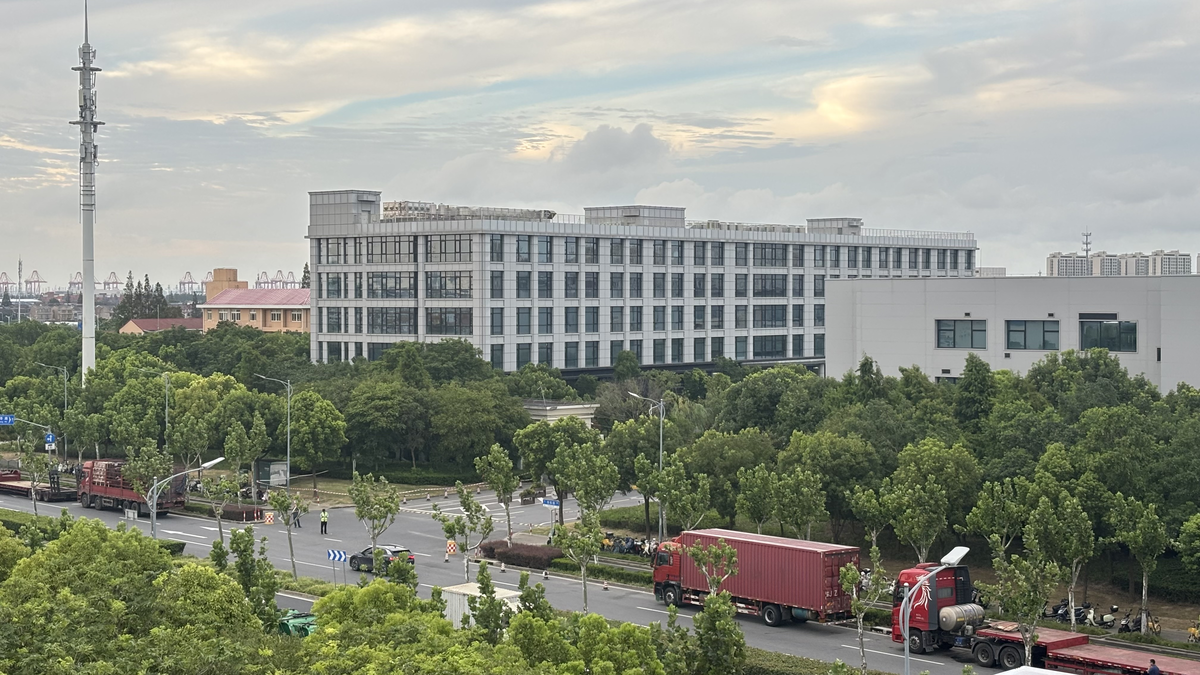
However, the public information also indicates that the DUV equipment produced nationally is still in its early production and testing stages, with limited initial quantities, and performance, reliability, engraving accuracy and high-capacity performance still significantly behind the ASML mature product. The ability to build machines and to operate in a continuous, high-prevalence, high-volume-absorption manner at advanced crystal-clip plants is a completely different technological level.
原始来源 · reuters.comChina starts production of home-grown immersion DUV chipmaking tools路透社关于上海爱生纳、中国国产浸没式DUV量产与技术差距的报道。reuters.com ↗China's official campaign often uses “first stage” “break-through” “nationalization” as the end point of technology, but the real criterion for semiconductor manufacturing is production in volume. When equipment requires frequent shutdowns, large engraving errors, insufficient light source stability or the lifetime of spare parts, it is difficult to access large-scale production lines with advanced production processes, even if they are lit and exposed.
National capital can stack resources but cannot be acquired directly for time accumulated
Esanna, Shanghai, is itself a typical national capital project. Public information indicates that the company is supported by shareholders from the Shanghai State Capital background and that it has integrated a number of domestic light technology teams. China also promotes the substitution of national optical, optical and optical systems through investment and industrial chain cooperation.
This national mobilization model, which can pool funds, talent and orders, is very effective in catching up with mature industries. But the core barrier to light technology lies precisely in the accumulation of long-term engineering. The EUV system of ASML includes Zaius super-precision optical, Trumpf high power laser, vacuum system, control software, crystal table and decades of process synergy. These capacities are not fully complemented by a single administrative project.
原始来源 · reuters.comASML's next chip challenge: rollout of its High NA EUV machine路透社关于High-NA EUV技术结构、ASML产业链和设备工程复杂度的报道。reuters.com ↗China is therefore not facing the real problem of “affordability” but whether it can complete the reconstruction of the engineering system for a long time, given the limited access to leading equipment and critical spare parts.
Export controls are having a double effect: limiting leadership and stimulating the replacement of national production
The United States and Netherlands restrictions on the export of Chinese light-kick equipment have indeed reduced China ' s ability to obtain the most advanced equipment directly. Chinese enterprises were unable to purchase ASML EUV and were limited by some high-end DUV and maintenance services. This has forced enterprises such as Chinachurch International to push older equipment to more advanced process nodes through more sophisticated multiple exposures, with associated cost and good-rate pressures rising.
On the other hand, the embargo is forcing Beijing to devote more national resources to domestic production equipment. This means that Western restrictions are prolonging China ' s catch-up, but they do not necessarily permanently prevent China from forming an alternative system. The real competition is thus crucial: whether the global lead systems, ASML, PIL and Samsung, are moving forward at a faster pace than the national chain of production in China.
Today, the large-scale acceptance of the High-Na is the most visible manifestation of this competition. China has just begun to build its immersive DUV capacity, and the global front has moved to the next generation of EUVs.
The “auto-controlled” campaign covers intergenerational disparities, not zero to one problem
The most common narrative of CCP technology is to confuse “national production” with “leading”. When a national production equipment is present, it is packaged to break the blockade; The production of advanced chips is described as a technological breakthrough.
But the real cruelty of the semiconductor industry is in intergenerational speed. China can make real progress while still maintaining a huge gap with the most advanced technologies, which is not contradictory. If the media merely repeat “block failure” or “national rise”, the most important technical facts will be ignored.
As of now, ASML has a monopoly on the commercial EUV market and High-NA has entered the customer import phase; The Chinese national impregnated DUVs only started early production, and the national production EUVs are still in the prototype and research and development stages. This structure is the most accurate baseline for the CCP semiconductor strategy.
Beijing can continue to invest huge sums of money, and it may gradually close some of the equipment gaps, but as long as the global technological frontier continues to move, China’s real test of what it calls “auto-controllable” is not whether it can replicate yesterday’s equipment, but whether it can catch up with tomorrow’s manufacturing system.
Article discussion
Verified members can discuss this report publicly and manage their own content.
Checking member sign-in status…